Get all your news in one place.
100's of premium titles.
One app.
Start reading
The Times of India
The Times of India
World
TOI World Desk

In 1902, a three-year-old girl arrived on Georgia’s Cumberland Island; she remained closely tied to it for decades and later opposed large-scale development

In 1902, a three-year-old girl arrived on Cumberland Island off the coast of Georgia, entering a world of maritime forest, beaches, marshes and sprawling Carnegie family estates. Her name was Lucy Carnegie Ricketson Ferguson. She would remain closely tied to the island for the rest of her life, eventually becoming one of the family members most determined to prevent its transformation into a developed resort. When developers began buying large tracts in the late 1960s, Ferguson and her family faced a choice: allow Cumberland to follow the path of other rapidly developing coastal islands or help preserve the landscape they had known for generations.

Get breaking news anytime, anywhere. Download the TOI app now!

From family retreat to development threat

Cattle were raised, forests were managed, and large areas were used for family recreation. Yet the family’s long ownership also kept much of Cumberland from the intensive commercial development that was spreading along the American coast. According to the National Park Service , members of the Carnegie family invited federal officials to examine Cumberland Island’s potential as a national seashore in the 1950s. The island’s extensive beaches, forests and marshes, much of them outside the family’s developed estate areas, had already drawn attention as a landscape worth preserving. But conservation was not the only future being considered.

However, by the 1960s, the Carnegies' grip on the island was gradually loosening. Members of the family had different visions for what they wanted to do with the lands they had inherited. Some preferred that Cumberland remain a private family estate, while others wanted to sell the land. Its significance grew as the family's trusts neared their end. This issue came into sharper focus in 1968, when developer Charles Fraser bought around 3,000 acres of Cumberland Island.

The prospect raised concerns among those who feared that roads, construction and a possible mainland connection would fundamentally change the island. Ferguson became an important voice in the opposition. She and her son, O. Ricketson Ferguson, were among the Carnegie descendants who favoured national-park protection over large-scale development. Their position was not simply about keeping outsiders away. It reflected a growing recognition that Cumberland’s isolation had helped preserve its forests, beaches and marshes. The debate became a test of whether a privately owned landscape could be opened to public conservation while still respecting the interests of the families who continued to live there.

The island becomes a national seashore

According to Cumberland Island National Seashore : A History of Conservation Conflict, the campaign brought together conservation organisations, Carnegie descendants and federal officials as competing visions for the island's future. The dispute intensified after developer Charles Fraser acquired about 3,000 acres in 1968, prompting the Sierra Club and Georgia Conservancy to campaign for national-seashore protection. Carnegie heirs themselves were divided over the island's future, with many opposing Fraser's development plans because they feared they would destroy the island's natural character and solitude.

For Ferguson, Cumberland was personal. She had spent her childhood there and continued to live at Greyfield as an adult. Her family maintained cattle operations on the island, and she remained involved in efforts to keep its landscape intact. The National Park Service's historical record notes that Ferguson continued to live at Greyfield and ranch on the island as the Carnegie properties were divided among different branches of the family.

In 1972, Congress established Cumberland Island National Seashore, protecting most of the island while allowing certain Carnegie descendants to retain private property and specified rights. The legislation also prohibited construction of a causeway linking Cumberland to the mainland, helping preserve the island’s relative isolation. Rather than placing the entire island under a single form of ownership, the agreement created a mix of protected public land, privately held properties and historic sites. This arrangement reflected the negotiations required to protect Cumberland while accommodating the families who still owned parts of the island.

A Life tied to Cumberland’s future

Ferguson continued living on Cumberland after its protection. She died in 1989, aged 89, having spent more than eight decades connected to the island. Her son had already converted Greyfield into an inn, giving visitors a controlled way to experience part of the old Carnegie estate without turning Cumberland into a conventional coastal resort. Her long connection to the island also coincided with a period of major environmental change. According to Global Ecology and Conservation , Cumberland Island supports an isolated population of bobcats, while its separation from the mainland and limited development have helped maintain its distinctive landscape. The island has no road connection to the mainland, and development is limited to a few private inholdings, historic structures and infrastructure supporting the national seashore.

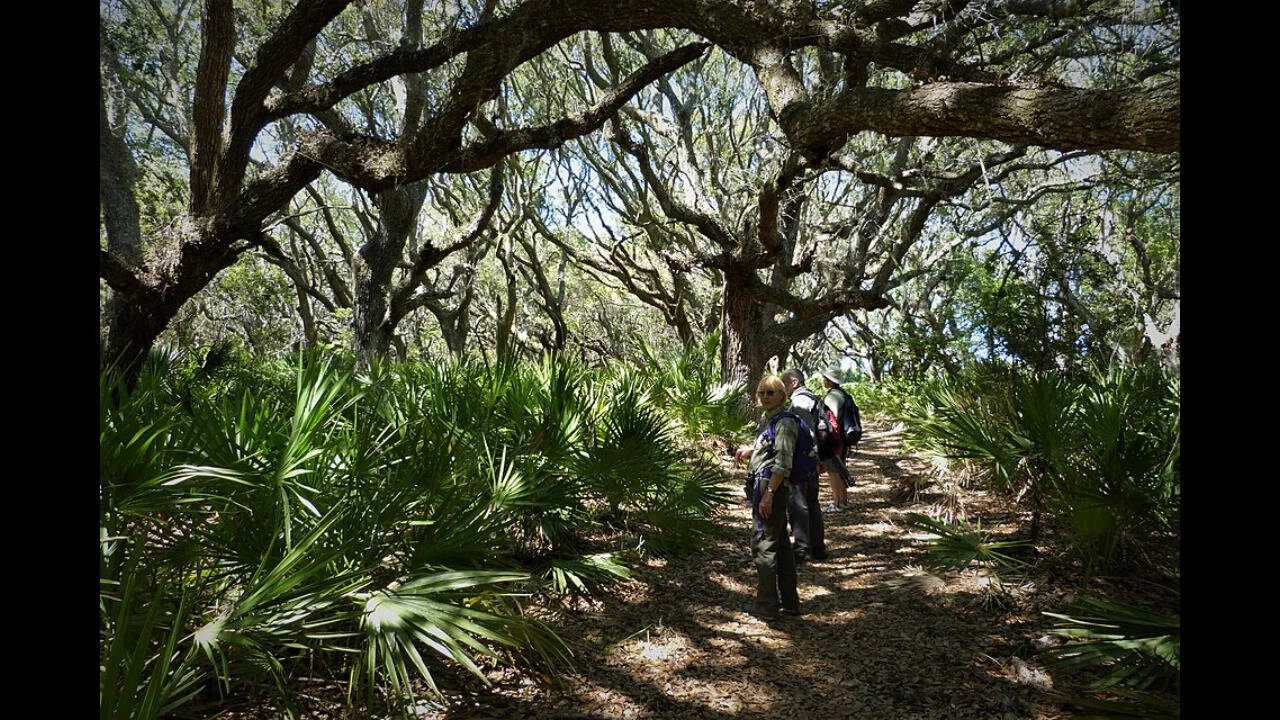
Today, Cumberland Island remains one of Georgia’s least developed barrier islands. Its beaches, dunes, maritime forests and salt marshes continue to shape the landscape, alongside historic sites and remnants of its earlier settlements. Much of the island remains protected from large-scale development, preserving the combination of natural habitats and cultural history that makes Cumberland distinct.

Sign up to read this article
Read news from 100's of titles, curated specifically for you.
Already a member? Sign in here
Related Stories
Top stories on inkl right now
One subscription that gives you access to news from hundreds of sites
Already a member? Sign in here
Our Picks
Fourteen days free
Download the app
One app. One membership.
100+ trusted global sources.