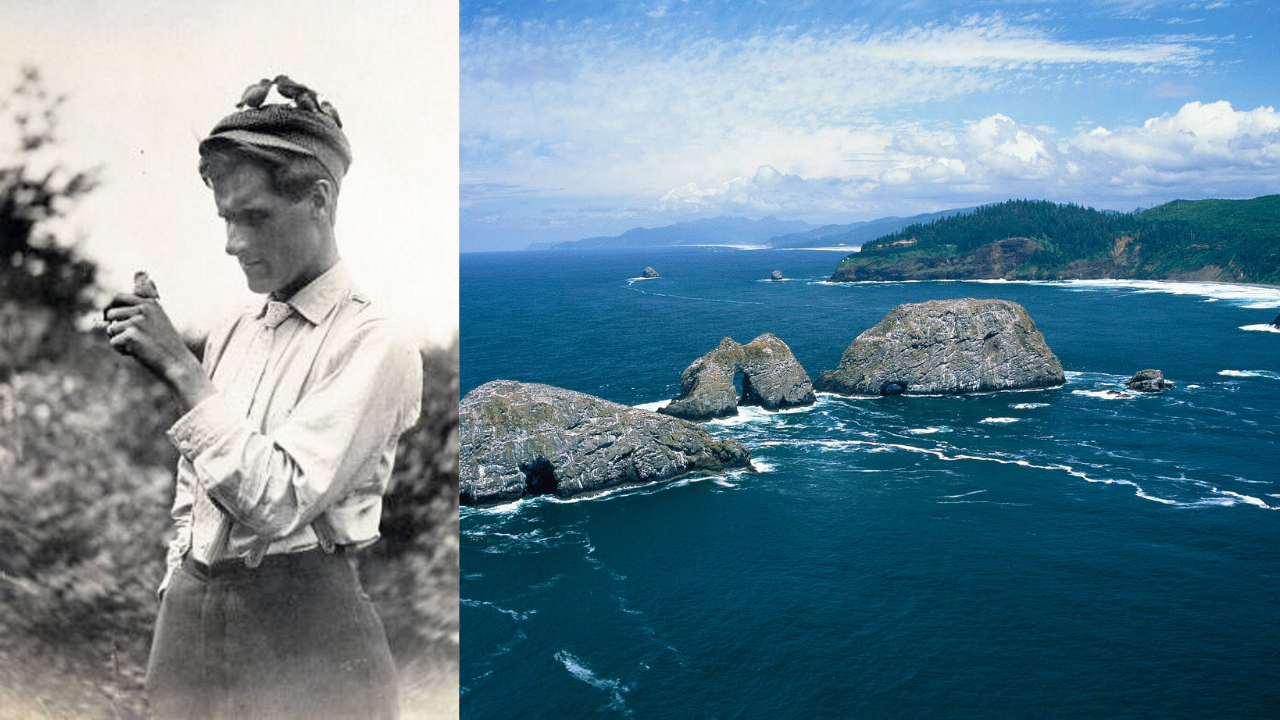
William L. Finley and Herman Bohlman went to Oregon’s Three Arch Rocks in 1901 to photograph birds and marine mammals, and ended up documenting a heavily exploited wildlife colony. Six years later, President Theodore Roosevelt designated the area as the first National Wildlife Refuge west of the Mississippi River.
Get breaking news anytime, anywhere. Download the TOI app now!

The nine rocks sit about half a mile offshore from Oceanside, Oregon. Three are large formations and six are smaller rocks, and cover about 15 acres in total. The islands supported large colonies of seabirds and were also used by marine mammals. Today, the area is known as Three Arch Rocks National Wildlife Refuge and remains closed to public entry to protect its wildlife. According to the U.S. Fish and Wildlife Service , the refuge was established in October 1907 largely through the efforts of Finley and Bohlman.
What the photographers found on the Oregon coast
Finley and Bohlman were both young naturalists from Oregon who used photography to document wildlife. They spent several weeks at Three Arch Rocks in the summer of 1901 and recorded the killing of seabirds and sea lions by people visiting the islands. Their photographs could show what was happening on the rocks and preserve evidence of the wildlife that remained there. The two men soon returned in 1903 for a longer expedition. They spent 14 days camping on the westernmost rock, and worked from steep slopes above the water. Bohlman climbed the rocks to photograph nesting birds, while the pair recorded the different species living on the islands.
The Oregon Encyclopedia describes the 1901 visit as the point when Finley and Bohlman brought wider attention to the condition of Three Arch Rocks. Their later 1903 expedition produced additional photographs and observations of the bird colonies. The Oregon Encyclopedia states that the men documented the slaughter of thousands of birds and dozens of sea lions during their work on the rocks. The photographs also showed common murres that crowded the cliffs, while pigeon guillemots, cormorants, storm-petrels and tufted puffins used different parts of the islands for nesting.
The evidence reached Theodore Roosevelt
Finley and Bohlman used their work to argue for greater protection of the islands and the animals living there. At the time, wildlife protection in the United States was still developing, because of which birds and marine mammals were often killed for food, feathers, oil or sport. The photographers believed that protecting the islands would give the colonies a chance to recover. Finley eventually took the photographs and information from their work to Washington, D.C, where he sought federal protection for the area.
Theodore Roosevelt was already using presidential authority to establish protected areas during his presidency. His administration created national forests, game preserves, and other federal reservations. Three Arch Rocks became another addition to that growing system of protected lands. On October 14, 1907, Roosevelt established Three Arch Rocks as a federal wildlife refuge. The designation protected the rocks and the wildlife that depended on them. The U.S. Fish and Wildlife Service identifies Three Arch Rocks as the first National Wildlife Refuge west of the Mississippi River and says Roosevelt was persuaded to protect the area by Finley and Bohlman.
The photographs are still part of the story
The original work by Finley and Bohlman has survived in photographic collections. Their images document both the wildlife and the difficult conditions under which the photographers worked. The Oregon Historical Society holds photographs from the William L. Finley collection that shows the men traveling to Three Arch Rocks, setting up camp and working around the cliffs. One 1901 photograph shows Finley and Bohlman traveling by wagon with other people and a dog on their way to the coast. The collection identifies the image as a Herman Bohlman photograph and lists its rights status as “No Copyright — United States.” The Oregon Historical Society's digital collection identifies the photograph as dating to about 1901 and lists William L. Finley and Herman Bohlman among the people shown.
The nine rocks remain offshore from Oceanside, and the area is still closed to public entry because of its sensitive nesting habitat. The wildlife has also remained central to the site. The U.S. Fish and Wildlife Service says Three Arch Rocks now supports Oregon's largest and most diverse seabird colony and serves as a breeding site for Steller sea lions. Finley died in 1953 and Bohlman died in 1943, but their photographs still remain part of the historical record of the refuge. Today, Three Arch Rocks is still a 15-acre refuge offshore from Oceanside. The public cannot land on the rocks, but the islands can be viewed from the Oregon coast.