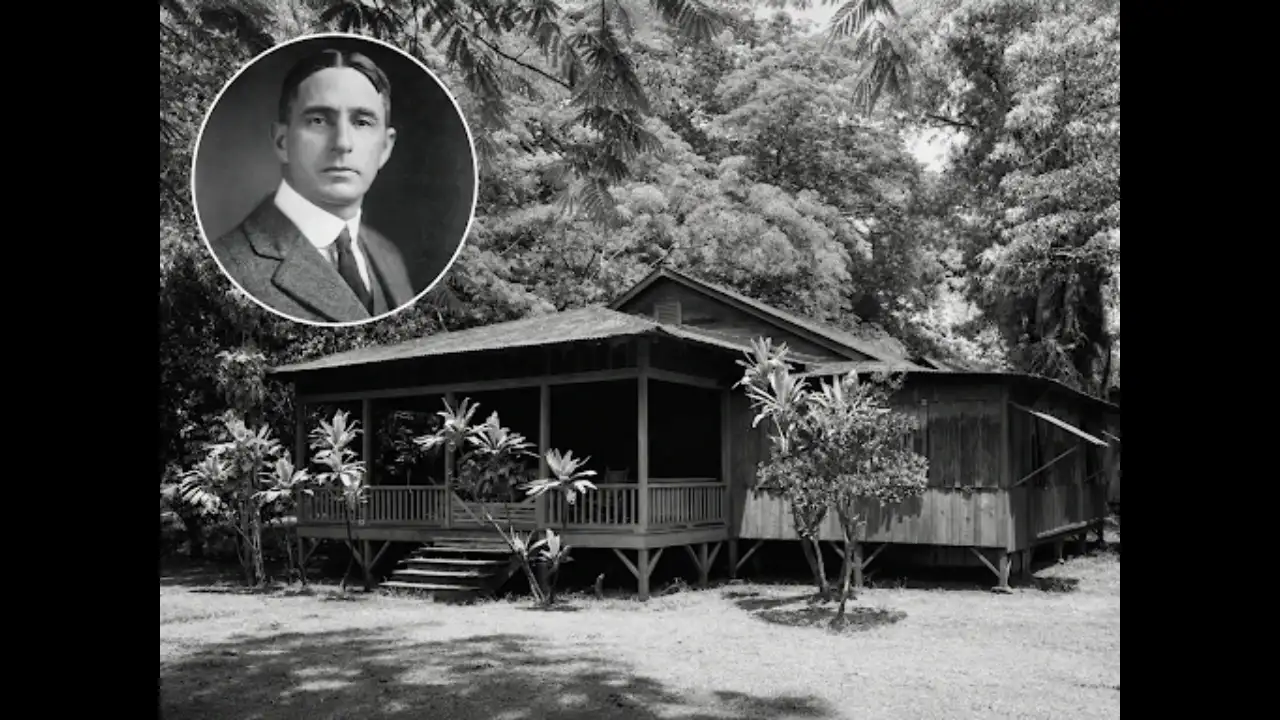
In 1899, 22-year-old Harvard graduate James Drummond Dole arrived in Hawaii hoping to make his fortune growing coffee. Instead, his coffee experiment failed and pushed him toward another crop that would eventually make his name synonymous with pineapples. What began as a 61-acre agricultural gamble ultimately became one of the world's best-known pineapple empires.

James Dole's 1899 coffee dream
Dole arrived in Honolulu in November 1899 with a bachelor's degree in agriculture and hopes of capitalizing on Hawaii's growing agricultural economy. According to the Jamaica Plain Historical Society's profile, he later explained that he “first came to Hawaii…with some notion of growing coffee” and “had heard that fortunes were being made in Hawaiian coffee.”
He acquired approximately 61 acres in Wahiawā on Oahu, where he experimented with coffee as well as peas, pigs and potatoes.
But coffee did not work out as planned. His arrival was also followed by a major crisis. Just over two months after Dole reached Hawaii, Honolulu was quarantined during a bubonic plague outbreak. Chinatown was subsequently burned in an attempt to contain the disease, with the fire spreading beyond the intended area.
How a failed coffee farm led to pineapples
As his coffee plans faltered, Dole gradually turned his attention to pineapple. The fruit had an obvious commercial problem: fresh pineapples could spoil during the long journey to the U.S. mainland. Rather than abandoning the idea, Dole looked for a way to preserve the fruit.
His answer was canning. In 1901, he established the Hawaiian Pineapple Company with $20,000 in capital. At first, production was small and labor-intensive. By 1903, fewer than 2,000 cases had been packed by hand.
The real breakthrough came from engineering. Henry Ginaca developed a machine capable of peeling and coring roughly 100 pineapples per minute. The technology dramatically accelerated production and helped turn pineapple processing into a major industrial operation.
Dole's pineapple empire expands
Dole's ambitions eventually went far beyond his original 61-acre farm. In 1922, he purchased the entire island of Lānaʻi, transforming it into a major pineapple-producing center. For decades, the island became one of the world's most important sources of pineapples, supplying a huge share of the global market.
The irony was hard to miss: the young Harvard graduate who arrived in 1899 intending to grow coffee had instead built his reputation around a completely different crop.
The complicated history behind the “Pineapple King”
The story of Dole's success also exists within Hawaii's complicated colonial history.
Dole arrived only a year after Hawaii's annexation by the United States, following the 1893 overthrow of the Hawaiian monarchy. American and European businessmen had acquired large amounts of land, while Native Hawaiians faced widespread dispossession.
Academic research has also examined the plantation economy Dole became part of, including land seizure and labor exploitation. Later company-sponsored accounts presented a more polished version of his rise, including a 1927 promotional booklet titled The Kingdom that Grew Out of a Little Boy's Garden.
The empire nearly collapsed
Dole's pineapple business was not always successful. During the Great Depression, the Hawaiian Pineapple Company suffered a severe financial crisis in 1932 and was subsequently restructured. Dole remained chairman but had little power over the company.
Yet his legacy survived. The story that began with James Dole arriving in Hawaii in 1899 to grow coffee ultimately became the story of the “Pineapple King.” His failed first plan unexpectedly became the foundation of a global fruit empire—proof that sometimes Plan B can become the master plan.