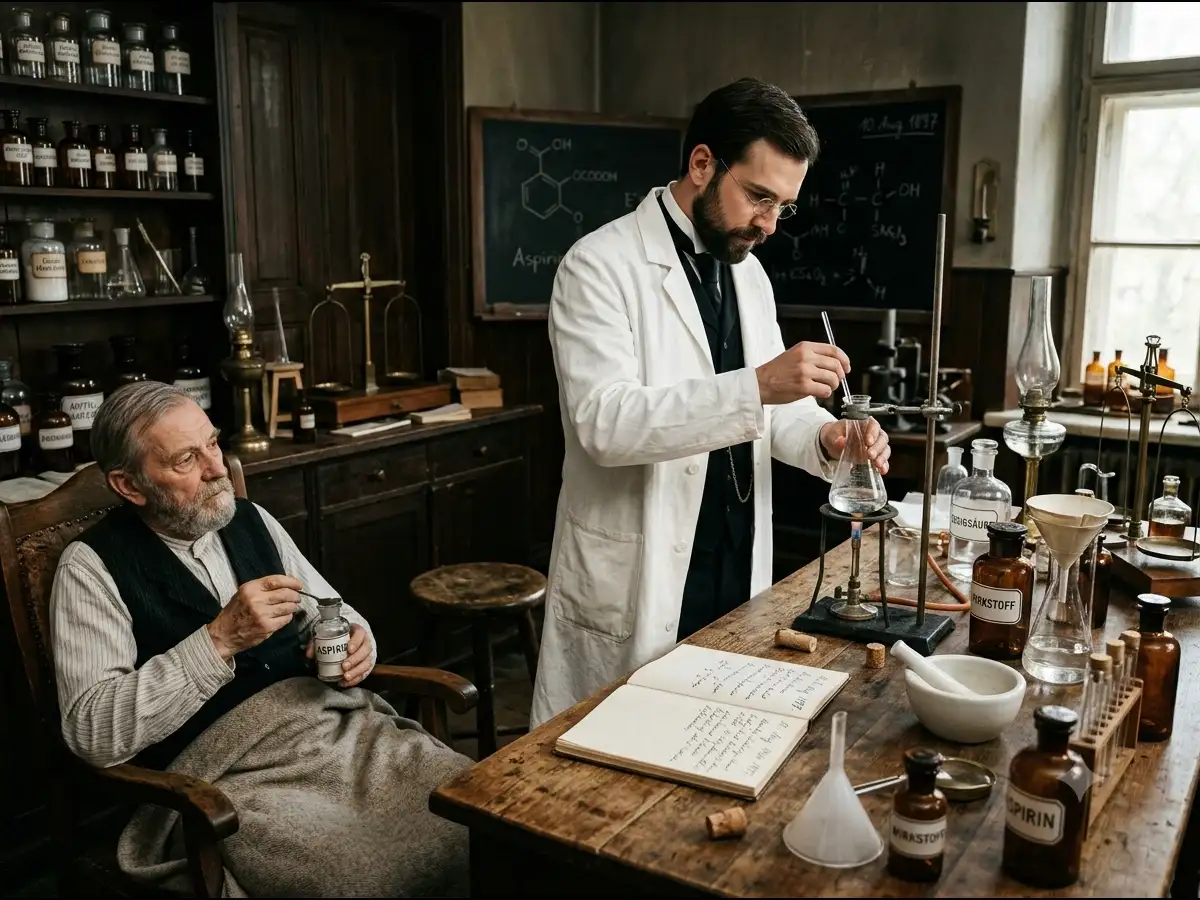
In 1897, a German chemist while trying to ease his father’s rheumatic pains accidentally developed a drug still widely used as an over-the-counter medication around the world. The chemist was Felix Hoffmann, who worked at Bayer in Germany. He was trying to modify chemical compounds used in medicine. His work led to acetylsalicylic acid, which Bayer later named Aspirin. The drug came from salicylic acid, a substance known for pain and fever relief but also linked to stomach irritation. Hoffmann’s work took place during a period when chemists were changing natural substances to create medicines. The same two-week period also produced heroin.