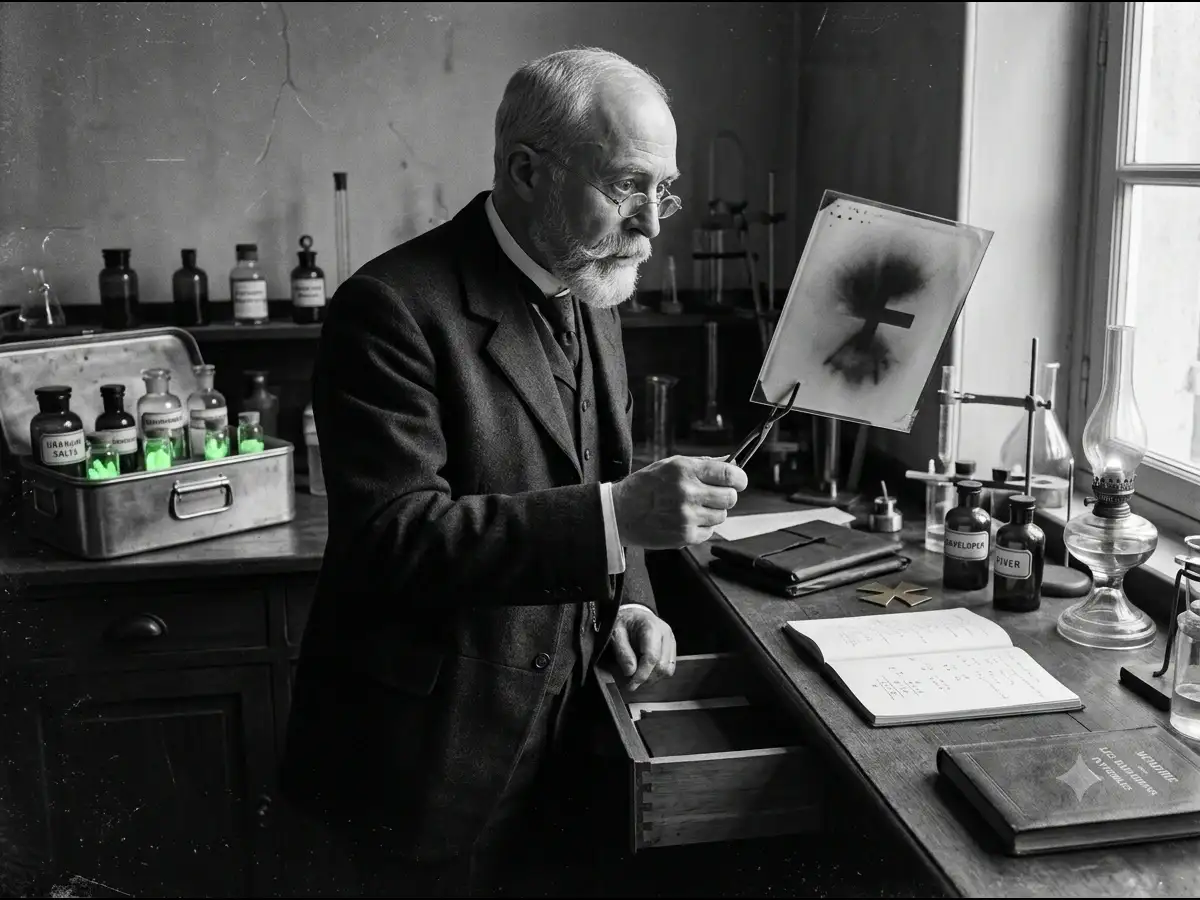
In 1896, a French physicist accidentally discovered radioactivity after leaving uranium crystals on photographic plates wrapped in black paper inside a dark drawer. Henri Becquerel was studying uranium compounds and wanted to know whether phosphorescent materials could produce X rays after exposure to sunlight. A period of overcast weather changed the experiment. The plates remained in darkness for several days. When Becquerel developed them, he found that the plates had been exposed. The result showed that uranium could produce penetrating radiation without sunlight. This finding became the starting point for the study of radioactivity and later influenced nuclear science, medicine and physics.