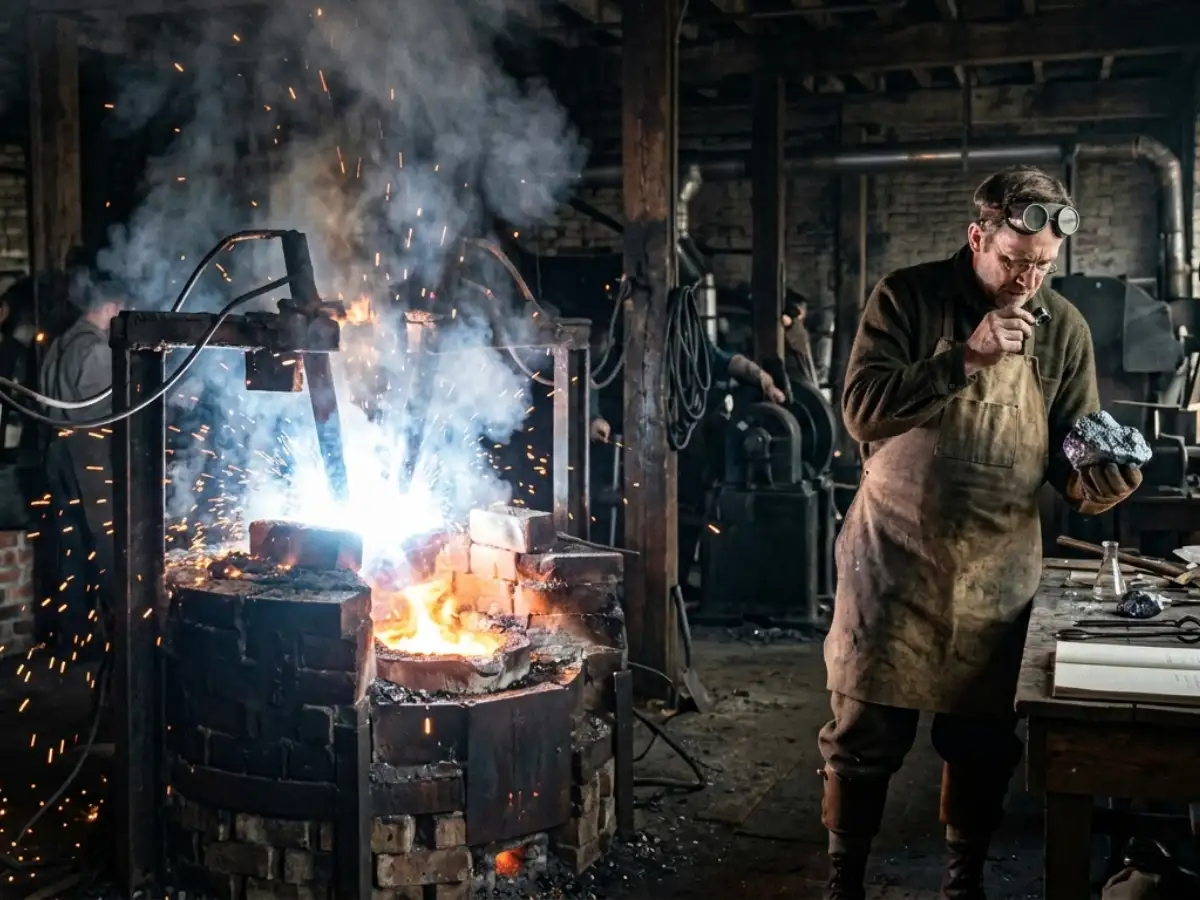
In the spring of 1892, Willson was not attempting to revolutionize industrial chemistry in any manner whatsoever. Instead, he was working towards discovering a more economical path for aluminum production. However, his experimental endeavors took an unplanned path at some point inside a furnace in Spray, North Carolina.
As per the account by the American Chemical Society, Willson, unintentionally made the discovery of the electric-arc process for calcium carbide on May 2, 1892, when he was working with high temperatures within furnaces. He did not discover the aluminum process, which was the ultimate objective of his experiment; rather, he found out a new compound that had its own economic prospects.