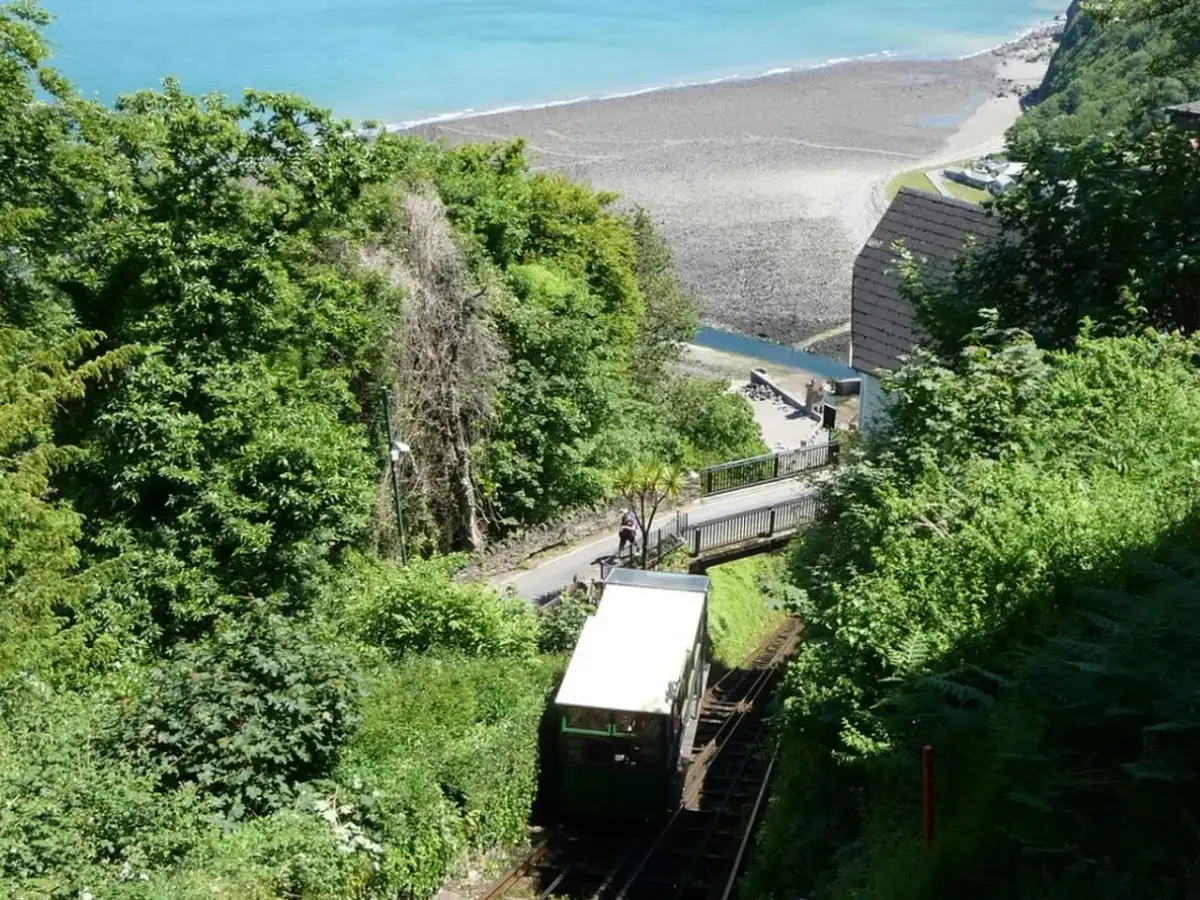
Imagine a 500-foot cliff between two towns, and nothing but a grueling hike between them. Now think of the Victorians in 1890, having no electricity, gasoline, or coal, and still being able to solve that problem, with the help of gravity, two train cars, and the river water. That's not a thought experiment. It's the Lynton and Lynmouth Cliff Railway on the coast of England in North Devon that has been operating since Easter Monday in 1890. This wasn't a case of Victorians lacking better options; by 1890, coal power was the backbone of British industry and electricity was already arriving in Britain's towns; Lynmouth itself got one of the country's earliest hydro-electric plants that very same year. The railway's designers chose a water-and-gravity system deliberately, because it suited the site's steep gradient and abundant river flow, not because nothing else was available. The railway's upper waiting room was "the first of its kind in England" according to Historic England, the country's official heritage authority, and the structure still runs via water to this day.
A commute problem