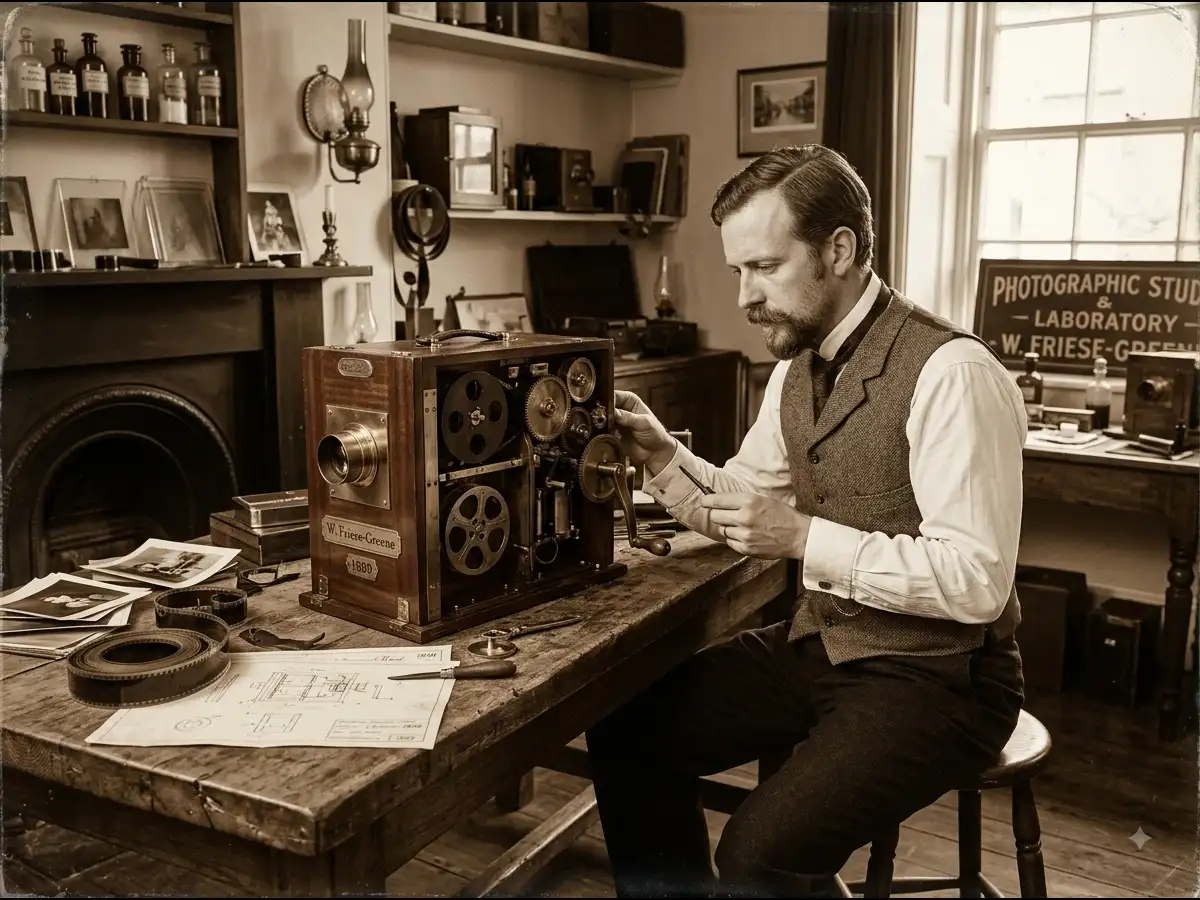
In 1889, a British photographer designed an early motion-picture camera triggering the birth of the movie industry and related fields. The photographer was William Friese-Greene, who worked on photography, printing and film technology. He developed a camera that could take a series of photographs on a roll of paper or celluloid film. The film moved intermittently behind a shutter. This method became part of the principle later used in motion-picture cameras. Friese-Greene also worked on stereoscopic and colour cinematography. His work did not result in a successful public moving-picture presentation, but it formed part of the development of cinematography during a period when inventors were trying to record and display movement.