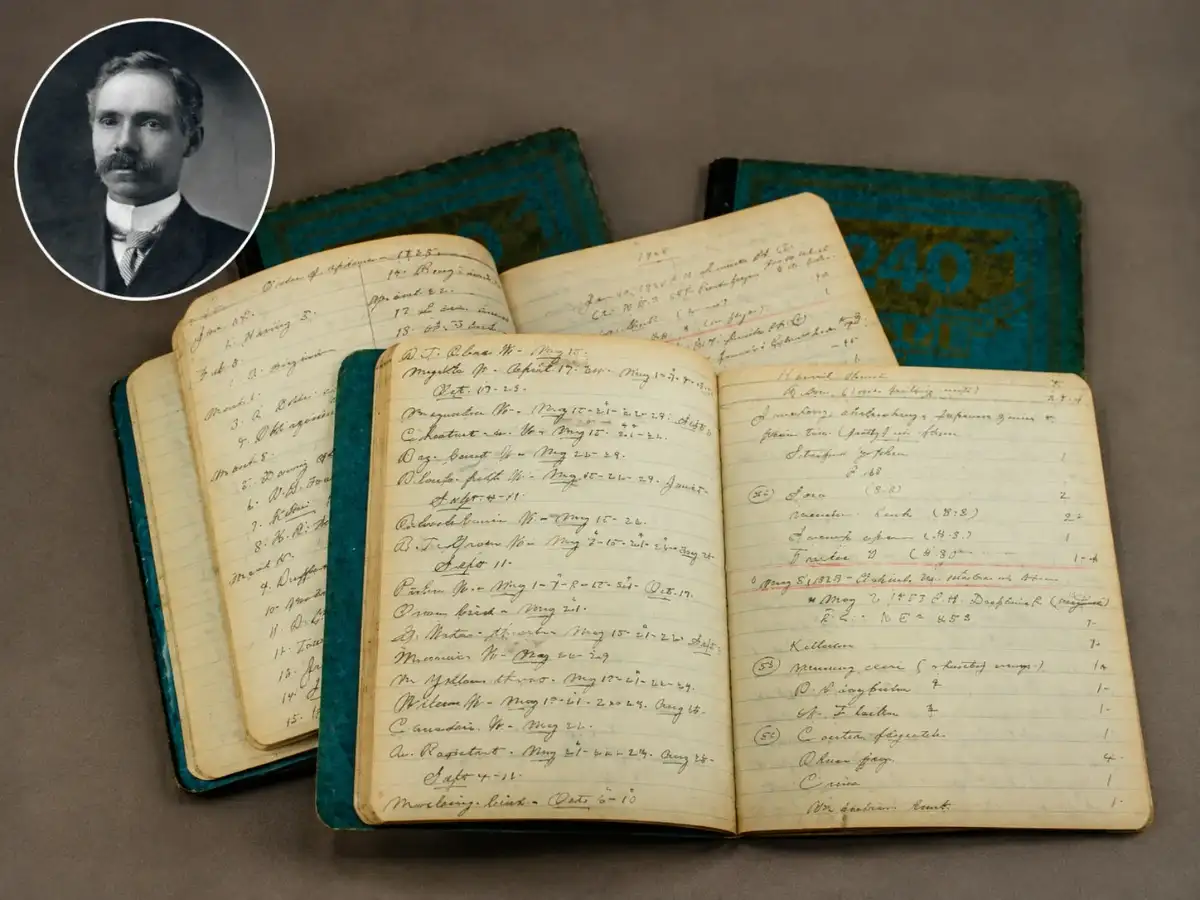
Long before crowdsourced data collection existed on phones or websites, one of its earliest large-scale examples ran on handwritten index cards. In 1880, Wells W. Cooke was posted to the White Earth Indian Reservation in Minnesota, where he taught by trade but spent his free time observing the birds passing through each spring. A U.S. Geological Survey (USGS) history of the North American Bird Phenology Program, the agency that now holds and curates the original records, recounts that Cooke became intrigued by a simple question that was largely unanswered at the time: did migratory birds arrive on the same dates each year?
With the help of a network of friends and acquaintances that he recruited, Cooke collected first sightings for different species of birds, information which he then carefully filed onto cards sorted by species, location, and date. It was a crowdsourced endeavor. That hobby would go on to become a federal program spanning nine decades and amass one of the largest migration records of any North American bird group.