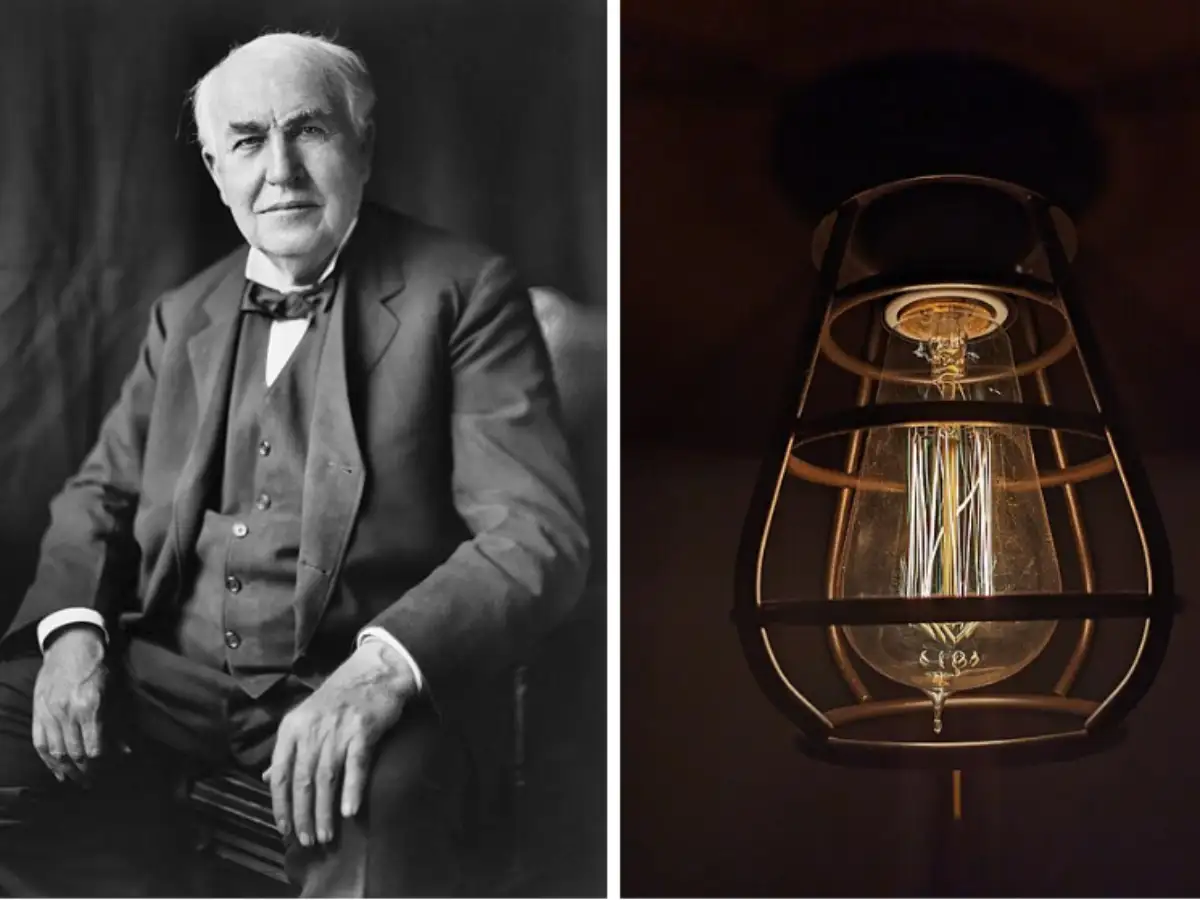
When people think about the invention of the light bulb, they often imagine a single flash of inspiration that suddenly illuminated the world, but the reality was more gradual and far more consequential. In 1879, Thomas Edison reached an important milestone when one of his incandescent lamps remained lit long enough to be practical rather than merely experimental. According to the Franklin Institute, Edison had developed a high-resistance electric lamp and identified carbonized cotton thread as a workable filament after testing numerous alternatives. That achievement mattered because it moved electric lighting beyond the laboratory and toward everyday use. For the first time, electric light had the potential to become part of homes, businesses, and public spaces, setting in motion changes that would eventually reshape how Americans worked, traveled, and spent their evenings.