Get all your news in one place.
100's of premium titles.
One app.
Start reading
The Times of India
The Times of India
World
TOI World Desk

In 1877, Douglass paid $6,700 for a Washington estate that became his final home

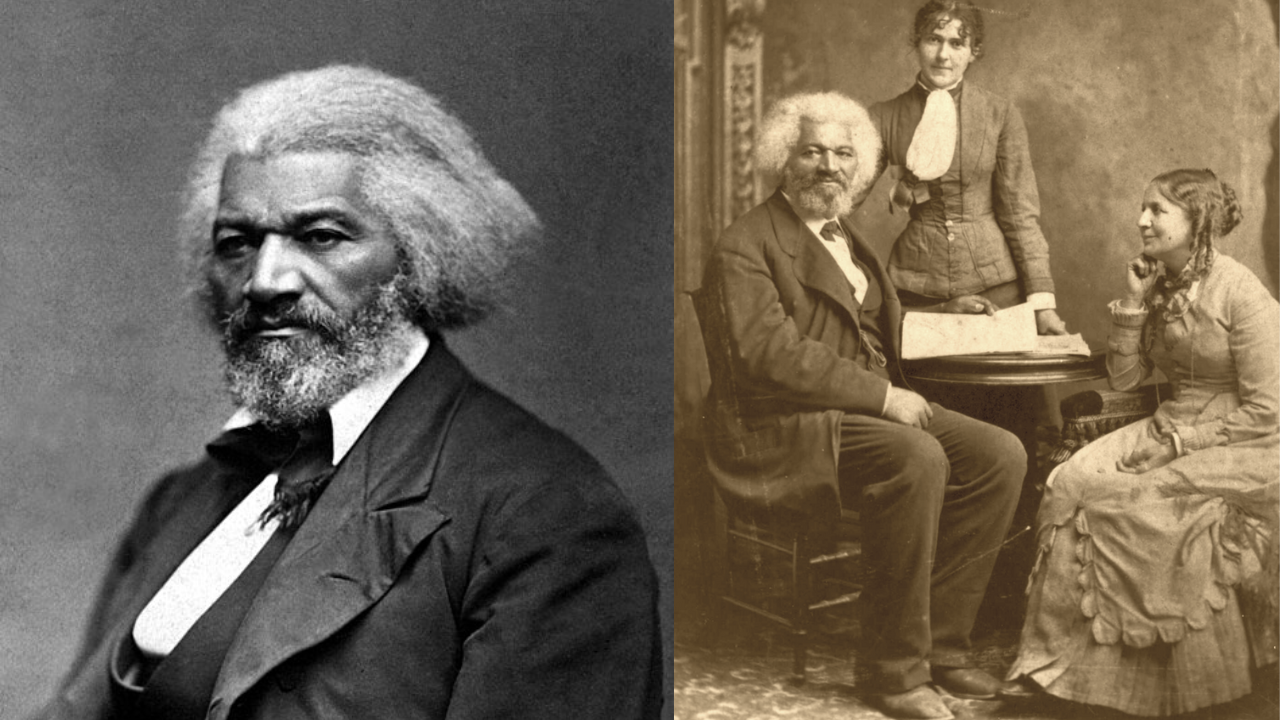
In 1877, Frederick Douglass bought a hilltop estate in Anacostia, Washington, DC, for $6,700, acquiring a house and roughly over 9 acres of land despite a racial restriction in the property's original deed. Douglass named the estate Cedar Hill and made it his final home. Over the next 17 years, he expanded the house, enlarged the grounds and built a substantial library. Today, the preserved property forms the Frederick Douglass National Historic Site, managed by the National Park Service.

Get breaking news anytime, anywhere. Download the TOI app now!

Douglass bought Cedar Hill despite a racial covenant

Douglass purchased the property on September 1, 1877, from the Freedmen's Savings and Trust Company. The National Park Service records the purchase price as $6,700 for the house and over 9 acres of land. The original deed contained a restriction prohibiting Black people from purchasing the estate, yet Douglass was able to complete the transaction.

The property stood on a hill in Anacostia, then a suburban area east of the Anacostia River. Douglass named it Cedar Hill, reflecting the cedar trees growing around the estate. The setting offered him a quieter home away from the more urban surroundings of central Washington.

He turned the estate into a much larger home

Douglass did not leave Cedar Hill unchanged. According to the National Park Service, he spent much of his time and money improving the property between 1878 and 1895. He expanded the house from 14 to 21 rooms, added a library and second-storey bedroom, and filled the home with books, art, antiques and other possessions.

He also continued acquiring land. In 1878, Douglass purchased some additional acres, bringing the estate to roughly 15 acres. The property was developed with additional structures and cultivated areas, creating what the National Park Service describes as a "gentleman's farm".

The library became one of the home's defining spaces. It eventually contained more than 1,000 books covering subjects including history, religion, science and government. Portraits of people Douglass admired, including John Brown, Susan B. Anthony and William Lloyd Garrison, were also displayed there.

Cedar Hill remained Douglass's home until his death in 1895

Douglass moved into Cedar Hill with his first wife, Anna Murray Douglass, in 1878. He continued living there for the rest of his life, even while his public career took him well beyond Washington. The former abolitionist, author and civil rights advocate later served in several government positions and was appointed US minister to Haiti in 1889.

Douglass died at Cedar Hill in 1895, at the age of 77. His connection with the property continued after his death. His second wife, Helen Pitts Douglass, worked to preserve the home. According to The Frederick Douglass Memorial and Historical Association, in 1900 Congress chartered the Frederick Douglass Memorial and Historical Association. Preservation efforts eventually helped keep Cedar Hill available to the public.

The home became a National Historic Site

The National Park Service eventually took responsibility for Cedar Hill, and the property was officially designated the Frederick Douglass National Historic Site. The site preserves the house and landscape associated with Douglass's final years and interprets his life and legacy.

Much of the house remains arranged to reflect its appearance during Douglass's lifetime. His roll-top desk remains in the library, while his clothing and Panama hat are among the objects displayed in the home. The National Park Service says the house is furnished with original objects belonging to Douglass and other members of his household.

What began in 1877 as a $6,700 purchase of a restricted property became the setting for the final 18 years of Douglass's life. More than a century later, Cedar Hill remains preserved in Washington as a place where visitors can see the home, possessions and landscape connected to one of the most prominent abolitionists and civil rights advocates of 19th-century America. Douglass’ roll-top desk sits in the library, while his Panama hat and clothing are on display in his bedroom. The rooms are also filled with gifts from prominent antislavery figures of Douglass’ time, including President Abraham Lincoln and Harriet Beecher Stow.

Sign up to read this article
Read news from 100's of titles, curated specifically for you.
Already a member? Sign in here
Related Stories
Top stories on inkl right now
One subscription that gives you access to news from hundreds of sites
Already a member? Sign in here
Our Picks
Fourteen days free
Download the app
One app. One membership.
100+ trusted global sources.