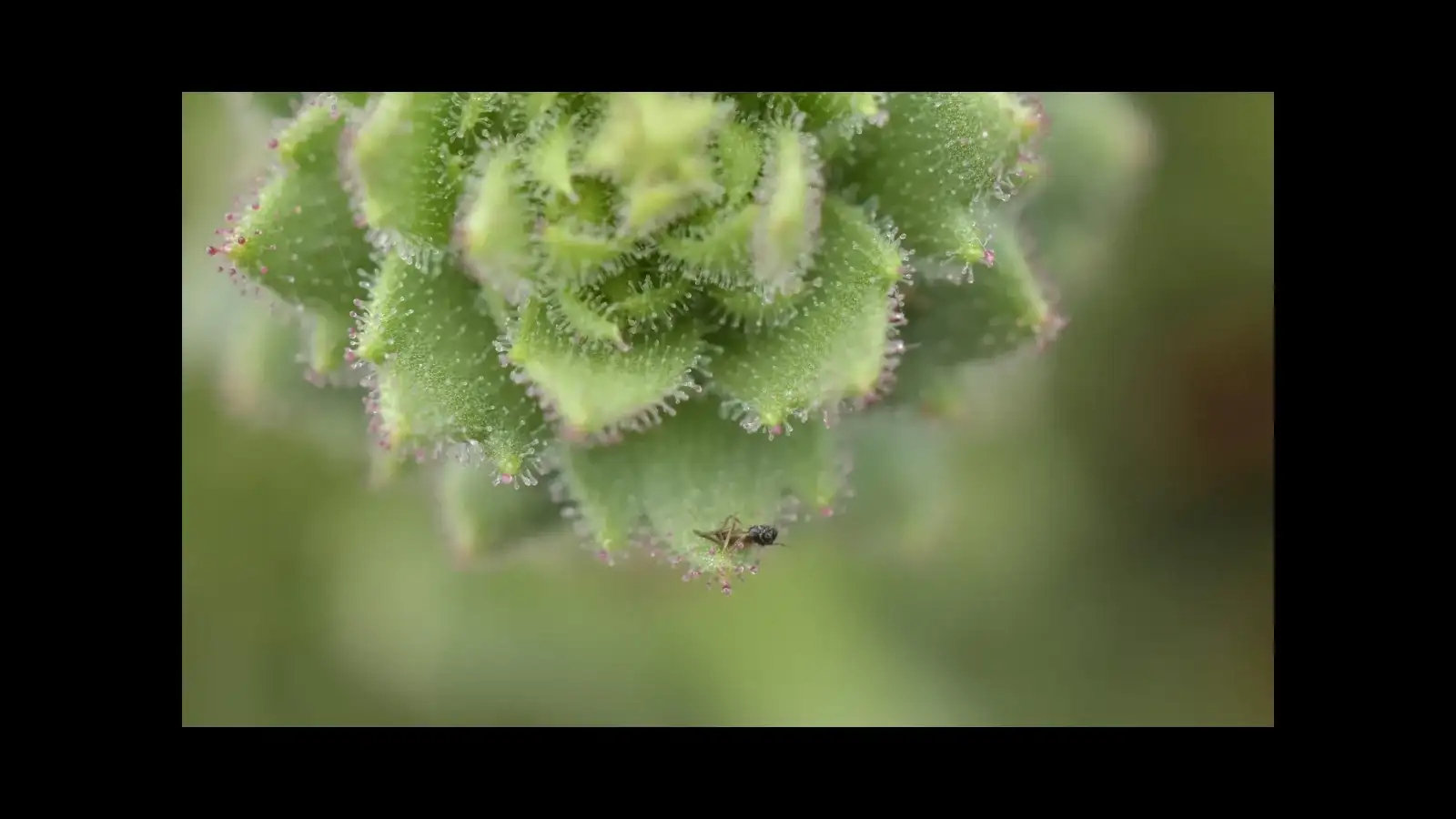
For most insects, a flowering alpine plant might seem an unlikely predator. But researchers have discovered that a delicate wildflower that grows in rocky mountain crevices in southwestern China lures prey onto sticky hairs, digests their bodies and absorbs the nutrients left behind. It is the first confirmed carnivorous plant in its botanical grouping. Its scientific name is Saxifraga candelabrum, and it is a member of a diverse botanical order — a taxonomic category — called Saxifragales that spans more than 2,000 species.
The plant grows on nutrient-poor rock faces in the Qinghai-Tibet Plateau and Hengduan Mountains of China, ranging from central and northern Yunnan Province to southwestern Sichuan Province at elevations of 2,500 to 3,300 metres (8,200 to 10,800 feet). It is covered with sticky reddish glandular hairs that trap small insects.