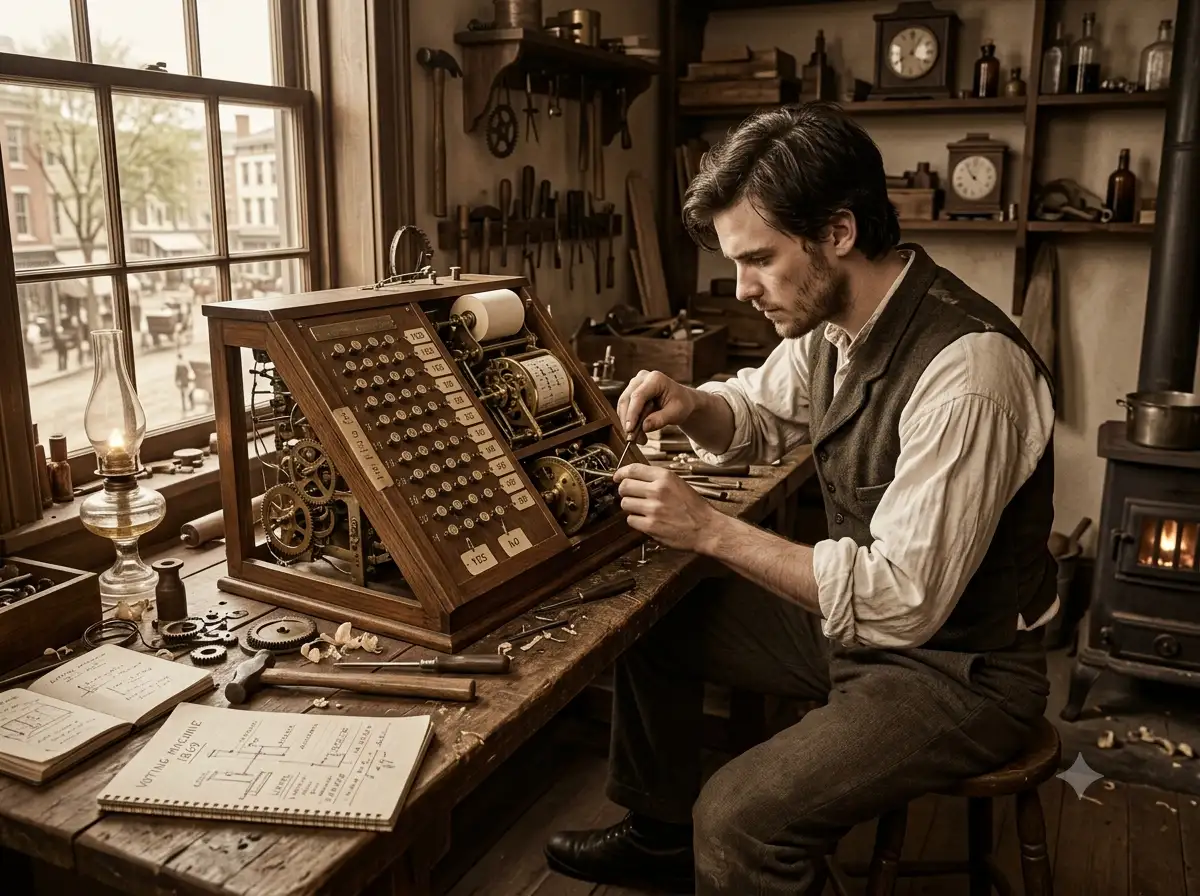
In 1869, an American inventor and businessman created a revolutionary machine to record votes long before electronic voting became part of public discussions. The inventor was Thomas Edison, who was 21 when he developed the device. His first patent was not for the electric light bulb or another invention that later became associated with his name. It was for an electrographic vote-recorder. Edison designed the machine for legislative bodies. It allowed members to record yes or no votes by moving a switch. The system used electricity, a battery and chemically treated paper to record the decisions.