Get all your news in one place.
100's of premium titles.
One app.
Start reading
The Economic Times
The Economic Times

In 1860, a French inventor recorded the human voice on paper 17 years before Edison’s phonograph — but nobody could hear it for almost 150 years until 2008

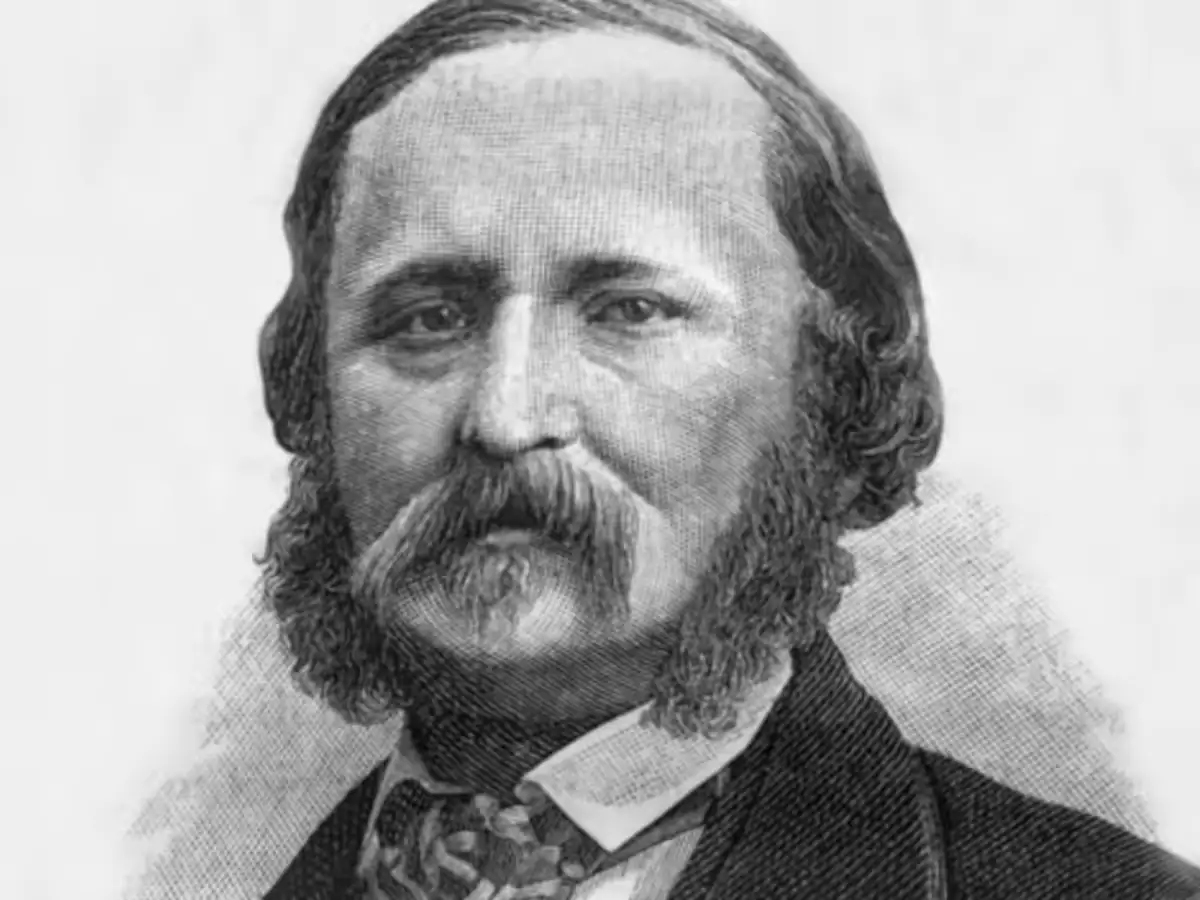
Édouard-Léon Scott de Martinville, a French inventor, created the world's first known recording of the human voice in 1860—17 years before Thomas Edison unveiled the phonograph. Yet the sound remained unheard for nearly 150 years because Scott's invention could record audio visually but could not play it back.

The recording, a rendition of the French folk song "Au clair de la lune," was finally reconstructed into audible sound in 2008 using modern digital technology, reshaping the history of recorded sound and bringing long-overlooked recognition to Scott's pioneering work.

All about Scott de Martinville

Born in Paris in 1817, Scott de Martinville worked as a printer and bookseller. Fascinated by the idea of preserving speech, he sought a way to capture sound in the same way photography captured light. His goal was to create a permanent visual record of spoken words without relying on memory or shorthand.

That vision led him to invent the phonautograph, which he patented in France in 1857.

Unlike Edison's later phonograph, the phonautograph was never designed to reproduce sound. Its sole purpose was to record it.

The device used a horn to collect sound waves, which vibrated a membrane connected to a stylus. The stylus traced those vibrations onto a soot-coated surface, creating visual patterns known as phonautograms.

These phonautograms became the first physical records of human sound ever created. However, because there was no playback mechanism, the recordings remained silent. Scott believed that one day people might learn to interpret the waveforms directly, much as they read written text. That idea never proved practical.

Despite its limitations, the phonautograph attracted the interest of scientists studying acoustics. Researchers used it to analyze sound vibrations and speech patterns, making it an important tool in early sound research.

After Scott's death in 1879, however, both he and his invention faded into obscurity.

For decades, the surviving phonautograms were viewed largely as scientific curiosities. That changed in 2008 when members of First Sounds, a group of audio historians and engineers, used optical scanning and digital reconstruction techniques developed at Lawrence Berkeley National Laboratory to convert the visual recordings into sound.

One of the reconstructed recordings, made on April 9, 1860, captured a brief performance of "Au clair de la lune."

The first playback sounded distorted and unnaturally slow. After corrections were made, researchers were able to hear what is believed to be the oldest surviving recording of a human voice—possibly Scott's own.

The discovery attracted international attention and was reported by The New York Times in March 2008 as the earliest known recording ever played back.

Its significance extended beyond the audio itself. The recording predates Edison's phonograph by 17 years, demonstrating that the human voice had been recorded long before technology existed to reproduce it.

While Edison's invention ultimately transformed sound recording by making playback possible, Scott's phonautograph established the fundamental concept of preserving sound in a physical form.

In recent years, Scott de Martinville's contributions have received wider recognition. His collection of phonautograms was added to the UNESCO Memory of the World Programme, which preserves historically significant documentary heritage.

Today, his work is regarded as a crucial milestone in the evolution of audio recording.

Scott's story highlights a recurring pattern in technological history: groundbreaking ideas are often incomplete when first conceived, only becoming fully appreciated after later innovations make them practical.

Modern technologies—from digital voice recorders and podcasts to speech-recognition systems—can trace part of their lineage to the experiment Scott conducted more than 160 years ago.

When the recording of "Au clair de la lune" was finally heard in 2008, it represented more than a scientific achievement. It corrected a historical oversight and gave voice to a recording that had existed only as lines on paper for nearly a century and a half.

The episode serves as a reminder that some inventions are recognized not when they are created, but when technology finally catches up with them.

Sign up to read this article
Read news from 100's of titles, curated specifically for you.
Already a member? Sign in here
Related Stories
Top stories on inkl right now
One subscription that gives you access to news from hundreds of sites
Already a member? Sign in here
Our Picks
Fourteen days free
Download the app
One app. One membership.
100+ trusted global sources.