Most history-altering discoveries are not made in labs or universities. Sometimes they occur when workers dig up something odd in a farmer’s field, and no one really knows what to make of it.
In the late 1830s, one of the greatest events in the history of American paleontology took place in a muddy marl pit in Haddonfield, New Jersey.

It began with a farmer and some very weird bones
Marl, a soft, calcium-rich sediment, was often dug up and spread across fields as a natural fertilizer at the time. So when farmer John Estaugh Hopkins was digging in his pit and struck something unusual, it wasn’t a planned expedition. There were no scientists, no funding, no research agenda. Just a guy doing his job and seeing something that didn't look right.
For years, the bones remained as a local curiosity. Nobody had the full picture yet.
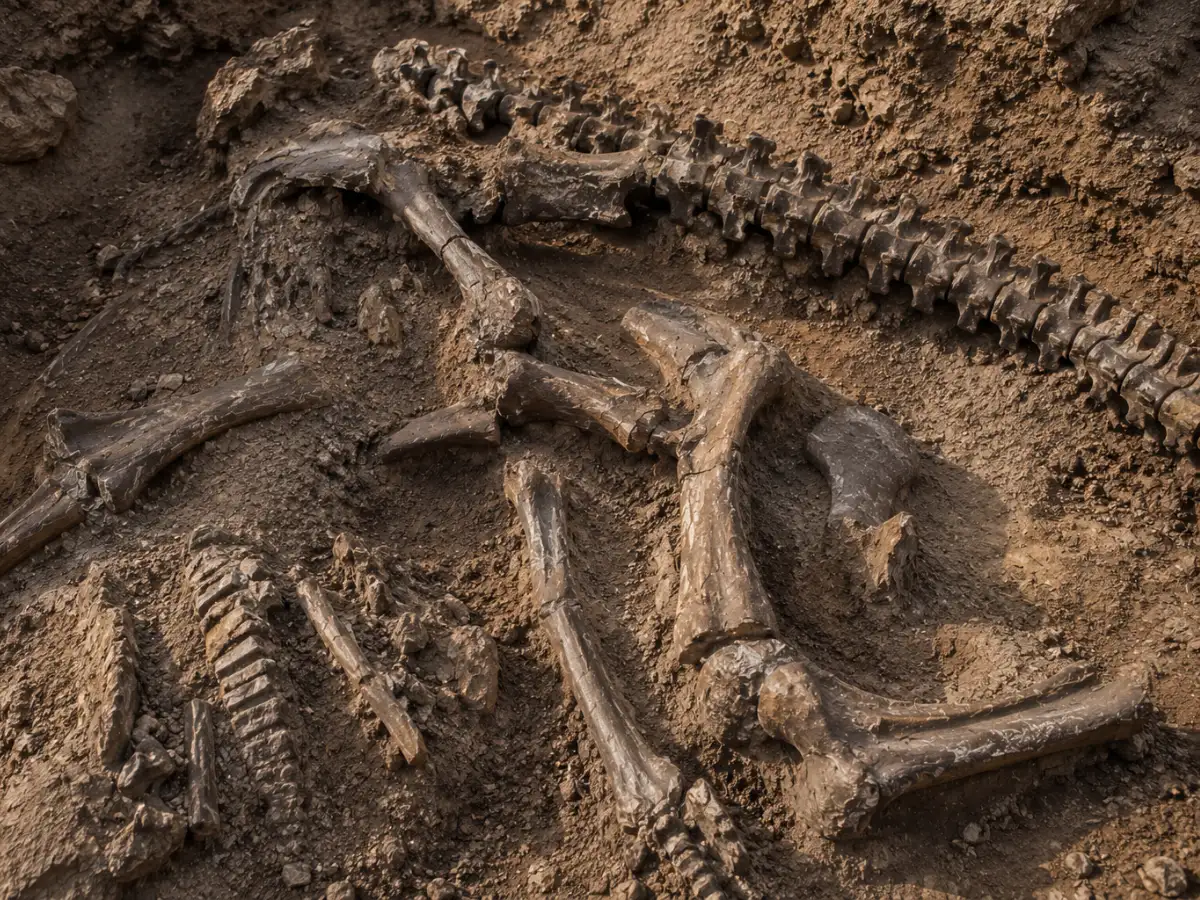
That changed in 1858 when a fossil enthusiast named William Parker Foulke returned to the site and organized a proper excavation. Whatever was coming out of the ground that year was almost unbelievable: an almost complete dinosaur skeleton, without the skull. The specimen, named Hadrosaurus foulkii, was the first nearly complete dinosaur skeleton ever discovered in North America.
Why ‘mostly complete’ was a big deal
We're surrounded by dinosaur images these days, movies, museums, toys, you name it. But in the 1850s, very little was known of what these creatures actually looked like. Most of the fossil finds were only bits and pieces: a tooth here, a rib there. It is hard to conceive of an animal from bits and pieces.