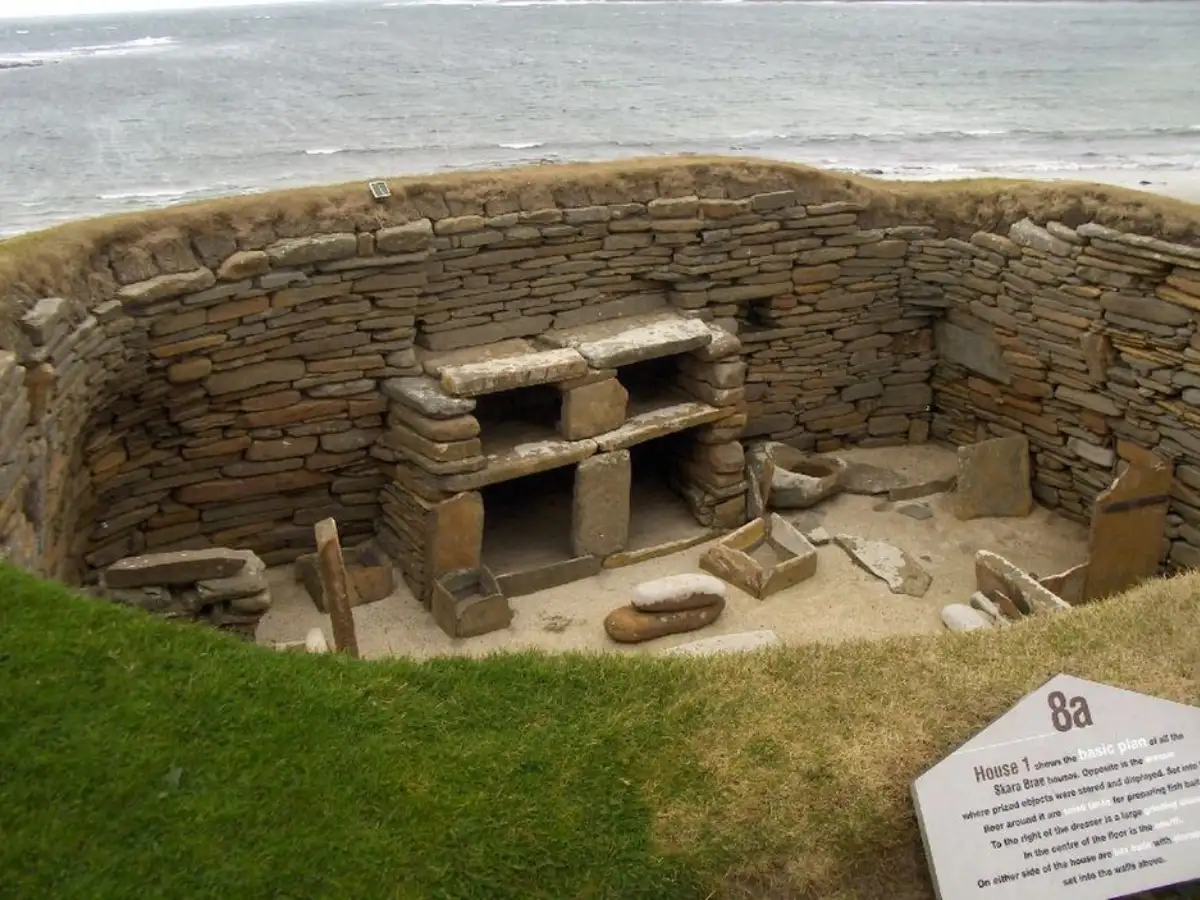
Skara Brae, which has been in existence for many millennia, lay buried under layers of shifting sand dunes on the Orkney Islands off the coast of Scotland until 1850. This archaeological site, which lacks fortifications or any form of protection from enemies, armies, and natural destruction, managed to be intact due to the efforts of nature to bury it. The ruins came to light when a severe storm washed away the dunes and uncovered ancient stone buildings that had been buried for over 5,000 years.
The discovery of Skara Brae in 1850 resulted in one of the best-preserved Neolithic villages discovered in Europe. The University of the Highlands and Islands states that Skara Brae is crucial in telling the heritage story of Orkney.