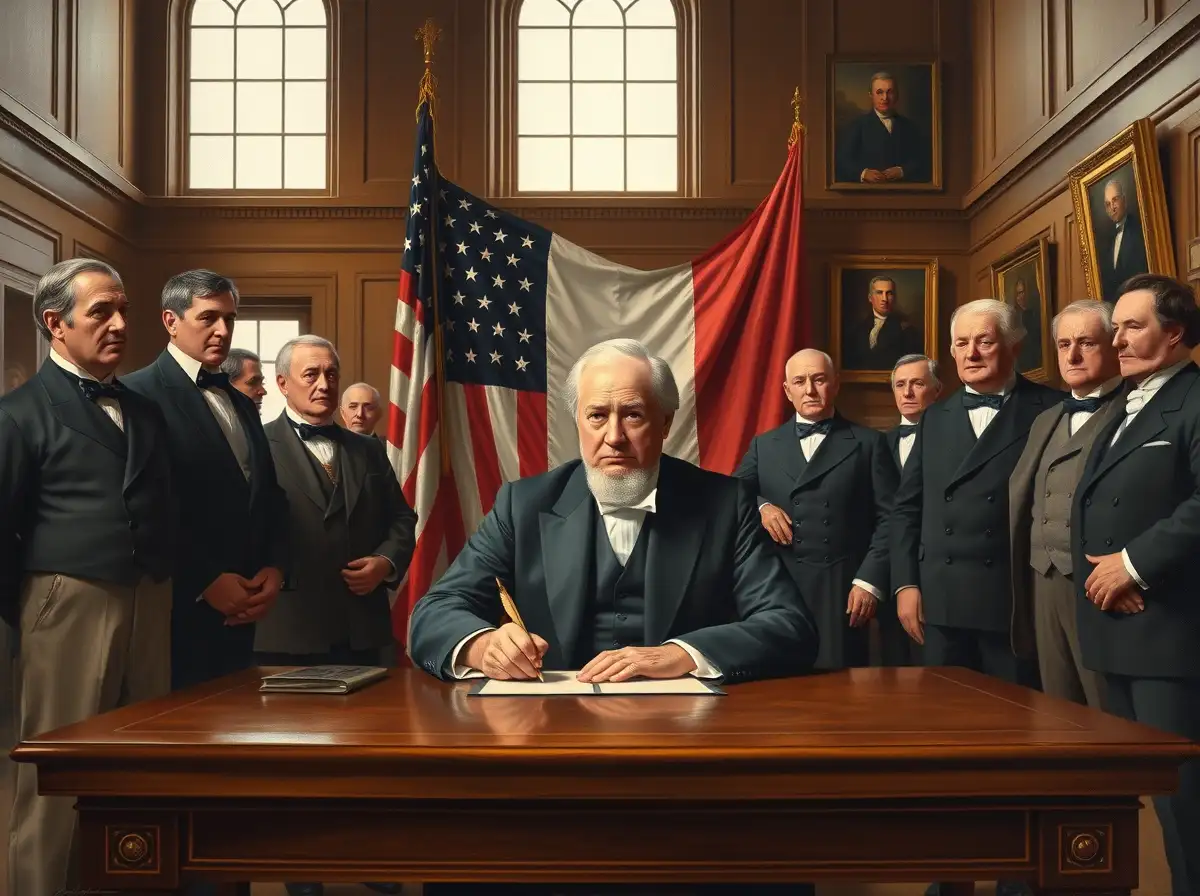
In 1850, California became the 31st state of the United States, marking a major turning point in American history and dramatically expanding the nation’s presence along the Pacific Coast. President Millard Fillmore signed the legislation admitting California on September 9, 1850, as part of the complicated political settlement known as the Compromise of 1850. California’s admission came only a few years after the United States acquired the territory from Mexico following the Mexican-American War. Its rapid transition from Mexican territory to American state reflected the extraordinary changes reshaping the country during the mid-19th century.
The transformation accelerated after gold was discovered at Sutter’s Mill in January 1848. News of the discovery spread rapidly, triggering the California Gold Rush and attracting hundreds of thousands of people from across the United States and around the world. San Francisco grew from a small settlement into a major port, while mining communities appeared throughout the Sierra Nevada. The population explosion made California’s political future an urgent question. Rather than progressing through the usual territorial stage, California moved quickly toward statehood and drafted a constitution in 1849.