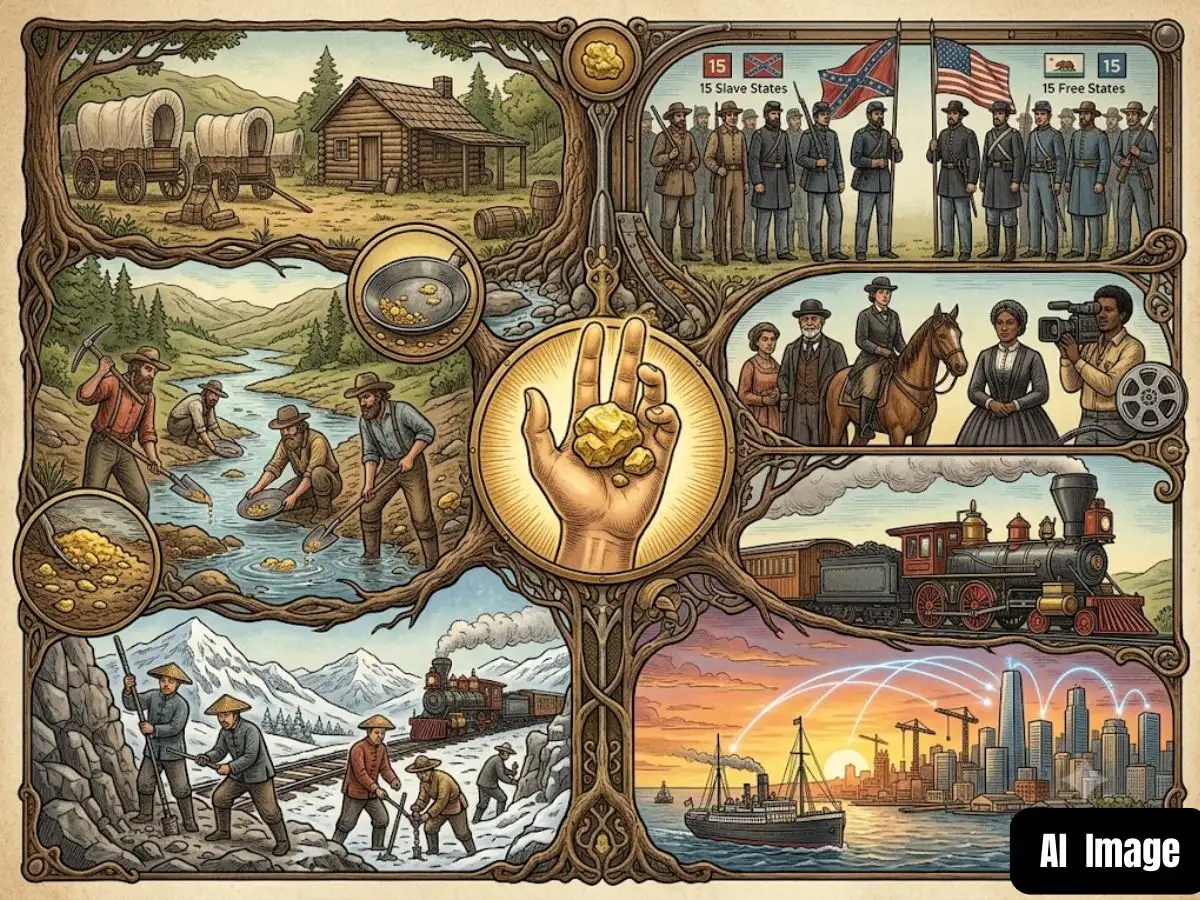
It was just before sunrise on January 24, 1848, when a carpenter working on a sawmill near Coloma, in the foothills of California's Sierra Nevada, noticed something glinting in the water below. He bent down, picked it up, and turned it over in his palm - Gold.
The carpenter's name was James Marshall, and he couldn't have known it at the time, but that small, glittering find would set off one of the most consequential chain reactions in American history, one that historian Nathaniel Philbrick argues reshaped not just California, but the entire trajectory of the young United States.