
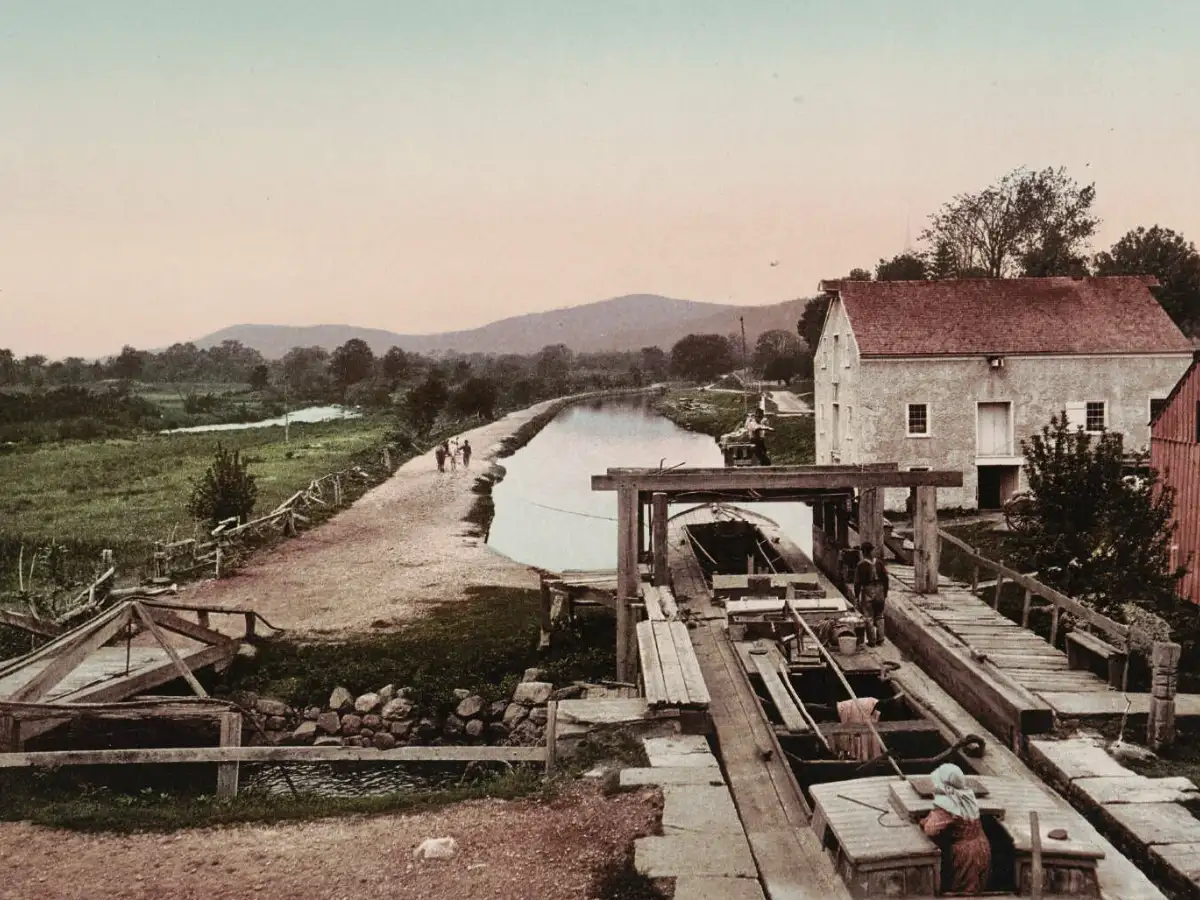
Imagine floating down the river in the 1830s. When you hit a steep incline instead of a barrier, your boat climbs right up. There's no need to offload cargo or wait for a set of portages. The boat carrying passengers and freight just casually climbs the hillside on a set of rails, its journey powered by water, and glides back into the canal on the other side as though the hill was never there. That's not a scene from a steampunk novel, but rather the Morris Canal, found scattered across the hills of northern New Jersey. This forgotten engineering feat was abandoned decades after its construction, and for most residents of New Jersey, the canal might as well not exist.
According to the American Society of Civil Engineers, the Morris Canal's innovative use of a hydraulic inclined plane made it possible for boats to traverse up to a hundred feet in elevation on the other side of an artificial water barrier within just fifteen minutes. For the residents of the United States, who largely knew canals through the Erie Canal, a 363-mile waterway that relied on a system of 83 conventional locks to climb more than 500 feet of elevation, the Morris Canal is the embodiment of the forgotten wonders of American engineering.














