
Get all your news in one place.
100's of premium titles.
One app.
Start reading
Space
Space
Science
Stefanie Waldek

In 1776, the moon was a clock, a calendar and a streetlight — and it was 31 feet closer to Earth

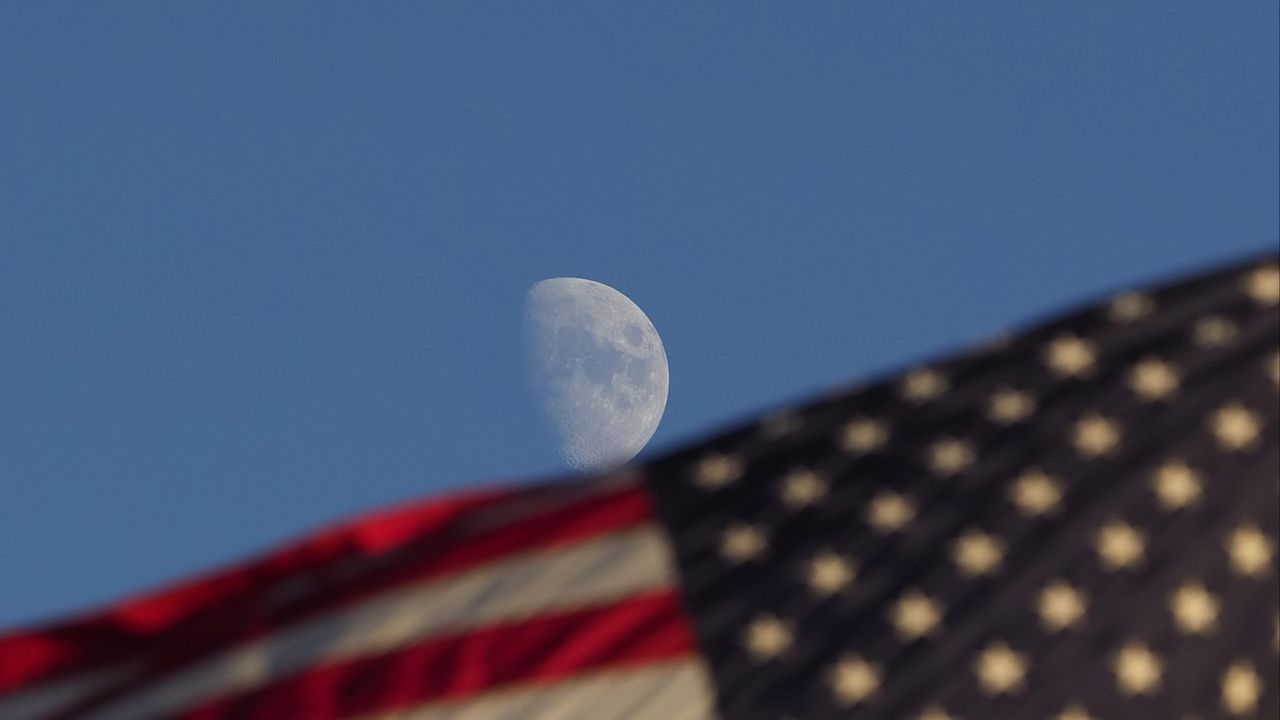
A photo showing the moon in a blue sky. On the lower half of the screen, there's an American flag.

After Americans declared independence on July 4, 1776, a waning gibbous moon rose in the night sky. To the people celebrating the birth of a new nation, it would have looked much the same as the moon we see today. But there was one subtle difference: 250 years ago, the moon was about 31 feet (9.4 meters) closer to Earth than it is now.

"The moon is currently drifting away from Earth at a rate of about 3.8 centimeters [1.5 inches] per year, which is coincidentally roughly the same speed at which human fingernails grow," says Seth McGowan, president of the Adirondack Sky Center & Observatory in Tupper Lake, New York.

Sign up to read this article
Read news from 100's of titles, curated specifically for you.
Already a member? Sign in here
Related Stories
Top stories on inkl right now
One subscription that gives you access to news from hundreds of sites
Already a member? Sign in here
Our Picks
Fourteen days free
Download the app
One app. One membership.
100+ trusted global sources.