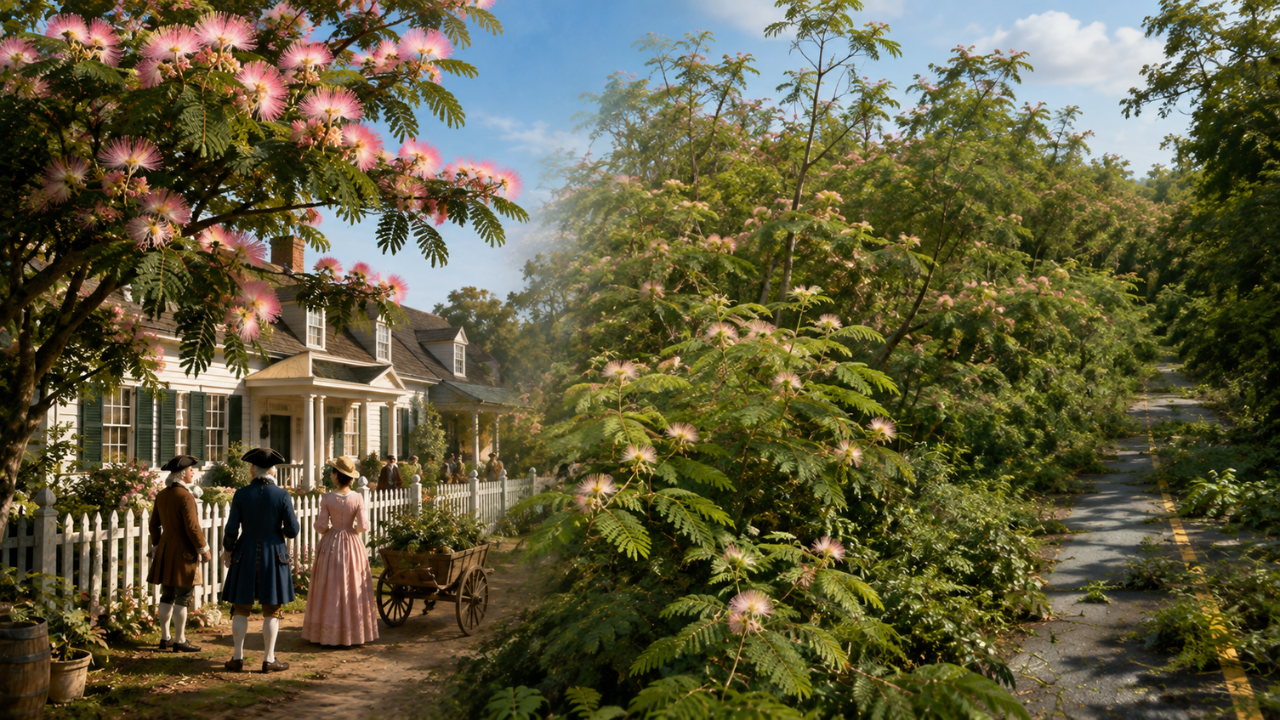
Around 1745, mimosa arrived in the United States as an ornamental tree, prized for its fragrant pink flowers, delicate foliage and unusual habit of folding its leaves at night. What began as a garden favourite, however, did not stay neatly within gardens. Albizia julibrissin escaped cultivation and gradually established itself along roadsides, clearings, flood plains and other disturbed areas across parts of the southern and eastern US. Its ability to grow quickly, produce large numbers of seeds and resprout after being cut has helped it persist and spread, while its seed pods can be moved by wind and water. In areas where mimosa forms dense stands, it can compete with native trees and shrubs and alter habitat along forest edges and waterways. The tree is now considered invasive in parts of the south-east, turning a once-popular ornamental into a persistent landscape management problem.
Get breaking news anytime, anywhere. Download the TOI app now!