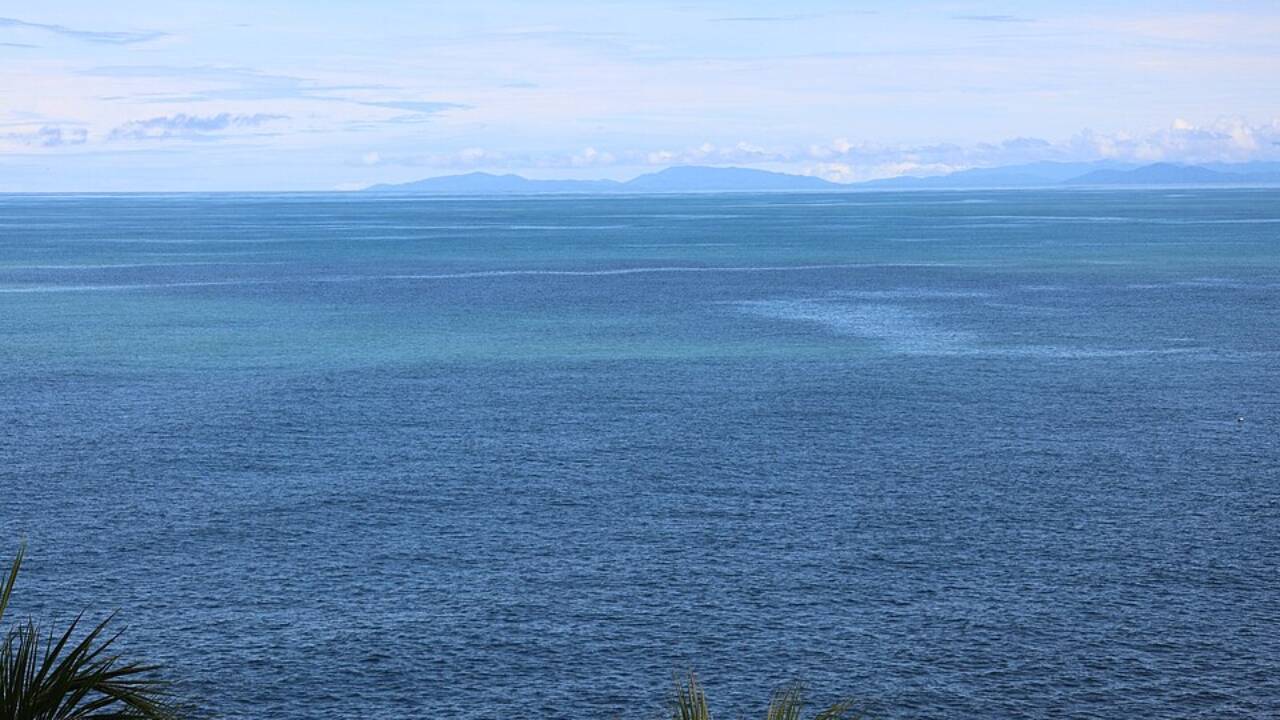
In November 1520, when Portuguese explorer Ferdinand Magellan came out from the storm-tossed waters of the strait which now bears his name, he encountered a vast expanse of calm sea. According to the U.S. National Oceanic and Atmospheric Administration (NOAA) , the contrast with the violent Atlantic conditions Magellan’s fleet survived was so striking that he named the ocean Mar Pacifico, which means ‘peaceful sea.’ Notably, more than five centuries later, the name remains attached to the planet’s deepest and largest ocean, even though the Pacific is now known for powerful typhoons, earthquakes and tsunamis. However, Magellan’s momentary encounter with tranquil Pacific waters became one of history’s most enduring geographical names.

A crossing that shaped Earth’s geography
Get breaking news anytime, anywhere. Download the TOI app now!
According to NOAA, Magellan began his expedition in 1519 under the Spanish crown in search of a westward route to the Spice Islands. After navigating the hazardous passage at South America’s southern tip, known today as the Strait of Magellan, his ship entered an unfamiliar ocean on 28 November 1520, and as the waters happened to be remarkably calm, he chose to name it Mar Pacifico. Unaware that they had entered the largest ocean basin on Earth, they believed Asia being close at hand and encountered months of open-water sailing before reaching Guam in 1521.
Modern science highlights how misleading that first impression was. According to NOAA Ocean Exploration, the Pacific covers more than 155 million square kilometres, spans over 30% of Earth’s surface and contains more than half of the planet’s water. Furthermore, it is the planet’s deepest ocean, with an average depth of approximately 4,000 metres, while Challenger Deep in the Mariana Trench descends nearly 11,000 metres, thus making it the deepest known point on Earth.
Magellan’s wrong first impression of the Pacific
It is worth noting that despite its name, the Pacific is among the most geologically active places on the planet. According to NASA and NOAA, the ocean is encircled by the Pacific Ring of Fire, which is a vast belt of subduction zones, volcanoes and earthquake faults responsible for the majority of the Earth’s earthquakes and volcanic eruptions. Notably, the same ocean that appeared calm to Magellen, regularly generates catastrophic tsunamis and hosts some of the world’s most powerful tropical cyclones, including typhoons that usually affect East and Southeast Asia and hurricanes in the eastern Pacific.
Furthermore, historians have pointed out that Magellan was not the first European to see the Pacific. According to NOAA, Spanish explorer Vasco Núñez de Balboa crossed the Isthmus of Panama in 1513 and became the first European known to view the ocean from the Americas, naming it the Mar del Sur, or South Sea. Magellan’s achievement, however, was different, as he became the first European to navigate across the ocean from east to west, and his name for it ultimately endured in maps and maritime history. Notably, Magellan himself never completed the first circumnavigation of the Earth, as he was killed in the Philippines in 1521 and the expedition was completed under Juan Sebastián Elcano, who returned to Spain in 1522. The name Pacific survived long after the voyage and became one of the few geographical names born from a fleeting personal impression.