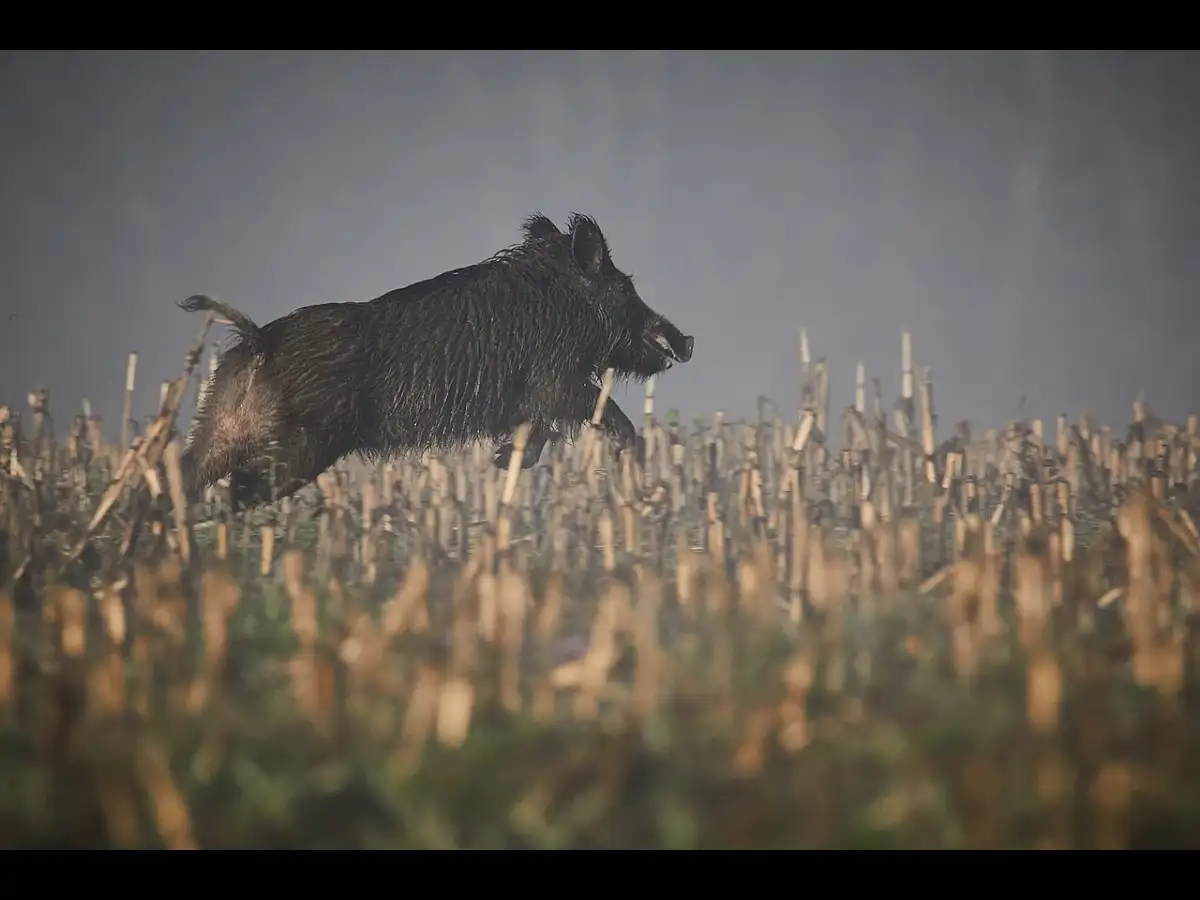
For years, wild pigs have been viewed as one of the most destructive invasive animals in North America. They damage forests, farmland and property by digging through soil and searching for food. But a new study suggests their impact on forest ecosystems may be more complicated than previously believed.
Researchers studying forests in the eastern United States found that areas where feral pigs were present could have fewer invasive, non-native plant species than forests without the animals. The findings, published in the journal Proceedings of the Royal Society B , suggest that the same rooting behavior that makes wild pigs a major nuisance may also help suppress some invasive plants.

Wild pigs have long been seen as a threat
Wild pigs have been present in North America for centuries. They were introduced by early Spanish explorers in the 1500s, and their populations have expanded significantly over time.
Their reputation has largely been shaped by the damage they cause. Wild pigs use their powerful snouts and tusks to dig through the forest floor in search of roots, insects and other food. The process can leave large areas of overturned soil and disturb vegetation.
Because of this behavior, conservationists and land managers have often treated feral pigs as a serious threat to native ecosystems.
But the new research suggests that their effects may not always be straightforward.
How rooting could affect invasive plants
The study, titled Divergent effects of native deer and alien wild pigs on forest understoreys , used extensive forest inventory data along with large-scale mammal camera-trap networks.
Researchers examined the relationship between the presence of wild pigs and vegetation in forests. Their findings indicated that forests where feral pigs were detected sometimes had fewer invasive plant species.
One possible explanation is the pigs' rooting behavior.
Unlike animals that mainly browse on leaves, wild pigs physically disturb the soil as they search for food. This repeated digging can uproot plants and prevent some species from becoming established.
Many invasive plants can spread effectively when forest floors remain relatively stable. Repeated disturbance by pigs may therefore make some areas less suitable for those plants.
In this sense, wild pigs can act as a kind of ecosystem engineer, changing their surroundings through their feeding behavior.
Native deer produced a different effect
The researchers also compared wild pigs with white-tailed deer, a native species in North America.
Deer generally feed by browsing on vegetation, including native tree seedlings and other plants. By selectively consuming native vegetation, deer can alter the composition of the forest understorey.
That can sometimes create opportunities for invasive plants to spread.
The contrast is important because it shows that the ecological impact of an animal cannot always be determined simply by whether it is native or introduced.
A native species can have effects that benefit invasive plants, while an introduced species can sometimes suppress them.
The study does not make wild pigs beneficial
The findings do not mean that feral pigs should be considered harmless or that their populations should go unmanaged.
Wild pigs remain a major environmental and agricultural problem. Their rooting can destroy vegetation, disturb soil, damage crops and affect habitats. They can also create problems for landowners and wildlife managers.
Instead, the research points to a more complicated relationship between wild pigs and forest ecosystems.
The animals may simultaneously cause significant environmental damage while reducing the presence of certain invasive plants in particular locations.
That distinction could become important for conservation efforts.
What the findings could mean for forest management
The study challenges the simple idea that every introduced species has only negative effects and every native species has only positive ones.
Forests are complex ecosystems in which different species interact in ways that can produce unexpected outcomes. Removing one animal can sometimes create changes elsewhere in the ecosystem that are difficult to predict.
For conservation managers, the findings could encourage a closer look at these trade-offs when developing strategies for controlling feral pigs and invasive plants.
The researchers' findings do not erase the need to manage wild pig populations. Instead, they suggest that management decisions may need to consider both the damage caused by pigs and the ecological effects of their presence.
As forests continue to change because of climate change, human development and shifting environmental conditions, understanding these interactions could become increasingly important.
The study ultimately offers a surprising reminder that nature does not always fit neatly into categories such as "good" and "bad." An animal widely regarded as a destructive pest can have an unexpected ecological effect at the same time.
For wild pigs, the digging that turns parts of a forest floor upside down may be causing damage in one sense while making it harder for some invasive plants to take hold in another.