
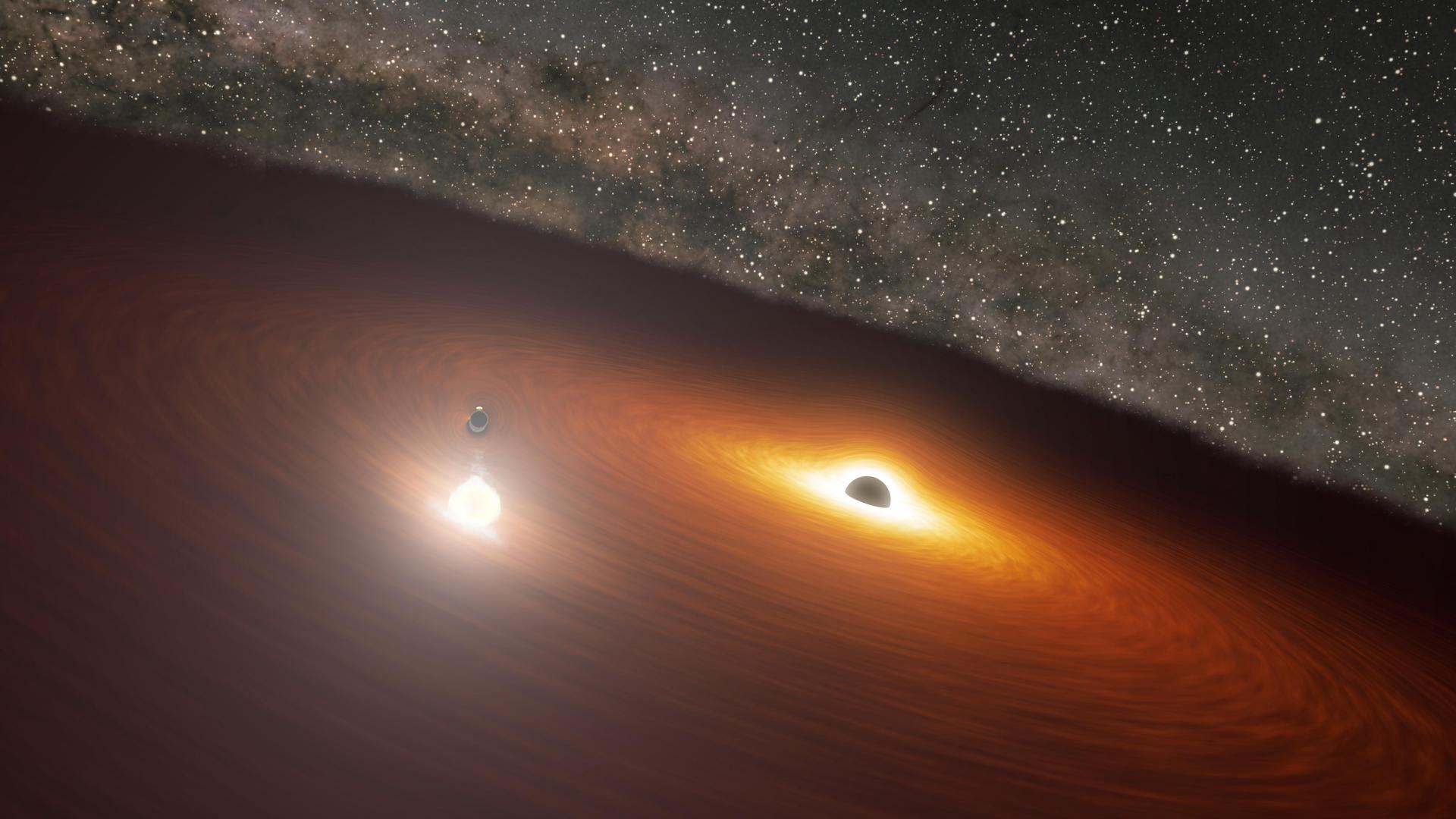
Astronomers have long been puzzled by supermassive black holes that seem to have fully formed in the earliest epochs of the universe. Now, a new paper suggests that these monster black holes may have emerged at the dawn of the Big Bang as tiny, primordial "seeds."
Almost all galaxies host supermassive black holes in their cores. They range in size from about 100,000 times the mass of the sun to billions of solar masses. Most surprisingly, observations with the James Webb Space Telescope (JWST) have revealed that these giants existed at the very edge of the cosmic dawn, just a few hundred million years after the Big Bang, right after the first stars and galaxies started forming.













