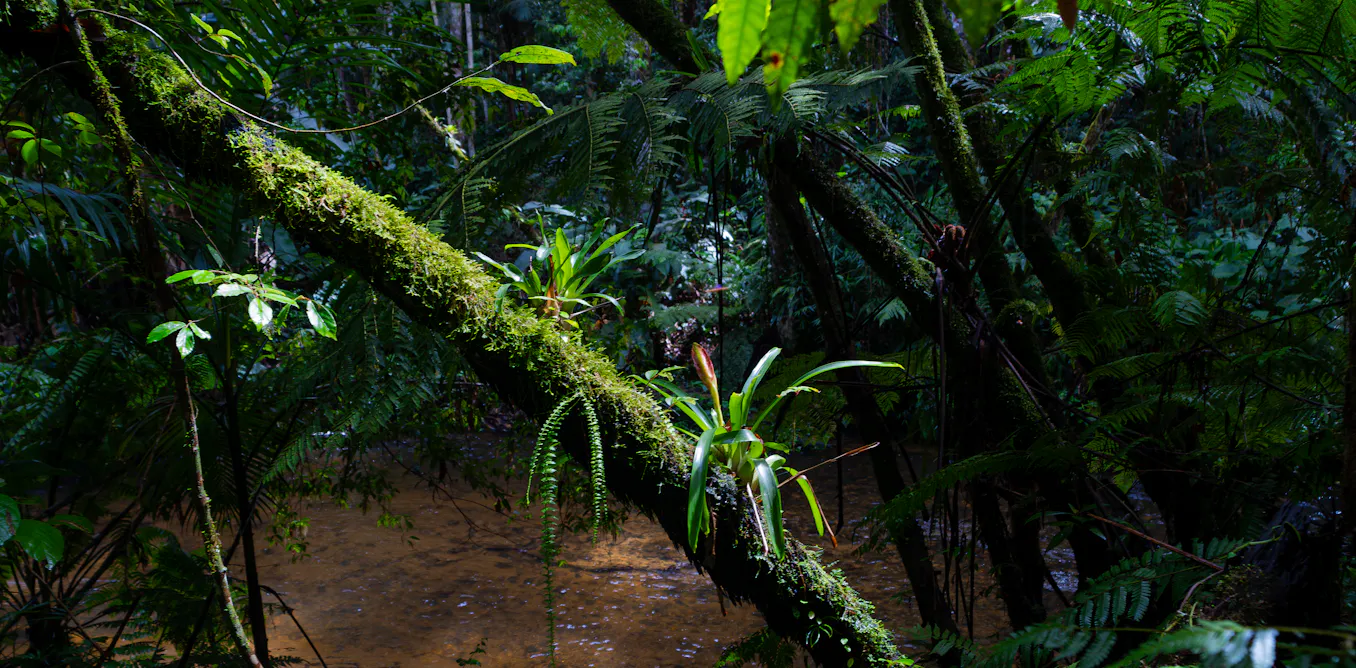
The tropics cover less than one-third of the Earth’s surface, but are home to more than half of all known species. Forests, savannas, grasslands, deserts: a vast array of environments stretches along the planet’s equatorial belt. This diversity, however, is not static. It is the result of millions of years of changes that have reshaped the tropical landscape time and again.
Our team at the Remote Sensing Center at the Federal University of Minas Gerais (UFMG) in Brazil reconstructed the distribution of tropical vegetation over the past 3.3 million years and projected how it may experience further changes due to climate change by 2050. The study was published in the Journal of Biogeography.