Get all your news in one place.
100's of premium titles.
One app.
Start reading
Euronews
Euronews
Eleonora Vasques

IMF warns against further relaxation of euro area fiscal rules

Euro area countries should not further relax fiscal measures to tackle the current energy shock but rather improve their budget balances, with additional effort asked of high-debt countries, the International Monetary Fund (IMF) has warned.

"Further relaxation of fiscal rules risks undermining the credibility of the framework and placing debt on an even higher path," the IMF wrote in its annual assessment of the euro area economy, released on Thursday.

An excessive deficit procedure of 1.5 percent is already in place across the bloc, allowing for defence spending, but EU countries most impacted by the energy crisis are asking for a further relaxation of fiscal rules. As the Middle East war rages on, European importers heavily relying on oil and gas are being hit particularly.

The latest economic forecasts have shown the crisis starting to bite. Inflation is rising and growth is slowing, while the European Central Bank announced on Thursday a raise of interest rates by 0.25% – likely not for the last time this year.

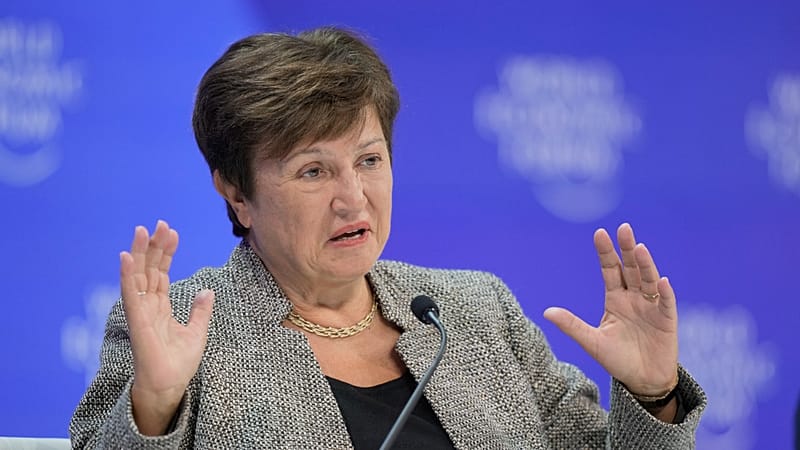
“Shock upon shock has led to fiscal action to defend consumers and businesses, and that has created, unfortunately, an expectation that when there is a shock, there will be support extended," IMF Managing Director Kristalina Georgieva told journalists during a press briefing.

"We have been cautioning that we are in a more shock-prone world. We should expect that there will be more shocks to come, and we should be very careful how we deploy scarce public resources, recognising that this is not going to be the last time when this would be necessary.”

High-debt countries ask for flexibility

Italian Prime Minister Giorgia Meloni is at the forefront of those asking for a relaxation of rules. In a letter to European Commission President Ursula von der Leyen in late May, Meloni asked to use further flexibility to tackle the energy crisis.

In response, the European Commission announced last week that flexibility can only be granted within the current framework, allowing a 0.3 percent spending of the 1.5 percent already allocated to defence to be transferred to energy.

Georgieva told journalists that the IMF "would very much like to see countries being disciplined in how they use that flexibility, especially countries that have high deficit levels".

The IMF has welcomed the Commission's latest moves and spelled out what high-debt countries like Italy should do.

"Structural fiscal adjustment over the medium term remains imperative," the Thursday statement reads, asking euro area governments to reduce their deficits – and increase their surpluses if they have them.

Excluding Germany, the IMF recommends "improving the structural primary balance by about 3 percentage points of GDP between 2025 and 2031 – an additional 1.3 percentage points on top of the baseline, largely for countries with high debt levels".

In other words, the IMF is calling for structural fiscal consolidation from euro area countries with additional effort for high-debt countries, which need to do even more than what was already foreseen.

"Fiscal adjustment will require a comprehensive and credible strategy that combines expenditure reprioritisation, improved spending efficiency, and structural measures such as entitlement reform, together with growth-enhancing reforms to boost revenue," the statement says.

Sign up to read this article
Read news from 100's of titles, curated specifically for you.
Already a member? Sign in here
Related Stories
Top stories on inkl right now
One subscription that gives you access to news from hundreds of sites
Already a member? Sign in here
Our Picks
Fourteen days free
Download the app
One app. One membership.
100+ trusted global sources.