Movement of oil tankers in the Strait of Hormuz remains largely unchanged despite the US attack on Iran over the weekend and the treat of closing the channel, critical to the world’s energy supplies.
The Joint Maritime Information Centre which issues daily alerts to the shipping industry in the region based on naval information, said the threat level was “elevated” with “severe consequences for shipping” the the Iranian parliament’s threat to close the Strait is carried out.
In Monday afternoon’s alert it said there were “persistently higher levels of electronic interference” from the southern Iranian port of Bandar Abbas and in the Arabian Gulf which “seems to be excessively affected”.
It noted that 67 vessels travelled eastward on Sunday and 50 westward, higher than the June average of 114 vessels daily sailing through the Strait but consistent wth last Monday’s traffic of 65 vessels heading out of the Arabian Gulf and 53 vessels entering.
Closing post
Time to wrap up…
The financial markets have reacted pretty calmly to the US attacks on Iran’s nuclear facilities.
Although oil did spike by 5% when trading began today, that jump quickly unwound.
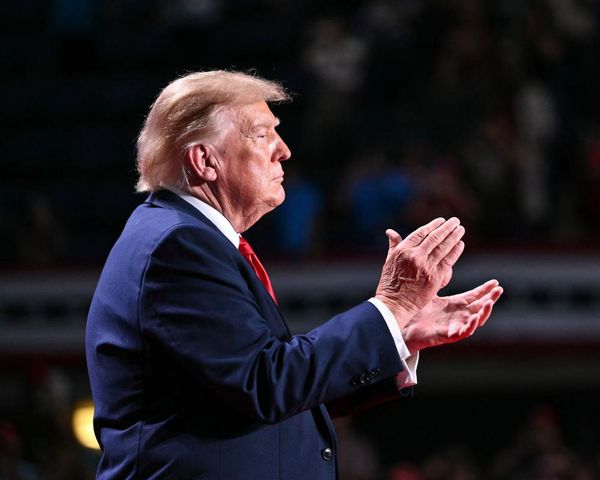
Indeed, crude oil prices are now down around 1% today, after US president Donald Trump called for cheaper prices, saying:
EVERYONE, KEEP OIL PRICES DOWN. I’M WATCHING! YOU’RE PLAYING RIGHT INTO THE HANDS OF THE ENEMY. DON’T DO IT!
Trump also stepped up his call for the US to increase its oil production, writing:
“To the Department of Energy: DRILL, BABY, DRILL!!!” And I mean NOW!!!”
Economists have warned that oil prices could jump if supplies from the gulf region were disruped. Goldman Sachs estimated that disruptions to shipping through the strait of Hormuz could push the price of Brent crude over $100 per barrel, up from $76 per barrel today.
Jim Reid of Deutsche Bank warned that maintaining the accessibility of the Strait of Hormuz is “pivotal to the global economic outlook”, explaining:
Despite being just 21 nautical miles wide at its broadest point, the strait handles a significant share of Middle Eastern oil exports. It features two narrow 2-mile-wide shipping lanes, separated by a 2-mile buffer zone.
The head of the International Monetary Fund warned that US strikes on Iran could damage global economic growth.
Director Kristalina Georgieva told Bloomberg TV that the IMF was watching energy prices closely, warning a rise in oil prices could have a ripple effect throughout the global economy.
She explained:
“There could be secondary and tertiary impacts. Let’s say there is more turbulence that goes into hitting growth prospects in large economies – then you have a trigger impact of downward revisions in prospects for global growth.”