
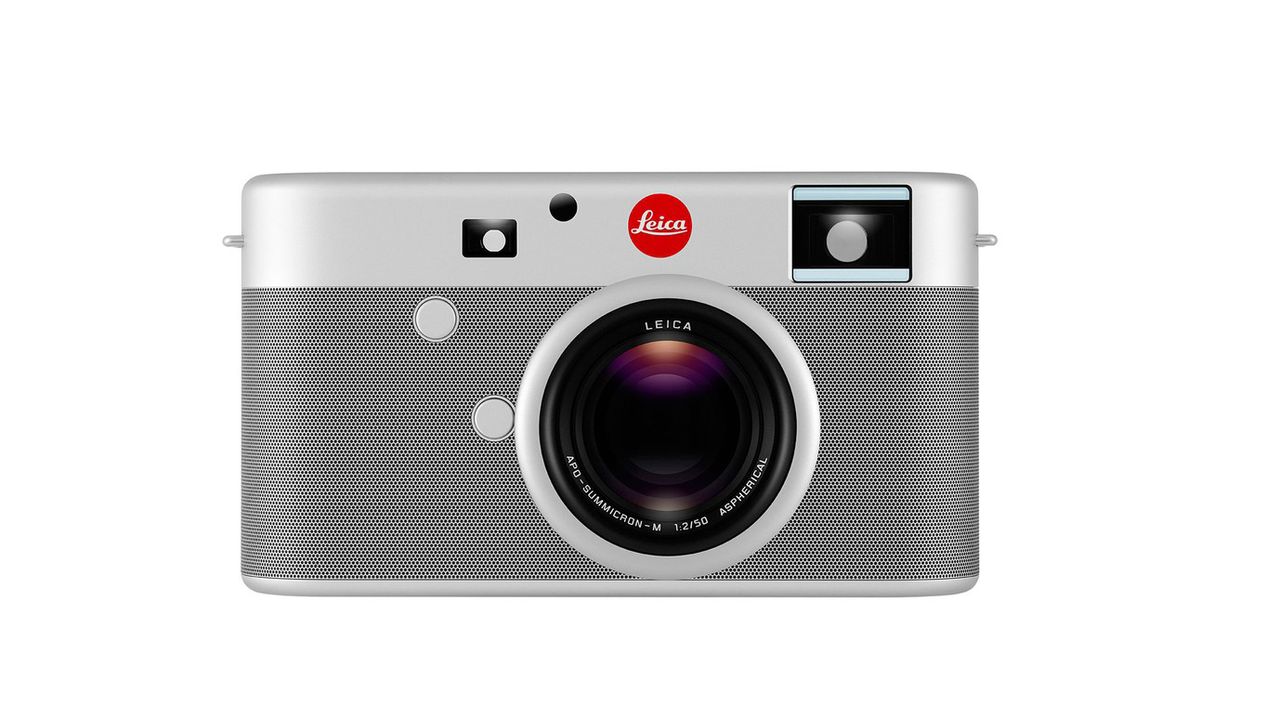
Few collaborations in modern photographic history feel as culturally significant as the moment that legendary Apple mastermind, Jony Ive, teamed up with fellow industrial designer Marc Newson to turn their attention to designing a Leica rangefinder camera.
In one of the latest releases from the Leica archive seen on TikTok, we’re given a rare glimpse at the prototype of the Leica M (Red): a camera designed not merely as an object of desire but as a philanthropic statement.

Created to support (Red) – the foundation established to combat AIDS in Africa – the camera represents a convergence of design, heritage and humanitarian purpose. It is a reminder that photography, at its best, does not just document the world, but can actively help change it.
You can view this camera in all its glory below:
What strikes me most watching the archival footage is how unmistakably "Ive" the camera feels.
The crisp white and off-grey two-tone colorway is both clinical and warm, futuristic, yet reverent. The hard industrial edges of the Leica M240 platform have been softened and rounded, transforming the familiar geometry of a rangefinder into something that feels sculpted rather than assembled.
It is still unmistakably a Leica, but it carries the visual language of Apple’s golden era – smooth transitions, uninterrupted surfaces and a design ethos built around restraint.

The top plate tells the real story. The shutter dial and shutter release are inset cleanly into the body, sitting flush within the surface as if carved from a single block. There is no traditional Leica engraving on the left-hand side, no overt branding to distract from the purity of the form.
This absence feels intentional, almost defiant. Ive understood something that many designers miss: true luxury does not need to announce itself; the silence of the branding speaks louder than any red dot ever could.
Yet, for all its aesthetic purity, this was never simply about design. When the Leica M (Red) went under the hammer in 2013, it achieved a staggering $1.8 million at auction. That figure alone elevates it beyond collectible status and into cultural artifact territory.
It became one of the most valuable cameras ever sold – not because of megapixels or specifications, but because of what it represented. Design leveraged for good. Heritage aligned with humanity.

For me, this prototype footage reinforces something I’ve long believed about Leica: when it dares to collaborate beyond photography’s traditional boundaries, magic happens.
The Leica M (Red) was not about incremental innovation or spec-sheet superiority. It was about reimagining a classic tool through the lens of one of the world’s most influential designers, and channeling that creativity toward a cause that matters.
In an era obsessed with upgrades and iteration, it stands as proof that sometimes the most powerful cameras are the ones built with purpose.