
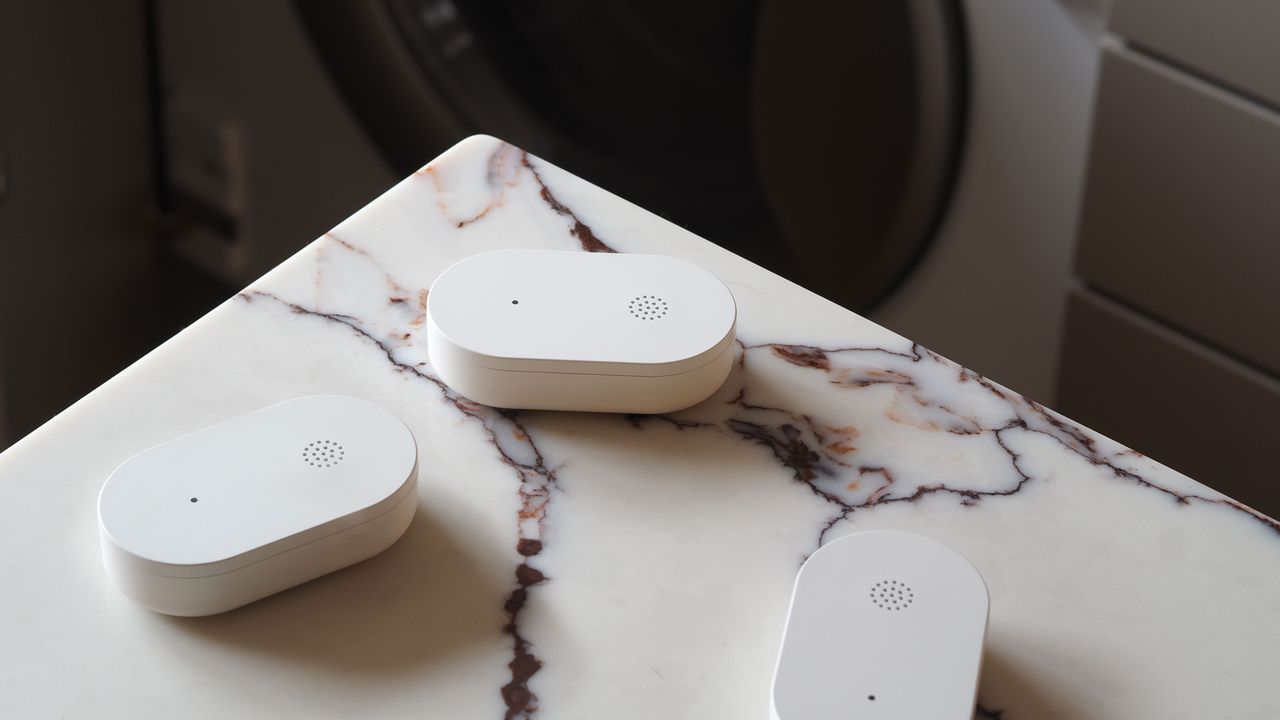
Water can be such a destructive force in the home that, often, the thought of an undetected leak keeps me up at night. And for me, it's not an unfounded fear. I've had suspicious plumbing under kitchen sinks warp cabinetry; radiator valves burst open, only to be noticed when water started dripping through the ceiling; and a problem with an intermittently leaking shower that's so hard to detect exactly where it's coming from. Of course, like so many things, you get the problem 'fixed', but I have never really taken any precautionary measures, so I could catch it before it happens again. Well, until scoping out IKEA's smart home sensor collection and spotting the IKEA KLIPPBOK Water Leak Sensor for a princely sum of £7. I could instantly think of a hundred places in my home where a water leak sensor would offer peace of mind, but how exactly I could use them would depend on how exactly they work. So, I popped along to an IKEA on my lunch break (thank you, Oxford Street store), and picked up a few to try. Here's what I found out, and the hacks you can use to make these sensors work better for you.

How IKEA's Water Sensor Works

Like the rest of IKEA's newest smart sensor range, IKEA's KLIPPBOK is Matter compatible, which means it should be able to connect to your existing smart home system. However, this water leak sensor needs a bit of hub support to work properly. You'll either need IKEA's DIRIGERAsmart hub, or you'll need a compatible hub for your smart home network that includes a 'Thread Border Router'. Many of them already do: for Apple this includes everything from Apple HomePod Mini to AApple TV 4K; while for Amazon, it's Amazon Echo Hub or the Amazon Echo Show 10or above should do the job. The water sensor itself works by detecting water's presence using the metal contacts on the base of the device. When it does, it'll not only send an alert to your hub and connected devices, but also emit a loud noise itself that is likely more than enough to alert you to the problem. However, unlike some other water leak sensors, including the SONMOFF Zigbee Water Leak Sensor from Amazon, IKEA's version doesn't have an extender cable, so you'll need to be thoughtful and purposeful in how you position it to best detect leaks.
Water Sensors With Extender Cables
How to Best Use IKEA's Water Sensor
I'm not in the middle of any water-based home emergencies right now, but I did have a little play with these sensors to best figure out how to use them. Here's my advice. Place on level, low surfaces Even small drips tend to cause a wide spread of water across a surface, but for the positioning of this water sensor to work, you'll need to play to the strengths of the bottom-mounted contact sensors. Make sure the surface it's on is even and flat. Think about where water accumulates Again, without an extender for you water sensor, you'll need to think about where water is likely to come from, and how it would accumulate. This can be a little easier when you've had leaks in the past you don't want to repeat. Make use of your smart home ecosystemSee if there are any smart ways to incorporate into your wider smart home system. You could even, for example, connect it up to a smart lightbulb, such as IKEA KAJPLATS, for lights to flash red when a leak is detected.
If you're after some other clever ways to make your home smarter, why not check out my ideas for using IKEA's smart plug and remote? And, while you're there, sign up for the Livingetc newsletter.