
Get all your news in one place.
100’s of premium titles.
One app.
Start reading
Guitar World
Guitar World
Entertainment
Stuart Williams

"Hits the sweet spot of Fender’s heritage, sound, practicality and price": Fender American Professional Classic Precision Bass review

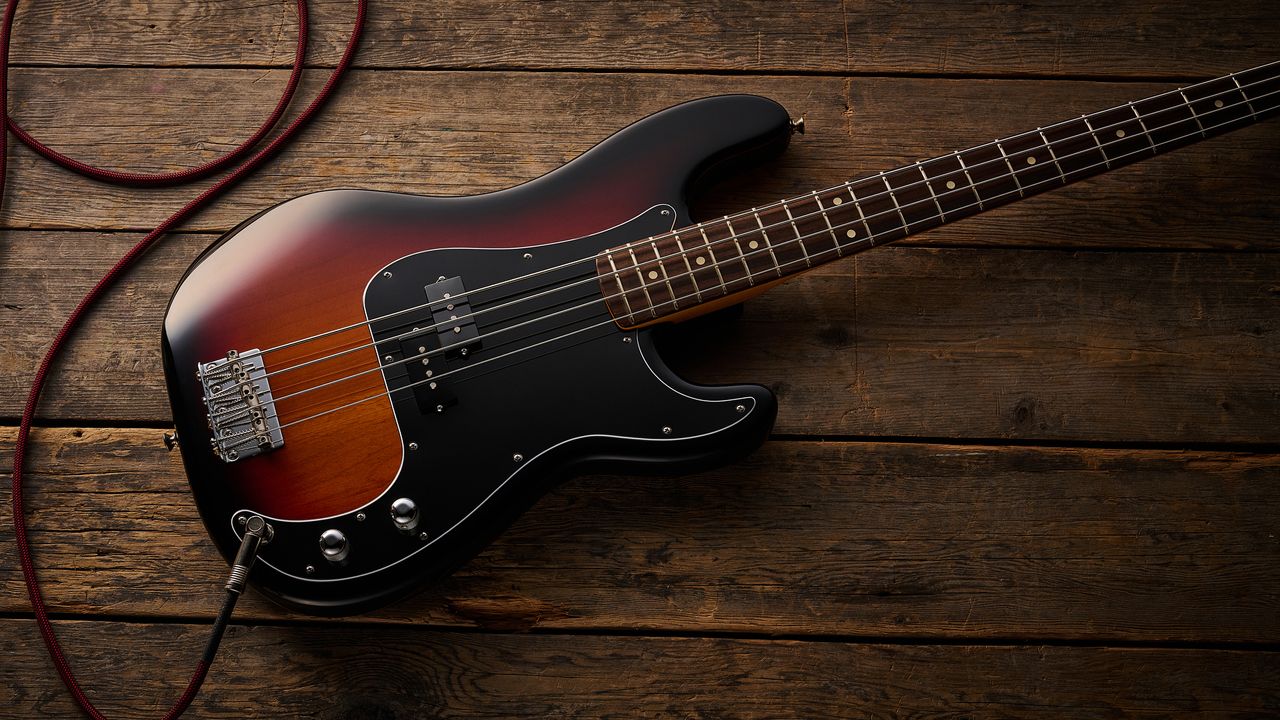
Fender American Professional Classic Precision Bass in 3-Color Sunburst shot on wood floor boards.

What is it?

Take a look at the Fender line-up in 2025, and you’ll see that there’s no shortage of options when it comes to choosing a Precision Bass. With eight current ‘production’ ranges bearing the Fender logo on the headstock, it starts with the Indonesian-made Standard series, takes a trip through Fender’s Mexican facility with the Player II/Player II Modified and Vintera II series and tops-out with the American Ultra II.

Now, to some, a ‘real’ Fender can only come from America, and the American Ultra II is just one of Fender’s US-made lines. Beneath that we have the American Vintage II series, then the American Professional II, and now, the introduction of the American Professional Classic, which replaces the out-going American Performer range.

(Image credit: Future)

This latest addition to the Fender stable is also the most affordable when it comes to buying an American made Fender, and follows a fairly straightforward brief: merge vintage styling with modern playability.

Specs

(Image credit: Fender)
  • Launch price: $1,599/£1,549/€1,849
  • Made: USA
  • Type: Four-string bass guitar
  • Body: Alder
  • Neck: Maple/Modern C
  • Fingerboard: Rosewood (maple on LPB finish), 9.5-inch radius
  • Scale length: 34"/864mm
  • Nut/width: 41.3mm
  • Frets: 20, medium jumbo
  • Hardware: Vintage-style 'lollipop' tuners, standard bridge (top-mounted) w/steel saddles
  • String spacing at bridge: 19mm
  • Electrics: Coastline split-coil P-Bass pickup, volume, tone (w/ Greasebucket circuit)
  • Weight: lb/kg
  • Left-handed options: No
  • Finishes: 3-Color Sunburst, Faded Sherwood Green Metallic, Faded Lake Placid Blue (w/maple fingerboard)
  • Cases: Fender hardcase
  • Contact: Fender

Build quality

(Image credit: Future)

Build quality rating: ★★★★½

You can’t market a Precision bass with the word ‘Classic’ in its name then rip up the blueprint. As such, the American Professional Classic Precision sticks to some of the key ingredients we know and love - an alder body paired with a maple neck. There are three finishes available - the 3-Color Sunburst of this review model, Faded Sherwood Green Metallic and Faded Lake Placid Blue. The first two are fitted with rosewood fingerboards, while the latter offers the maple ’board option in the range. These finishes are all urethane, so while the hues on offer reflect the ‘Classic’ styling, they’re a durable, hard-wearing and modern finish.

The 3-Color Sunburst is done nicely though, with a subtle and balanced fade from edge to center that has a definite red tint to it which screams ‘Jamerson!’, while allowing the grain to poke through.

The rosewood is immaculate and while a touch on the light side (depending on your tastes), could darken down with some conditioning. At the headstock end Fender has gone with vintage-style ‘Lollipop’ tuners, and while they feel thin and old-school, turn beautifully and hold the tuning with precision. At the other end, there’s more vintage-styling with the classic four-saddle bridge which uses steel saddles vs the American Professional II’s HiMass model.

(Image credit: Future)

So where are the ‘modern’ elements, exactly? Well, the neck is carved to Fender’s Modern C-shape profile, there’s a synthetic bone nut, truss rod access from the headstock end and Fender has equipped this Precision with its new Coastline pickup - here a split-coil P-Bass model, obviously. Overall its put together nicely, with the only small criticism being that the three-ply pickguard (the American Pro II uses a four-ply) appears a bit on the thin side, with the screws causing some slight rippling.

Playability

(Image credit: Future)

Playability rating: ★★★★½

It’s an impressive, buzz-free performance across the scale.

Weighing in just shy of 9lbs, it’s right in the ‘average’ zone, weight wise. As a result, this Precision sits well balanced on a strap without causing fatigue, and - as always with a P-bass and those sleek contours - it’s comfortable in the lap when playing sat down.

The back of the neck is finished in a smooth satin, which lends the entire playing experience a ‘comfy slippers’ vibe of familiarity. It gets out of the way, particularly on longer slides and stretches and combined with the C-shaped profile and 9.5” fingerboard radius which as anyone who has tried one can attest, makes this an ergonomic player. If your hands are on the stubbier side then you won’t have any problems here.

(Image credit: Future)

The heel is a traditional ‘square’ (rather than contoured) profile, but I didn’t notice access towards the top frets being inhibited nor awkward, and with the action set at a medium-low 2.2mm on the bass side, it’s an impressive, buzz-free performance across the scale.

Sounds

(Image credit: Future)

Sounds rating: ★★★★½

There’s a reason that this design has been the four-string of choice since its inception nearly 75 years ago. Like Coca-Cola, Levis or an AC/DC album, you know exactly what to expect from a Precision Bass. Here, though, Fender has given the Classic its biggest step out of the traditional circle thanks to the electronics. It’s still the same split-coil configuration we know and love from a P-bass, but it’s built around the new Coastline 60s pickup design, which in turn is paired with Fender’s Greasebucket circuit.

Starting with the pickup, it’s an Alnico V magnet, and as Fender’s Max Gutnik tells us, the Coastline series is “basically the Pure Vintage set – just like the American Vintage II guitars, but these are overwound a little to make them a little hotter.”

(Image credit: Future)

Like Coca-Cola, Levis or an AC/DC album, you know exactly what to expect from a Precision Bass.

And that’s exactly what we get. It’s the classic Precision sound, all throaty poke, bolstered by a warmth that adds weight without becoming overbearing (although it’ll do that too with a bit of EQ). I tried the Precision through a few different preamps - including a Line 6 HX Stomp, Ampeg SGT DI and IK Multimedia Tonex One Bass - straight into a DAW and the resulting tones simply feel like ‘home’.

Plugged into an amp it’s a similar story, and the Professional Classic responds beautifully when you feed it a bit of grit. Played with a pick and dirt being provided by the Ampeg, with a fuzz setting on the Tonex, it brings out even more of that classic nasally point, cutting through and accenting the notes with clarity and bite. But all the while, it’s offset by the solid foundation of full fundamentals and vintage-style warm roundness.

Now, the Greasebucket is designed to preserve low end when you roll the tone back, and it's a circuit Fender employs in numerous guitars across its range. But, while in a Strat or Tele the effects are more overt, here, it's more subtle. Many players will likely be indifferent, but some will likely prefer the traditional tone circuit for its familiarity.

(Image credit: Future)

Verdict

(Image credit: Future)

As I mentioned at the start of this review, if there’s one thing that Fender isn’t lacking, it’s choice. That means that there’s something for everyone in its range, pretty much across the board.

The window starts to narrow once you impose your own criteria and rules. There are basses in the Fender range that lean way more to the future - just this year it released the excellent Player II Modified, which serves up heaps of contemporary value for around 2/3 of the price.

If there’s one thing that Fender isn’t lacking, it’s choice.

Going the other way, it’s around another 1/3 on top to stretch to an American Professional II, or vintage fans can scratch that itch with the Mexican-made Vintera II Road Worn for a couple hundred bucks less. That’s where Fender rarely misses - it knows its customer.

Guitar World verdict: If it absolutely has to be an American-made instrument - and lets face it, there’s something special about knowing your instrument is from that lineage - and you want a versatile bass that hits the sweet spot of Fender’s heritage, sound, practicality and price, this Precision checks all the right boxes.

Ratings scorecard

Test

Results

Score

Build quality

Apart from the pickguard being a little thin, it's put together with excellence.

★★★★½

Playability

The profile, radius and finishing of the neck make this a smooth-playing bass across the scale.

★★★★½

Sounds

The P-Bass tone we know and love, but with a little added contemporary heat.

★★★★½

Overall

An excellent place to introduce yourself to Fender's American-made line-up, at a real world price.

★★★★½

Also try

Hands-on videos

Fender

Empire Music

N Stuff Music

  • ***********Related review or guide link here*******
Sign up to read this article
Read news from 100’s of titles, curated specifically for you.
Already a member? Sign in here
Related Stories
Top stories on inkl right now
One subscription that gives you access to news from hundreds of sites
Already a member? Sign in here
Our Picks
Fourteen days free
Download the app
One app. One membership.
100+ trusted global sources.