
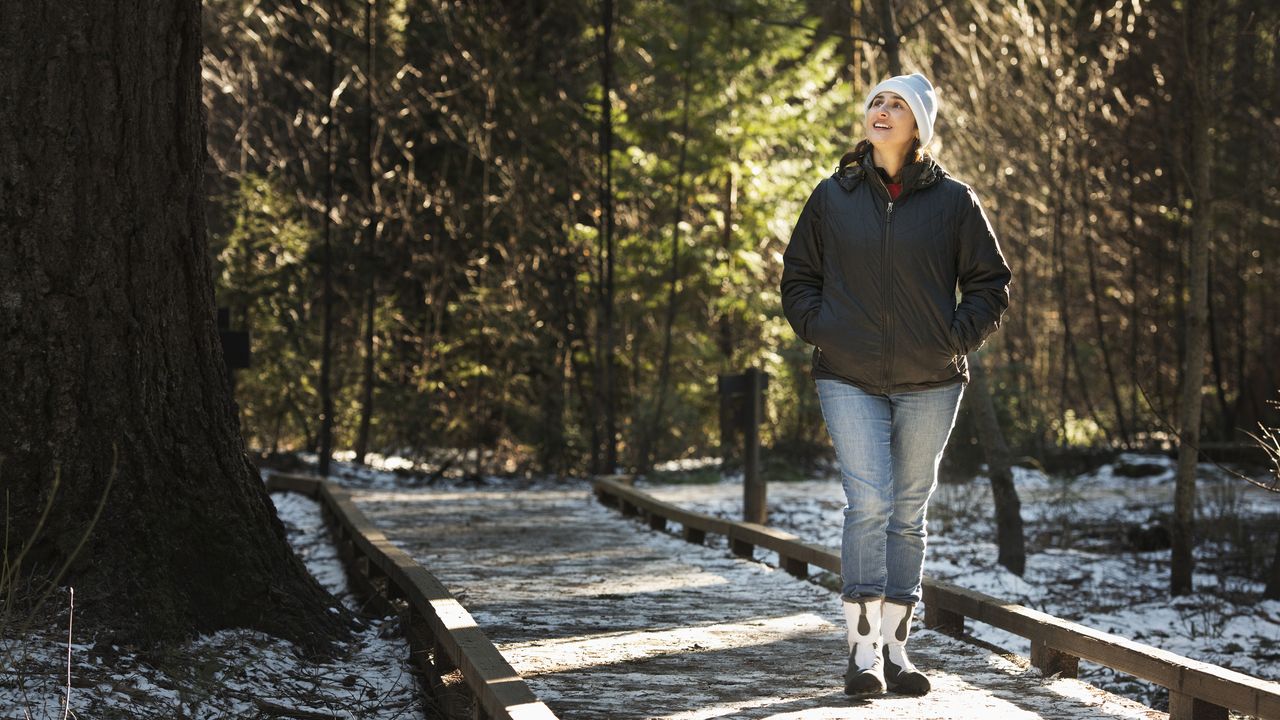
Mindful walking is my go-to when I’m feeling overwhelmed, and as a meditation teacher, it’s one of the first practices I recommend to new clients.
Given the benefits of walking and mindfulness are well-documented, it’s a reliable well to improve wellbeing.

Studies have shown mindfulness practices can reduce stress, while walking supports cardiovascular health, sleep and general wellbeing. Mindful nature walking has also been linked to improved mood, too.
For me, there’s something about being out in nature, tuning into my senses and noticing the colours, textures and sounds all around that brings an immediate sense of calm.
But during the winter months, when it’s gloomy and nature is hibernating, I’ve found myself swapping my usual sensory nature walk for a color walk instead.
A color walk requires you to choose a color, go for a walk and keep an eye out for that color—whether it’s on a car passing by or a poster in a shop window.
Sometimes, I choose a color before I head out, other times I go with the first color that catches my eye.
It’s a simple, but surprisingly effective way to ground me in the present moment.
Like many other mindfulness practices, having an anchor—in this case, the color—gets me out of my head and into the world around me.
It’s the kind of gentle focus that’s enough to quieten the mental chatter but still gently hold my attention without feeling overwhelmed.
Keen to give it a go? Here’s my advice for getting the most out of this method.
How to go for a color walk
- Choose a color—you could lean into the psychology of color and choose one that mimics the mood you’d like to tap into e.g. bright colours to spark joy or cool colours to feel calm. Or, choose the first colour that comes to mind.
- Walk at your own pace—there’s no rush to find your chosen color around you, simply walk like you usually would but with a sense of awareness and see if you can spot it.
- Notice your color—each time you see it, just notice it. There’s no need to spend too much time or attention on the color, simply notice it, and keep going.
- Be aware of your surroundings and keep it short—you don’t have to do this for your entire walk, just a few minutes at the beginning can be all that you need to feel grounded and calm. In fact, some studies suggest just 10 minutes of mindfulness a day is enough.