
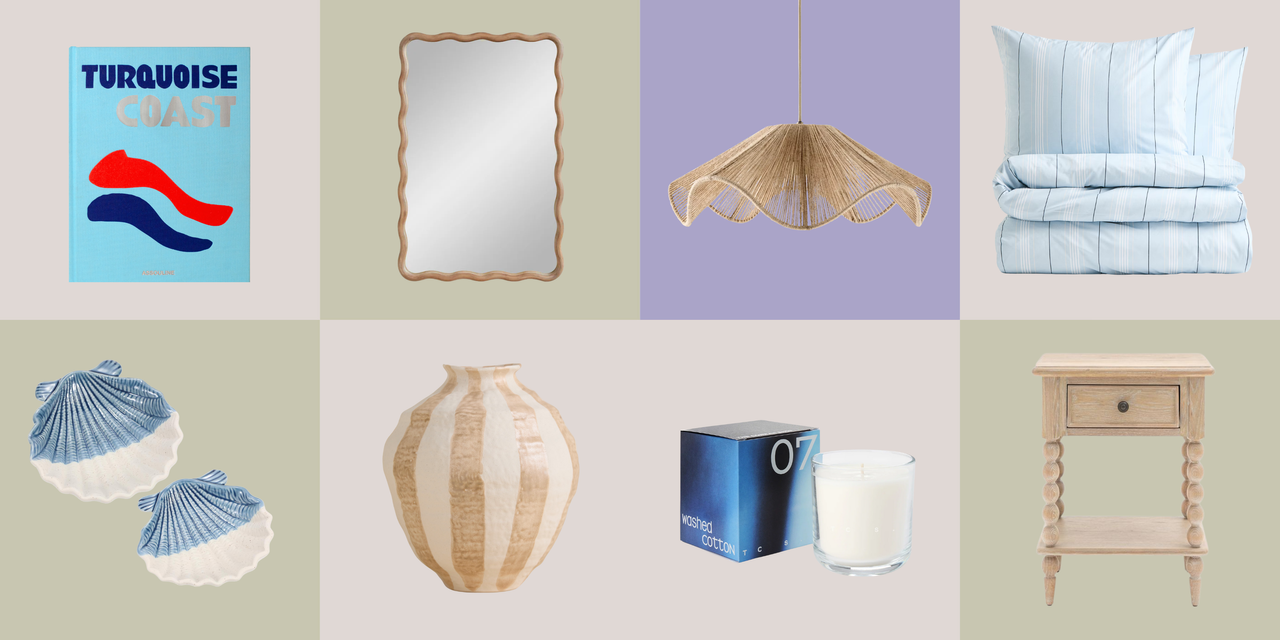
When I think about coastal decor, I think about how a room feels before I think about how it looks. This isn’t a space for statements or sharp contrasts.
A coastal bedroom should slow you down the moment you walk in. Softer edges. Lower visual noise. A sense that nothing is in a rush.
The key is restraint. Coastal bedrooms work best when the palette is kept intentionally narrow. Warm whites layered with sand, stone, soft clay, or a washed blue that feels more like a memory than a color. Instead of mixing lots of shades, I prefer to stay within one tonal family and build depth through texture.
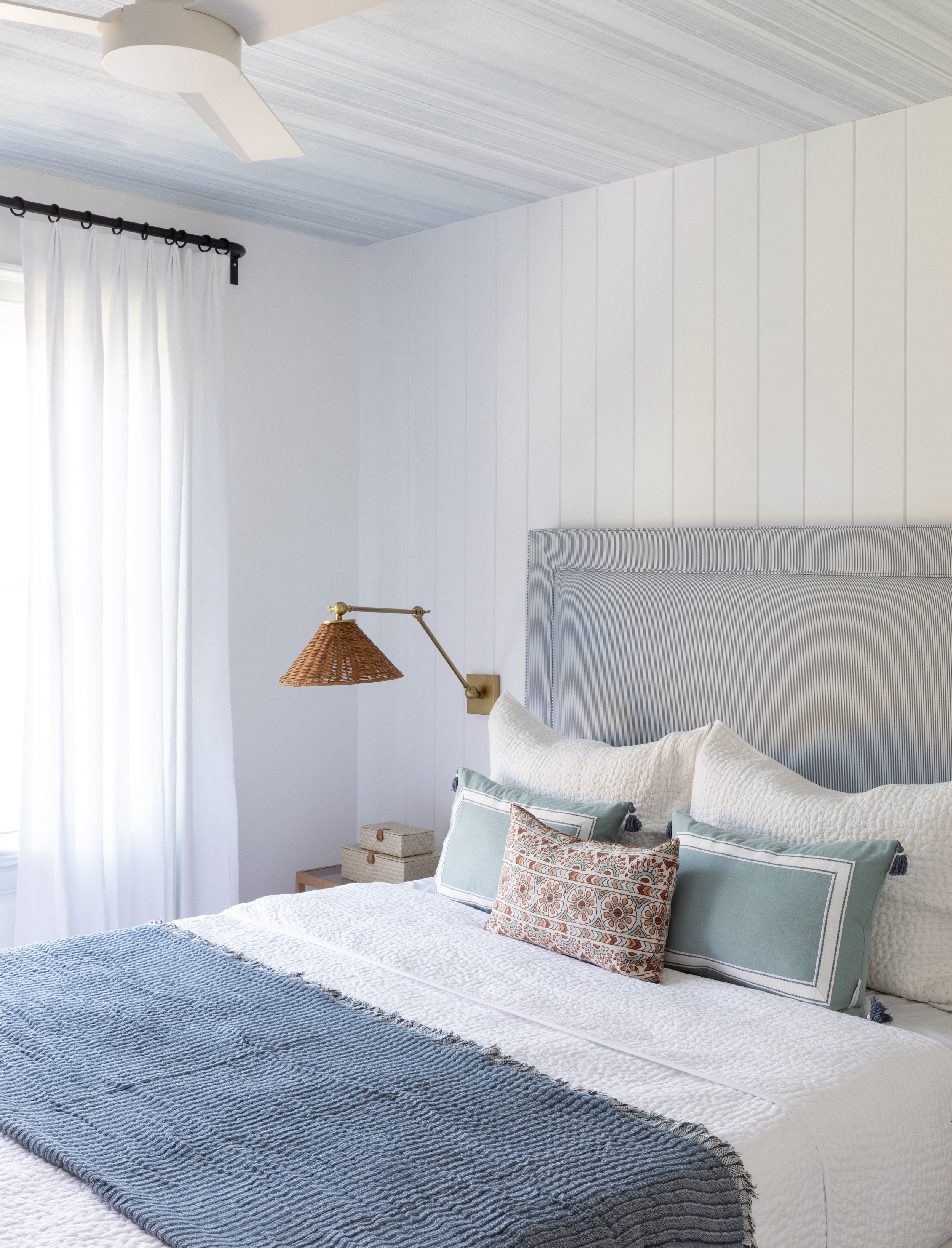
Fabric choices matter more than anything else here. Linen bedding that creases naturally. Cotton throws that feel breathable rather than heavy. Headboards upholstered in fabric, cane, or light wood instead of anything hard or overly structured. Even rugs should feel gentle underfoot, flatwoven or softly textured, never too bold.
Furniture stays low and unfussy. Bedside tables feel better when they’re simple and slightly imperfect. Lamps should cast a warm, diffused glow, not bright overhead light. Coastal bedrooms are about atmosphere, not illumination. Everything earns its place, and nothing feels like it’s trying to be decorative for the sake of it.
What I love most about this style is that it doesn’t date quickly. It’s not trend-led in an obvious way. It’s rooted in comfort, calm, and materials that age well. Coastal interior design should feel timeless, not seasonal. Somewhere you want to linger in the morning and unwind at night.