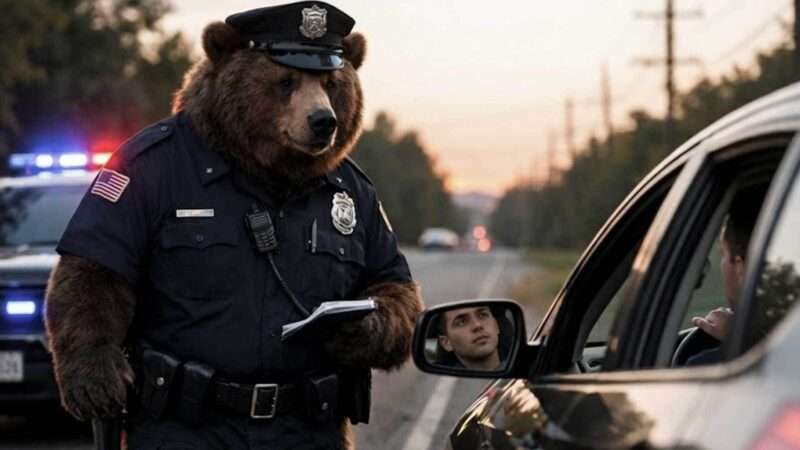
A few years ago in Connecticut, Mark and Carol Brault complained that state officials had strapped a camera to the neck of a black bear that was known to frequent their property. They alleged that the Connecticut Department of Energy and Environmental Protection (DEEP), which suspected them of illegally feeding bears, was employing the furry spy in an attempt to back up that allegation. That DEEP strategy, the Braults argued, violated their Fourth Amendment right to "be secure in their persons, houses, papers, and effects" against "unreasonable searches and seizures."
The couple's claim was complicated by the Supreme Court's "open fields" doctrine, which says private property beyond the immediate vicinity of a home, a.k.a. the "curtilage," is not protected by the Fourth Amendment. But it seemed unlikely that Bear Number 119, the camera-carrying animal that Mark Brault had photographed "near the center of our property," was familiar with the finer points of Fourth Amendment case law. Assuming it was not, there was no assurance that it would confine itself to the Braults' "open fields" and avoid the "curtilage" around their home.