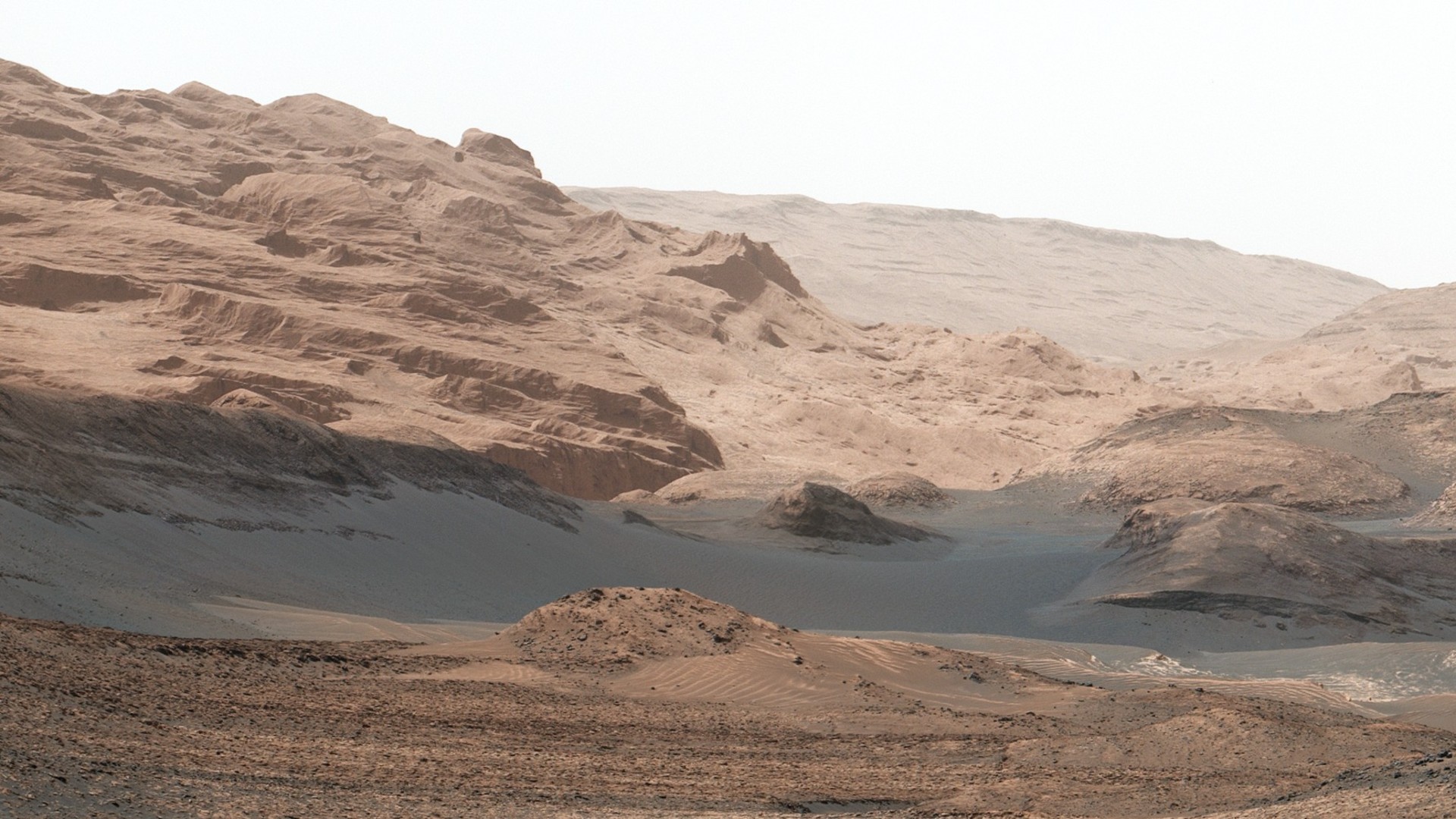
Scientists searching for the fossilized remains of ancient microbes on Mars now have a better idea of what signs they should be looking for, thanks to a new study of Earthly microbial fossils embedded in the mineral gypsum that was produced when the Mediterranean Ocean dried up over 5 million years ago.
Mars was once wet, with rivers and lakes and even an ocean that existed on the Red Planet between about 4.1 and 3.7 billion years ago. That liquid water has now all gone, either frozen into polar ice caps or as permafrost beneath the surface, or evaporated into the atmosphere and lost to space. When water evaporates, it leaves behind sulfate minerals that had been dissolved in the water — a simple school experiment of boiling away rain water reveals this.