
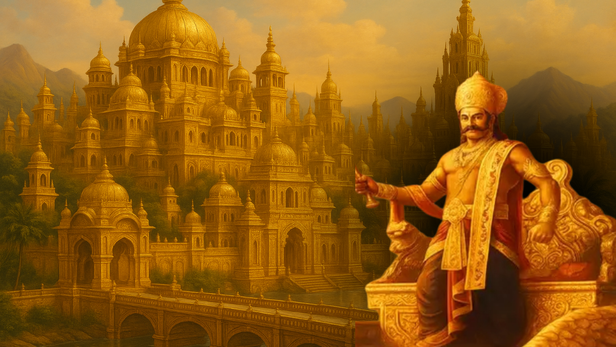
The idea of Lanka has always stirred the imagination. In the Ramayana, it appears as a place of astonishing wealth, power, engineering, and royal grandeur, a city so magnificent that it has stayed alive in memory for centuries. That is exactly why the question keeps returning: if Lanka was really so advanced, where is it now?
This is not just a question about stones, ruins, or archaeology. It is also a question about how we read epics, how time destroys even great civilizations, and how memory can outlive material evidence. The Ramayana is one of India’s most influential epics, traditionally associated with Valmiki, but historians and scholars do not treat every literary description in such texts as direct archaeological proof. At the same time, there is no widely accepted archaeological consensus identifying a surviving site as Ravana’s Lanka exactly as described in the epic.














