
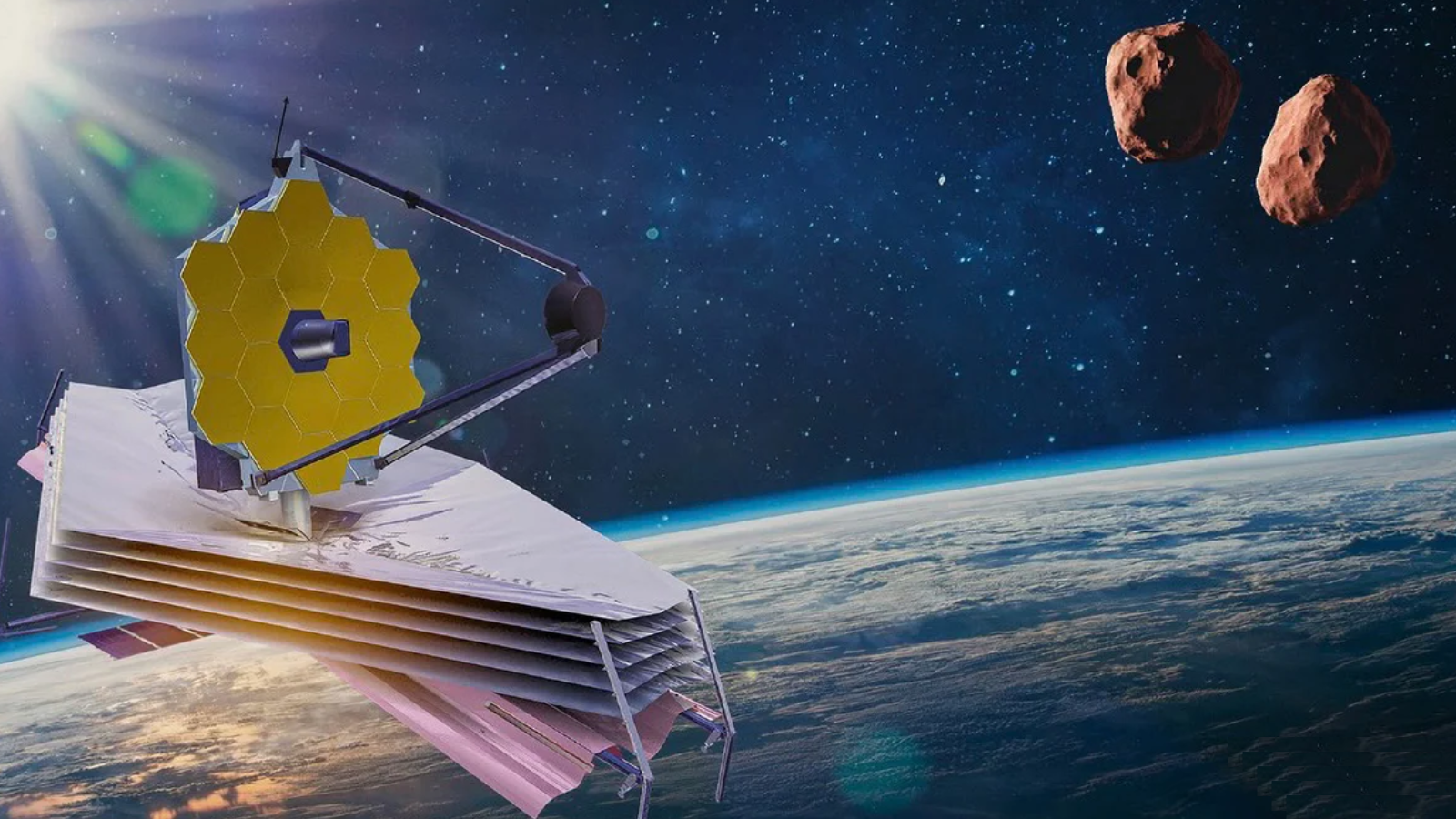
In examining a pair of icy asteroids at the edge of the solar system, the James Webb Space Telescope is helping scientists understand the evolution of an ice giant: Neptune. These findings could also help reveal how ancient Earth grew saturated with water, the ingredient that ultimately led to the emergence of life.
The binary asteroid system Mors-Somnus was recently discovered to have originated within an icy band of objects that make up what's known as the "the Kuiper Belt." This region exists beyond the orbit of Neptune, the eighth and furthest planet from the sun. Mors-Somnus can therefore be used as a proxy to study the dynamic history of Neptune as well as other icy bodies in the Kuiper Belt, also known as trans-Neptunian objects (TNOs).













