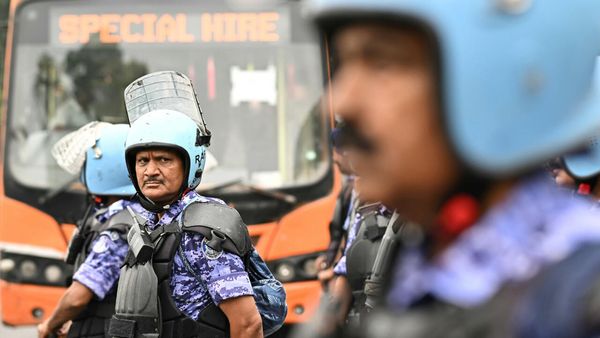
Federal immigration agents took more than 10,000 people into custody over a five-day stretch at the close of June, a tally first reported by The New York Times and corroborated by The Associated Press using figures supplied to UC Berkeley's Deportation Data Project. That pace — north of 2,000 arrests a day — is roughly double what officers were logging earlier in 2026, when the daily count hovered closer to 1,000. Arrests peaked at more than 2,400 in a single day on a Saturday at the end of June, and the population held in ICE facilities jumped by nearly 4,000 in a matter of days, crossing 63,000 as of the following Tuesday.
Three officials briefed on internal conversations told the Times that the push to raise numbers came directly from the White House, and that agency leadership has settled on 2,000 arrests a day as the new baseline. One added that nobody inside the agency is certain how long that pace can hold. Field supervisors were instructed to keep as many officers as possible working all seven days of the week and to devote 80 percent of personnel to arrest operations rather than other duties.
Numbers in Context
The current tempo dwarfs even the previous high points of the crackdown. UC Berkeley's Deportation Data Project found that December 2025 — the busiest month up to that point — averaged 1,283 arrests daily nationwide, according to the AP's analysis. January 2026, when hundreds of extra agents flooded the Minneapolis–St. Paul area, averaged about 1,212 arrests a day. Before President Trump's second term began, ICE was making roughly 300 arrests daily nationwide, according to figures compiled by the American Immigration Council. Even a goal set last year by White House deputy chief of staff Stephen Miller — 3,000 arrests a day — was never actually reached.
Groups tracking the underlying enforcement data note that as totals have climbed, so has the share of people picked up with no criminal record — roughly two in three "at-large" arrests this year, by one recent count, despite administration statements that enforcement is aimed at serious offenders.
Why the Streets Look Calmer Even as Arrests Climb
What sets the current push apart from last year isn't its scale — it's the absence of spectacle. Throughout 2025, the administration announced its intentions before descending on cities including Chicago, Los Angeles, and Minneapolis with waves of agents. That model came apart during Operation Metro Surge, a Minnesota deployment that ran roughly ten weeks — from early December 2025 into mid-February 2026. During that operation, an ICE agent fatally shot Renée Good, a mother of three, in an encounter that began when she was stopped in her car; weeks later, federal agents fatally shot Alex Pretti, an ICU nurse, amid a chaotic scene tied to protests against the operation, according to PBS NewsHour's account of the shooting.
Kristi Noem was homeland security secretary throughout that operation. Roughly six weeks after Pretti's death, President Trump removed her and nominated Sen. Markwayne Mullin of Oklahoma, who was confirmed and sworn in that same month. Mullin has since described his approach to enforcement as a quieter one, and the agency has leaned into that posture even as arrest totals climb rather than fall. Separately, border czar Tom Homan had already begun withdrawing agents from Minnesota back in February — weeks before Mullin was even nominated.
The result is a campaign that spreads arrests across routine, everyday moments instead of dramatic sweeps: scheduled check-ins with immigration officers, traffic stops, and encounters on the street. In an internal message described to reporters, Marcos Charles, who runs ICE's deportation division, thanked staff for their "extraordinary efforts this past weekend" following Saturday's 2,400-arrest tally, per documents reviewed by the Times.
Fear That Doesn't Make Headlines
Immigration attorneys and advocates say the quieter, more dispersed approach has done little to ease anxiety in immigrant communities — if anything, several say it has spread further. In South Texas, Sister Letty Ugboaja, a Nigerian-born nun who also works as a nurse, was detained on her way to Sunday church services; she was released the same day after a colleague alerted local officials, according to coverage of the incident. In Miami, attorney Cindy Blandon told reporters that a client — a Nicaraguan father of two with an immigration court date not scheduled until 2027 — was picked up during what was supposed to be a routine Monday check-in, a detail confirmed in multiple accounts of her case.
A Supreme Court Backdrop
The enforcement surge lands in the same week the Supreme Court handed down two consequential immigration rulings. On June 30, the justices struck down the administration's executive order attempting to end automatic birthright citizenship, ruling 6-3 that the 14th Amendment guarantees citizenship to nearly everyone born on U.S. soil. Five days earlier, on June 25, the court ruled 6-3 the opposite way on a separate question, clearing the path for the administration to strip Temporary Protected Status from roughly 350,000 Haitians and 6,000 Syrians — a decision that could eventually reach more than a million people across the 17 countries still holding that status.