Get all your news in one place.
100's of premium titles.
One app.
Start reading
Latin Times
Latin Times
Politics

ICE Is Now the Largest Source of New DNA Profiles in FBI Criminal Database, According to Report

NEW YORK, NEW YORK - JULY 16: Immigration and Customs Enforcement (ICE) agents patrol the halls as they detain an individual after exiting his immigration court hearing at the Jacob K. Javits Federal Building on July 16, 2026 in New York City. ICE continues its practice of detaining non-U.S. citizens at immigration courthouses despite a federal judge's order that vacated the Trump administration’s policy. The judge stated that the Department of Justice had failed to provide “reasoned explanations” for the policy. (Credit: Photo by Michael M. Santiago/Getty Images)

Immigration and Customs Enforcement may have added nearly 920,000 genetic profiles to the FBI's criminal DNA database in 2025, making the agency the largest source of new entries, according to research by Georgetown Law's Center on Privacy and Technology.

The FBI's detainee index within its Combined DNA Index System, or CODIS, grew by roughly 995,000 profiles last year, reaching 3.35 million. Customs and Border Protection records account for about 75,000 submissions, leading Georgetown researchers to estimate that ICE may have contributed most of the remainder.

The collection applies broadly to people detained under federal immigration authority, including many without criminal convictions. DNA profiles entered into CODIS can be compared with evidence from unsolved crimes indefinitely, while the physical samples containing each person's full genome are retained in a federal laboratory.

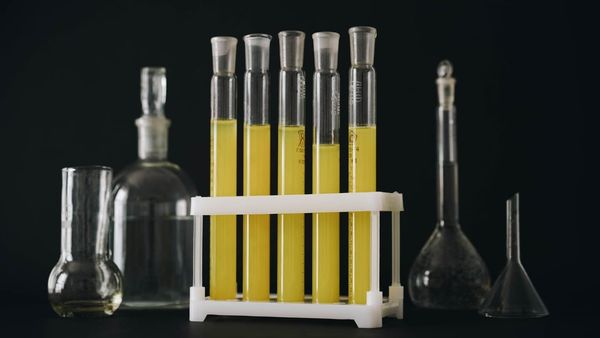
DNA test
DNA test Via Pexels

Internal ICE correspondence cited by Georgetown described the program's "primary purpose" as building "a national DNA database for solving crimes." Researchers said that statement conflicts with the government's earlier argument that collecting DNA from immigration detainees primarily serves identification purposes.

The program has also reached children. Federal records reviewed by Georgetown and also supported by WIRED show CBP submitted samples from 492 children under 14 between January 2025 and January 2026, including children as young as four. DHS said ICE may collect DNA from detainees beginning at age 14 but did not explain the younger submissions.

Refusing a cheek swab can result in prosecution. WIRED identified two cases filed in 2025, including that of Hugo Moreno-Mendez, who was charged after repeatedly declining to provide DNA following his arrest during a probation appointment in Texas. He was convicted and sentenced to time served.

DHS defended the collection as an identification and border-security measure but did not respond to Georgetown's estimate of ICE's contributions. Researchers project that, if collection continues at its current pace, DHS could supply more than one-third of the FBI's searchable criminal DNA index by 2030.

Back in November, a notice published to the Federal Register revealed a DHS proposal meant to broaden biometric collection across the immigration system. The rule would allow the department to require fingerprints, DNA samples, facial images and iris scans from immigration-benefit applicants and potentially from U.S. citizens, nationals and permanent residents who sponsor or file petitions for them, regardless of age unless specifically exempted.

It would also permit continued biometric collection after a benefit is approved, potentially until an immigrant becomes a U.S. citizen, and would expand long-term storage of that data. DHS said at the time that the changes were intended to verify identities, prevent fraud and support immigration enforcement.

Sign up to read this article
Read news from 100's of titles, curated specifically for you.

Already a member? Sign in here
Related Stories
Top stories on inkl right now
One subscription that gives you access to news from hundreds of sites
Already a member? Sign in here
Our Picks
Fourteen days free
Download the app
One app. One membership.
100+ trusted global sources.