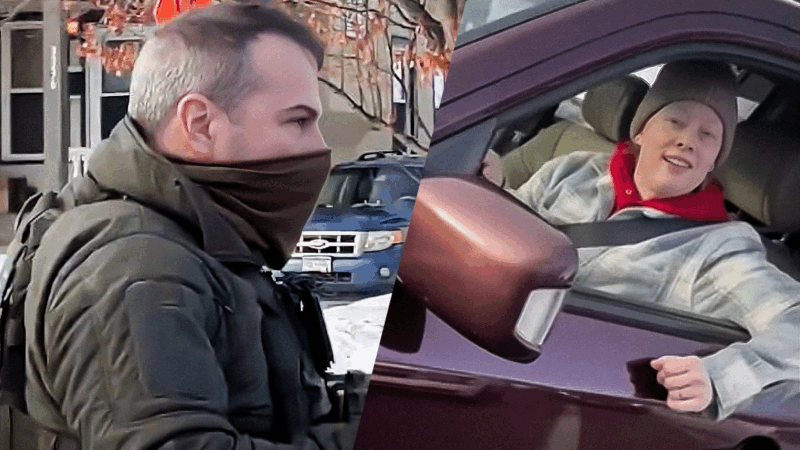
When Immigration and Customs Enforcement (ICE) agent Jonathan Ross approached Renee Good's Honda Pilot at 9:35 a.m. on Wednesday, January 7, his cellphone video of the encounter shows, she was smiling at him. "That's fine, dude," Good assured Ross from the driver's seat, apparently referring to the fact that he was recording her. "I'm not mad at you." Within two minutes, Ross had fatally shot Good. "Fucking bitch," he said as the unguided SUV careened down the street before crashing into a parked car.
The controversy over that shooting has focused mainly on the question of whether it was legally justified, which depends on whether Ross reasonably believed, given "the totality of the circumstances," that the use of deadly force was necessary to protect himself, his colleagues, or the general public from the threat Good allegedly posed as she began to drive away. But the swift escalation from a calm interaction to lethal gunfire also raises questions about how Ross and the other ICE agents at the scene handled the encounter before he killed Good—in particular, whether they followed policies and practices aimed at avoiding such outcomes.