Get all your news in one place.
100's of premium titles.
One app.
Start reading
Tom’s Guide
Tom’s Guide
Technology
Jason England

I went eyes-on with Snap Specs and saw Evan Spiegel wear them — they look way better than I feared, but there's one massive comfort flaw

Snap Specs.

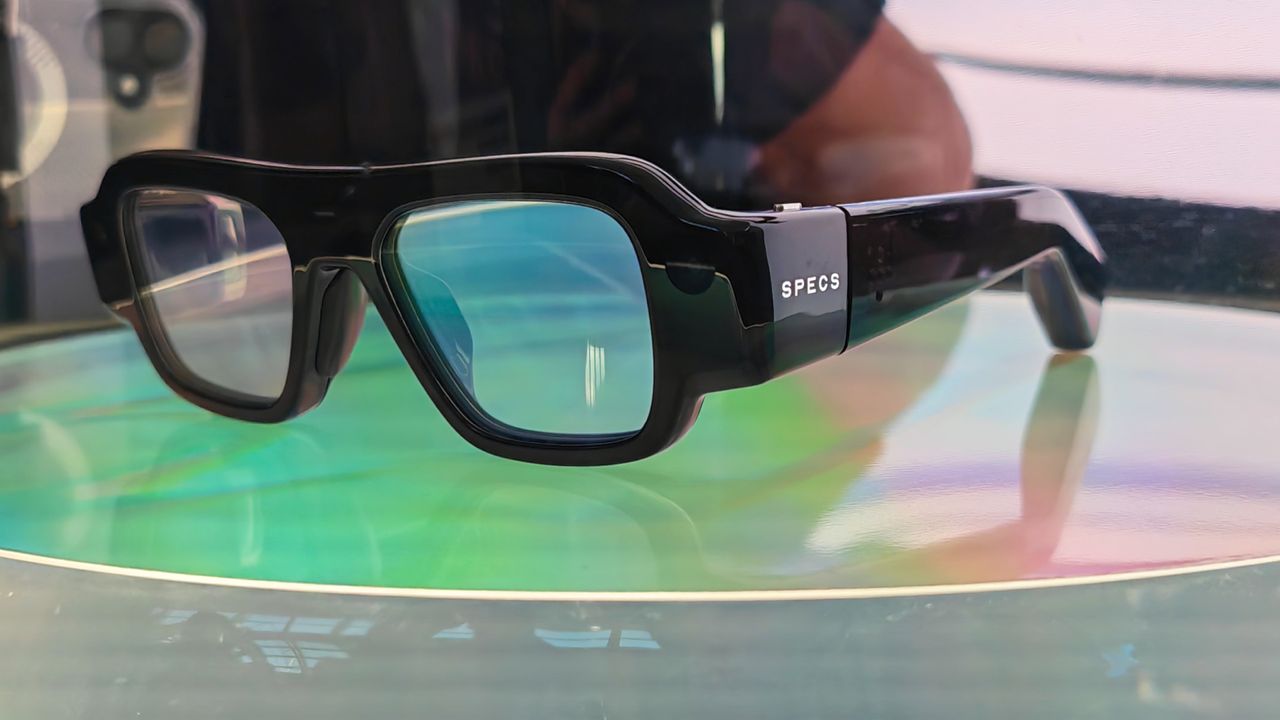
When I first saw the design of Snap Specs during CEO Evan Spiegel’s keynote, I’ll admit I was a little nervous. For all the talk of making them “substantially smaller,” as former hardware VP Scott Myers told me, they still look pretty chunky.

But the press pictures don’t quite do them justice, and after seeing them in person (and seeing them worn by Evan himself), I must say I kind of dig the aesthetic. They’re a bold statement piece for the future of spatial computing, and a look that I believe can blend well into the public day-to-day.

@tomsguide ♬ original sound - Tom’s Guide

Designing around the constraints

(Image credit: Future)

Bear in mind that Snap’s had to stuff two Snapdragon processors, optical waveguide displays with a 51-degree field of view, a ton of sensors, and enough battery for four hours of general use, and you can start to see how much of a challenge this is.

Speaking with the Snap team, they acknowledged that the task of making it all smaller was quite the challenge. But compared to the developer hardware you’ve seen me wear over the past couple of years, the difference is stark — sleeker lines on that Wayfarer-esque face, contoured stems, and a real upgrade in materials used to a polymer Snap calls “plastic titanium.”

(Image credit: Future)

The frame around the lenses seems to have been made thinner; the stems may be large, but they fit into the general vibe up front, and that cross sign of dots on the side is a magnetic charging connector that doubles as a USB-C video-in to plug this directly into your laptop or handheld (that’s huge).

My only real concern is when Evan came through the Snap booth wearing them. Not the look of them, but the fact that they seem to be exerting a bit more downward pressure on the tops of his ears, from the side profile.

(Image credit: Future)

There could be many reasons for this (the way he’s put them on and ear shape, for example), but it did give me a little pause that the 132g weight might cause some discomfort. I’m hoping I’m wrong!

“Nerd alert”

(Image credit: Future)

That’s not to say it has its detractors. This is a divisive look, and when I shared them for general thoughts on my team’s Slack channel, the first reaction I got was a GIF of Austin Powers saying "Nerd Alert."

I’m going to have to give these my classic “pub test” with friends in my small hometown to get a real feel for how people react to them outside the tech bubble. But to be honest, the early detractors haven’t really phased my impressions here.

Snap set out on a mission to take its super ambitious idea of mashing the capabilities of a VR headset into something the size of a pair of glasses, usher in a new, more immersive type of computing, and make it look good.

(Image credit: Future)

After testing the OS experience on development hardware, I’m confident they’ve nailed the first; the jury’s out on the second, as real-world testing is needed, and going eyes-on has shown me they can tick off the third.

The only real obstacle now is the $2,195 asking price (available to preorder now), which I understand is definitely on the lower end of new spatial computing hardware (think Apple Vision Pro), but is still rather astronomical. This is definitely for early adopters, and you’ll stand out in these swish specs.

More from Tom's Guide

Sign up to read this article
Read news from 100's of titles, curated specifically for you.
Already a member? Sign in here
Related Stories
Top stories on inkl right now
One subscription that gives you access to news from hundreds of sites
Already a member? Sign in here
Our Picks
Fourteen days free
Download the app
One app. One membership.
100+ trusted global sources.