Get all your news in one place.
100's of premium titles.
One app.
Start reading
T3
T3
Technology
Matt Kollat

I wasn't expecting vlogging cameras to make a comeback – now I think they're one of tech's biggest success stories

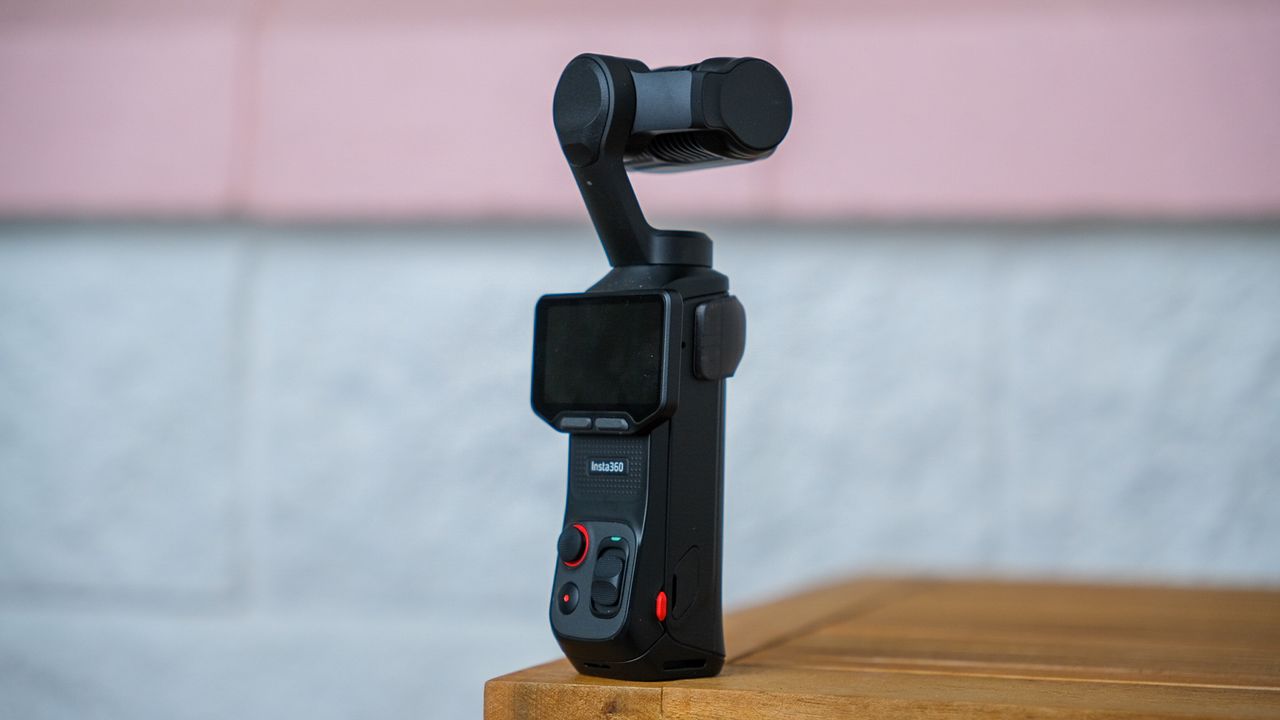
Insta360 Luna Ultra review.

If you'd told me five years ago that one of the hottest consumer tech categories in 2026 would be dedicated vlogging cameras, I'd probably have laughed.

After all, smartphones have become astonishingly capable, with every new flagship promising bigger sensors, smarter AI processing and another lens squeezed into an impossibly thin body.

On paper, it looked like the end of standalone cameras for anyone who wasn't a professional photographer. As someone who’s been passionate about photography and cameras for nearly two decades, I was very sad to see how things were going.

I like cameras, still photos, and even though I totally appreciate videos are all the rage now – I watch quite a few myself – I wanted to believe there was a future for dedicated camera gear.

(Image credit: Matt Kollat)

I was right, but not in a way I thought. As T3’s in-house action camera and drone expert, I’ve been following compact camera design for a while, and lately, I noticed a trend: vlogging cameras are big.

Whether it's DJI's Osmo Pocket 4, Insta360's Luna Ultra, Sony's ZV range or Canon's EOS R50 V, manufacturers are doubling down on cameras built specifically for creators, and, more importantly, people are buying them. More curiously, I don't think that's happening despite smartphones becoming better, but because of it.

The return of the specialist gadget

In the past two decades or so, the trend has been to fuse all the different functionalities into a single device that can do it all. And yes, I’m talking about everyone’s favourite love-hate gadget, the smartphone.

Our phones became our cameras, sat navs, music players, wallets and even our boarding passes. Now, I'm seeing the pendulum swing back the other way, toward a place where people increasingly want products that excel at one thing rather than trying to do everything.

CD and vinyl players are making a comeback, and people have also started buying DVDs and Blu-rays instead of spending cash on subscriptions. Vlogging cameras are perhaps the best example of that shift.

The PowerShot V1 is Canon's take on the compact video-first camera (Image credit: Matt Kollat)

The category isn't new, which is part of the appeal. Canon and Sony have spent decades refining compact cameras, while newer players such as DJI have rapidly accelerated innovation with their gimbal technology.

As a result, the latest generation of vlogging cameras feels remarkably polished, with fast autofocus, excellent face and eye tracking, clever shooting modes and image stabilisation that's good enough to make handheld footage look like it was filmed on professional equipment.

They've finally grown up

Then there is mechanical stabilisation. I’d still pick a GoPro Mission 1 Pro or a DJI Osmo Action 6 for mountain biking, skiing or anything involving mud and water.

But for everyday filming, they're often a compromise, with their ultra-wide lenses distorting faces and making arms look unnaturally long. They can also be unflattering when you're talking directly to camera (well, modern cameras are pretty good, to be fair).

A dedicated vlogging camera produces a more natural-looking image. That difference becomes even more obvious when you compare them to smartphones. Computational photography has come a long way, but physics still matters.

(Image credit: Matt Kollat)

Dedicated vlogging cameras have larger sensors, better optics, and far more room for manufacturers to optimise image quality rather than relying almost entirely on software.

I'm also a big fan of how approachable these cameras have become. Subject tracking, vertical recording, wireless transfers and professional colour profiles like D-Log mean you don't have to be an experienced filmmaker to produce footage that looks genuinely impressive.

Small cameras, big advantages

The form factor is another component that makes vlogging cameras so appealing. I can slip them into a jacket pocket or bum bag without thinking twice, yet I'd much rather pull one out in a café or on a busy street than a mirrorless camera with a chunky zoom lens attached.

They're less intimidating, people react more naturally around them, and they're simply more enjoyable to carry every day.

Not to mention that having a dedicated camera helps preserve your phone's battery.

When I'm travelling, I don't particularly want to spend hours recording video on the same device I'm relying on for navigation, tickets, mobile payments and communication. A dedicated camera keeps my phone charged, leaves plenty of storage available and lets me swap SD cards whenever I need more space.

The category is becoming more versatile, too. Early pocket gimbal cameras were almost entirely wide-angle affairs, but newer models, such as the Luna Ultra mentioned above, are starting to add telephoto options, making them much better suited to travel, product reviews and more cinematic storytelling.

No gadget is perfect

It’s not all sunshine and lollipops when it comes to vlogging cameras, though. They're expensive, especially for something that's effectively designed around a single purpose

Their moving camera assemblies are also more vulnerable than the fixed lenses on action cameras, though brands are clearly addressing this with tougher designs and protective covers.

I'd also argue that anyone serious about content creation should budget for a wireless microphone, because great audio still makes a bigger difference than most camera upgrades.

(Image credit: DJI)

And while image quality is excellent, these cameras still can't match the low-light performance of larger APS-C or full-frame cameras. (That said, sensors in vlogging cameras are getting bigger and algorithms smarter, so this disadvantage is disappearing. Slowly.)

Even with those caveats, I think we're witnessing something bigger than the rise of another gadget category.

For years, we assumed smartphones would absorb every dedicated device. Instead, people are rediscovering the value of products that have a clear purpose. Just as dedicated running watches continue to thrive alongside smartwatches and action cameras remain indispensable for adventure sports, vlogging cameras have found their place by doing one thing exceptionally well.

Of course, the smartphone isn't going anywhere, but after watching this category evolve over the past few years, I'm convinced dedicated vlogging cameras aren't going anywhere either. If anything, I think they're only just getting started.

Sign up to read this article
Read news from 100's of titles, curated specifically for you.
Already a member? Sign in here
Related Stories
Top stories on inkl right now
One subscription that gives you access to news from hundreds of sites
Already a member? Sign in here
Our Picks
Fourteen days free
Download the app
One app. One membership.
100+ trusted global sources.