
Get all your news in one place.
100’s of premium titles.
One app.
Start reading
Cinemablend
Cinemablend
Entertainment
Heidi Venable

I Was So Inspired By Apple's Deaf President Now! Documentary, And I Want To Talk About It

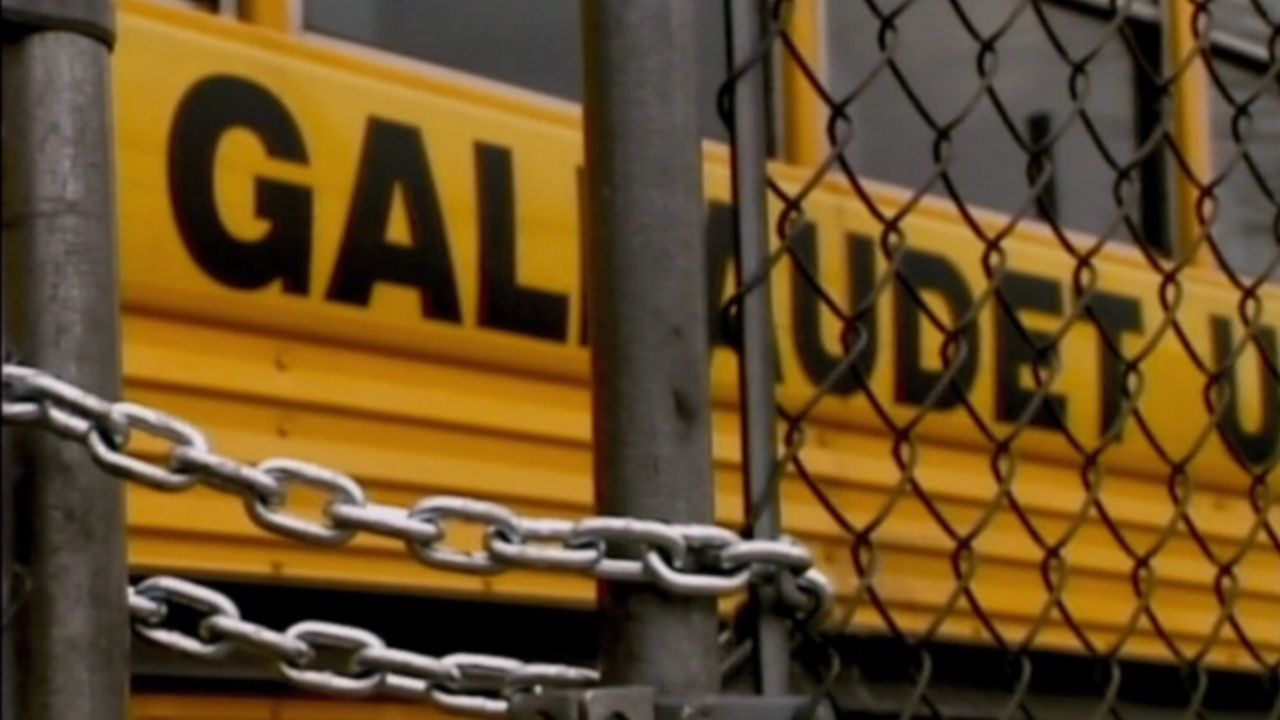
In the documentary Deaf President Now!, a Gallaudet University bus is shown behind a locked gate, as students shut down the school during the 1988 protest.

As we look ahead to the 2026 movie calendar, there are a lot of exciting things coming our way, and that surely will include some thought-provoking true stories. Last year was a great one for documentaries that are sure to stick with us for quite some time, and for me, Deaf President Now! stands out as one of the most inspiring. Four alumni of Gallaudet University recall the events of a one-week student protest in 1988 that resulted in the school’s first deaf president and huge leaps for disabled Americans as a whole.

Deaf President Now! is a powerful documentary from directors Nyle DiMarco and Davis Guggenheim that can be streamed with an Apple TV subscription, and I really hope it helps bring to light what they call the greatest civil rights movement most people have never heard about.

(Image credit: Apple TV)

What Is Deaf President Now! About?

In 1988, Gallaudet University — which was founded in 1864 and is, according to the documentary, the only deaf university in the world — was set to get a new president. A board of all hearing members bypassed two deaf candidates and appointed Elisabeth Zinser as the new head of the school, despite the fact that she wasn’t deaf and didn’t know sign language.

Told through photos and video footage taken at the time, as well as the recollections of four students pivotal in the movement — Jerry Covell, Tim Rarus, Greg Hlibok and Bridgetta Bourne-Firl (pictured left to right above) — Deaf President Now! documents the weeklong protest during which the Gallaudet students locked down the campus and insisted that their voices be heard.

(Image credit: Apple TV)

It Was Powerful To See The Movement’s Leaders Recall The Events In Their Own Words

In addition to the story that was being conveyed in the Apple TV documentary, I was moved by how it was presented. The four former students were interviewed separately, giving their individual and candid accounts of how things went down. An interpreter was used to translate their signs, but their gesticulation served as a performance in itself and brought a real energy to your typical “talking head” interview.

My favorite part was when all four would recall the same event, with their reactions being shown in succession, such as when the flyers came that first announced a hearing president had been chosen over the deaf candidates (shown in the photo above).

Other parts of the film were presented without sound. We can see the leaves rustling in the wind, fire alarms going off and students shouting in protest, but omitting all sound brings the viewer right into the experience of the students. An especially moving example of this occurs at the end of the documentary as the students celebrate I. King Jordan’s appointment as Gallaudet University’s first deaf president — the sound drops out as Jerry Covell signs to a raucous crowd:

We will be heard.

The silence only amplified the sound of my celebratory sobs.

(Image credit: Apple TV)

I Was Inspired By How They Were Able To Organize The Protest And Communicate Their Needs

It was amazing to me to watch this motley crew of students — who didn’t seem to be friends outside of this protest and who exhibited wildly different personalities and leadership styles — come together to organize the student body in protest. Not only were they having to act collectively without the use of cellphones or other modern technology, but there was an extreme language barrier between them and the very people they were standing up to.

Jerry Covell (above) is shown taking action at the beginning of the film to calm a crowd that risked becoming violent, and the others also said they understood that as the Deaf President Now protest gained national attention, they were not just representing their university but deaf and disabled people as a whole. It was important to stay strong, calm and organized, and given what they were up against, I can’t imagine that was an easy task.

(Image credit: Apple TV)

The Board’s Infuriating Treatment Of The Students Proved Why Representation Is So Important

It was absolutely infuriating to see how the Board of Trustees completely ignored the student body’s call for a deaf president. How can someone act in the best interest of a group when they have no understanding or knowledge of what they’ve been through or what they experience on a daily basis?

Deaf President Now! features a particularly exasperating example of this when board member Jane Spilman was asked by the students why a hearing president had been chosen, and she supposedly said:

Deaf people are not ready to function in a hearing world.

While the interpreter confirmed to the incensed crowd that the message had been conveyed accurately, Spilman later denied saying that but claimed the scene was so chaotic that she couldn’t recall what exactly she had said. This exchange alone, and the documentary overall, is a clinic on why representation is so important — and it’s proof that change can come from advocating for yourself.

(Image credit: Apple TV)

The Way The Students Advocated For Themselves Gives Me Hope For The Future

One aspect of Deaf President Now! that really stuck with me was how the students’ reaction to being treated like their opinions didn’t matter differed from generations that had come before them. Gallaudet University was 124 years old at the time and had never had a deaf president representing its students. The documentary subjects spoke of what their own deaf parents and grandparents had endured, vowing to not accept such treatment for themselves.

The result was something that those who came before them either hadn’t thought to do or didn’t think was possible. Ultimately, I. King Jordan, who was also interviewed for Deaf President Now!, served as president until 2006, and according to the doc, the three who have followed him were also deaf. The Board of Trustees was also restructured to feature a majority of deaf members.

The effects of the protest went beyond the Washington, D.C., campus, though. Just two years later the Americans with Disabilities Act was passed, along with other civil rights protections granted to deaf and other disabled people.

There have been many inspirational documentaries about disabilities, and I was moved to tears watching this one. I really hope more people learn about this movement, because I believe it’s a great example of how to change the world for the better.

Sign up to read this article
Read news from 100’s of titles, curated specifically for you.
Already a member? Sign in here
Related Stories
Top stories on inkl right now
One subscription that gives you access to news from hundreds of sites
Already a member? Sign in here
Our Picks
Fourteen days free
Download the app
One app. One membership.
100+ trusted global sources.







