
Get all your news in one place.
100's of premium titles.
One app.
Start reading
Livingetc
Livingetc
Natasha Brinsmead

I Was Promised Stain-, Damage-, and Heat-Resistance When I Bought My Composite Sink, Only to Be Sorely Disappointed — I Asked the Experts: Where Did I go Wrong?

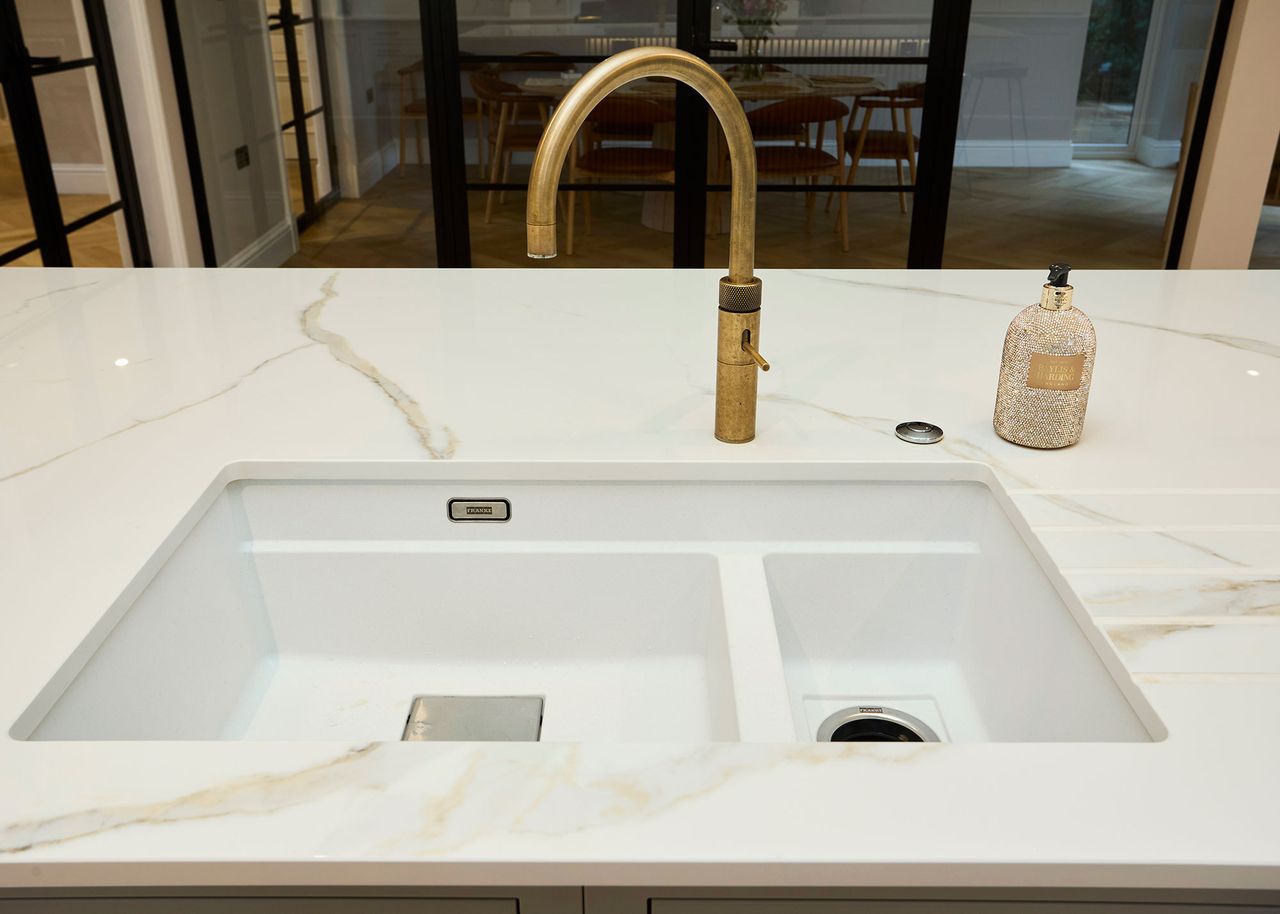
Composite worktops and white composite kitchen sink.

When the vision doesn't reflect the reality, it is always disappointing — and in the case of my renovated cottage, there are several areas where this has turned out to be the case. This has been down to a combination of poor research on my behalf and misinformation in the first place — either way, what it means, 10 years after completing the project, is that I am now looking at embarking on some very overdue changes.

Looking at the house overall, it has to be the kitchen that needs addressing first, within the extension refresh and remodel we have planned. It isn't that it looks dated exactly, more just a little tired — scruffy even. And, at this time of year, when the sun has started to stream on in through the rooflights in the morning, certain areas of the space are really showing their age — the water-stained timber countertops, marked white walls, and, in particular, the discolored white composite sink.

Back when we chose it, composite sinks were being billed as the best option if you wanted a kitchen sink that looked sleek and modern and that would resist stains and damage. While that might have been the case for some, it certainly hasn't been for me. This one is covered in ground-in stains, has chipped, and developed an unattractive, crackled look over time. If you are considering a composite sink yourself, this might well set alarm bells ringing. I have been speaking to the experts about why this has happened and what sink materials might be a better option next time around.

What Is a Composite Sink?

Composite sinks are made of natural stone and acrylic resin. (Image credit: Ashford Kitchens & Interiors)

The term 'composite sink' is a little vague in many ways, in that it describes a sink made from a composition of various materials — what these kitchen sink materials are can vary really widely though.

Generally, they combine natural materials, usually granite or quartz (or even both), with acrylic resins. The idea is that you get all the hardwearing, robust qualities of natural stone without the price tag or weight. However, the issue is that the ratio of natural materials to synthetic, as well as their quality, can vary hugely.

Richard Davonport, managing director at Davonport, explains that paying close attention to quality really matters here. "Composite sinks have improved significantly over the years, but quality still varies, and that is often what determines how well they age. Earlier versions, particularly in lighter shades, could be more prone to staining, surface marks, and fine cracking, whereas newer designs use a higher quartz content and more advanced resins to create a denser, more resilient finish that is far better at holding its color over time."

What Are the Pros and Cons of Composite Sinks?

One of the advantages of composite sinks is the design flexibility they offer. (Image credit: Andrew Beasley. Design: James Munro at Pace Architecture)

Understanding the pros and cons of a composite sink will help you decide whether this is the right option for you. Very few sinks come with no downsides at all, but at least if you are ready for them, the frustration is minimized.

There are three main areas to consider when choosing both a kitchen sink and a kitchen countertop — heat resistance, how stain-proof they are, and their ability to withstand damage from sharp and heavy objects.

According to Matthew O’Grady, director of Thomas Matthew Kitchens & Furniture, how well a composite sink holds up in the face of heat, stains, and damage is down to its quality. "Most of the issues we get called back for with composite sinks have to do with people being surprised by how they age when placed in real kitchens.

"Some people opt to get the cheaper variants thinking that they will perform in the same way as the more expensive ones, but cheaper composites tend to develop a slightly chalky look around the bowl or get a faint surface marking where pans are constantly placed on them."

Are Composite Sinks Heat Resistant?

When it come to heat resistance, a stainless steel kitchen sink is a great option. (Image credit: Laura Hammett Living)

If there is one room in the house where heat resistance matters, it is most definitely the modern kitchen — but how do composite sinks rate here?

"While composite is highly heat-resistant, it is not heat-proof," explains Andrew Wright, founder and owner of Cookology. "The acrylic resin within the mix can be susceptible to thermal shock or warping if a pan is taken directly from the hob and placed onto a dry surface. We always advise letting cookware cool or placing it into a sink of water to protect the integrity of the finish."

The most common alternative sink materials to composite sinks — ceramic and stainless steel — are both able to withstand higher levels of heat but, again, this does depend on their quality, and it makes sense to let pans cool a little before throwing them into any sink or placing them on a surface.

How Stain-Resistant Are Composite Sinks?

Opting for a mid-toned composite sink as opposed to pure white makes stains less obvious. (Image credit: Andrew Beasley. Design: James Munro@Pace Architecture)

One of the main complaints I have with my own white composite sink is that it no longer looks pristine and snowy — in fact, it didn't look that way for long. Certainly, marble kitchen sinks are known for being stain-prone, but where did I go wrong with my composite model, and is this the fate of all white composite sinks?

"A common concern is whether white composite is a mistake," picks up Andrew Wright. "The reality is that these sinks are color-fast and do not ‘stain’ in the traditional sense. In hard water areas, what appears to be a stain is often a limescale deposit that has trapped pigments from tea or wine. Regular cleaning to prevent limescale build-up is the secret to keeping a white sink pristine."

Perhaps this is where I messed up, then. Matthew O'Grady agrees that white composite sinks are hard to keep looking unblemished. "Lighter sinks tend to pick up metal marks or dull patches faster over time, so they rarely stay showroom-white for long. If you frequently use your kitchen, go for mid-tone colors as those hide everyday wear better.”

Having owned stainless steel, composite, and ceramic sinks, in my opinion, the former two batted stains away better.

Are Composite Sinks Easy to Damage?

Some degree of damage is inevitable over the years — concrete sinks look beautiful, for example, but need regular sealing to keep them that way. (Image credit: Chris Snook. Design: Vatraa Architects; Kitchen: Main)

While my composite sink has stood up pretty well to years of having things quite literally thrown at it, there are little chips and scratches, plus the oddly crackled look the surface seems to have taken on.

According to Andrew Wright, this shouldn't be the case if you look after your sink properly. "Unlike ceramic sinks, which can chip or develop 'spider-web' crackle marks upon impact, composite granite is incredibly resilient. The high density of quartz makes the surface nearly impossible to dent or scratch during normal use, ensuring the sink looks as fresh years later as the day it was installed."

It seems that my treatment of the sink could be to blame — in particular, my method of getting it looking whiter, which is to fill it with a solution of cold water and bleach and leave it to sit for a few hours. I should have looked into more designer-approved cleaning products first.

"To avoid damaging the smooth, anti-bacterial surface, homeowners should move away from harsh chlorides and prolonged bleach exposure," reveals Andrew. "These substances can attack the surface over time. Instead, simple soapy water and a weekly application of a dedicated granite cleaning liquid will preserve the ‘straight-out-of-the-box’ look."

This Method Surface Cleaner For Granite & Marble on Amazon would do the trick — perfect for getting both composite sinks and countertops gleaming, without damaging them. It's a non-toxic cleaning solution that also smells divine.

Are There Better Alternatives to Composite Sinks?

Stainless steel sinks with a brass finish, such as this one, offer a robust alternative to composite. (Image credit:  Chris Snook. Kitchen: Main)

Speaking to the experts, I have come to realize that there are pros and cons of all types of kitchen sinks — the deciding factor for most people tends to be aesthetics and the kitchen trends doing the rounds.

"While stainless steel remains the ‘old reliable’ for industrial durability, and ceramic offers a classic farmhouse charm, composite acts as the perfect middle ground," says Andrew Wright. "It provides a more contemporary, matte aesthetic than steel and is more impact-resistant than ceramic, making it a versatile choice for a modern refurbishment."

“For those weighing up alternatives, stainless steel remains a reliable choice for its durability and ease of maintenance, while ceramic offers a classic look with a robust, stain-resistant surface," adds Richard Davonport. "Composite sits somewhere between the two, offering a more tailored aesthetic, but it benefits from being selected carefully to ensure it performs as well as it looks.”

How to Choose a Composite Sink That Will Stand the Test of Time

Take time to research the quality of the product you are investing in as well as the reputation of the supplier. (Image credit: Ashford Kitchens & Interiors)

On reflection, I think where I went wrong was in assuming that all composite sinks would be created equal. I was seduced by the idea of something really low-maintenance, the fuss-free, modern appearance, and what I saw, at the time, as a more contemporary version of the classic white ceramic, farmhouse-style sink we had in our last home. Had I taken the time to track down a better quality product and looked into the best kitchen sink materials for hard-water areas, things might have turned out differently.

"When choosing a composite sink, it is worth paying close attention to the specification rather than focusing purely on appearance, as a well-made model should be non-porous, resistant to heat, and less likely to show wear with daily use," advises Richard Davonport. "Brand reputation and manufacturing standards make a noticeable difference here."

Andrew Wright has a similar take on this and is keen to emphasize that a well-chosen composite sink can deliver on many levels. "By choosing a material that blends the hardness of quartz with the versatility of resin, homeowners can move away from clinical, industrial finishes toward a centerpiece that feels like a natural, sophisticated part of the home’s design."

If you are looking at where to spend and where to save in your kitchen, bear in mind that elements that take the brunt of the activities in this room, such as the sink, countertops, and flooring, are all well worth investing in.

For more design ideas and advice, sign up for the Livingetc newsletter, and all the latest will be delivered straight to your inbox.

Sign up to read this article
Read news from 100's of titles, curated specifically for you.
Already a member? Sign in here
Related Stories
Top stories on inkl right now
One subscription that gives you access to news from hundreds of sites
Already a member? Sign in here
Our Picks
Fourteen days free
Download the app
One app. One membership.
100+ trusted global sources.







