Get all your news in one place.
100's of premium titles.
One app.
Start reading
International Business Times UK
Chelsie Napiza

'I Was Chest-Bumped by Police': Lead Journal Editor Thrown Out of Diabetes Conference for Criticising Trump's Research Cuts

The discovery of metformin’s brain-based effects could explain why it also shows promise for brain health and ageing. (Credit: Anna Shvets/Pexels)

Five scientists, including the editor-in-chief of America's leading diabetes journal, were removed from the field's premier annual conference after handing out a research editorial criticising the Trump administration's dismantling of biomedical science.

On 5 June 2026, police escorted the researchers out of the Ernest N. Morial Convention Center in New Orleans during the American Diabetes Association's annual scientific sessions. The incident unfolded moments before the Trump-appointed director of the National Institutes of Health, Dr. Jay Bhattacharya, was scheduled to deliver the keynote address. Bhattacharya cancelled his appearance at the last moment, and a senior NIH adviser addressed the crowd instead.
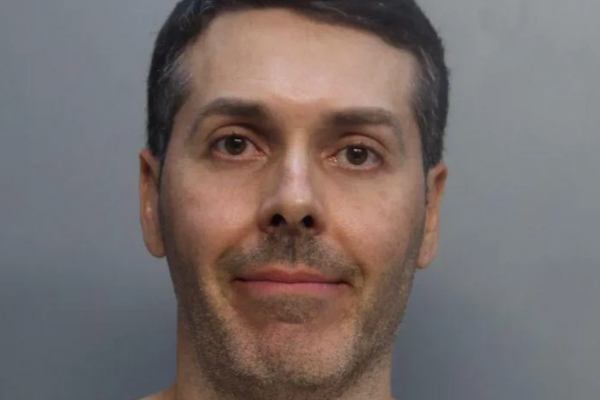
The ADA subsequently banned the ejected researchers from the remainder of the conference, citing a code of conduct violation.

Police Chest-Bump and Confiscate Copies Outside Keynote Ballroom

Dr. Steven Kahn, editor-in-chief of Diabetes Care, the ADA's flagship peer-reviewed journal, was among those removed. Also ejected were Dr. Aaron Kelly, a professor of paediatrics at the University of Minnesota, and Dr. Justin Ryder, a paediatric obesity researcher at Northwestern Medicine, along with two other conference registrants.

The group had been distributing printed copies of an editorial published in Diabetes Care on 29 April 2026, titled 'Misguided brushes of a pen continue to dismantle and destroy biomedical research in the United States: We can no longer afford complacency and fear.'

Security officers first approached them inside the ballroom reserved for the NIH keynote, then directed them to leave. Kelly told reporters the confrontation continued after they complied and moved to a quieter section of the convention centre.

'I was chest-bumped by a police officer several times,' Kelly said. Video recorded by a reporter from MedPage Today showed one instance of Kelly being shoved by a uniformed officer. Copies of the editorial were also confiscated. Louisiana State Police spokesman Sgt. Ross Brennan confirmed to the Times-Picayune that troopers were requested by event organisers to assist in removing the individuals, and that none of those removed were arrested.

ADA Bans Kahn from Conference

Hours after the removal, the ADA sent an email directly to Kahn informing him that his conduct had violated the conference's code of conduct. The association said it had 'no choice' but to remove him from the event. 'The code of conduct expects that all participants will conduct themselves in a professional and respectful manner,' the executive team wrote. 'For the safety of everyone, we must take all demonstrations seriously.'

Kahn shared the email with the Seattle Times. The ADA told him he would not be permitted to participate in the rest of the conference, which was scheduled to run through Monday. 'We appreciate the years of service and leadership you have provided to the ADA and those who we serve, and we regret that it came to this,' the email concluded. The ADA did not respond to a request for further comment from the Seattle Times.

Kahn is not only the editor-in-chief of the journal that published the contested editorial, he is also the director of the University of Washington Diabetes Research Centre and a professor of medicine at the VA Puget Sound Health Care System. He had travelled to New Orleans specifically to present at conference sessions.

The Cuts That Prompted the Editorial, By the Numbers

The editorial's core complaint has a documented basis. A February 2026 report from Senator Bernie Sanders' Senate Health, Education, Labour and Pensions Committee found that the NIH had terminated or frozen at least £450 million ($561 million) in research grants across the four leading causes of death in America. Of that, £66 million ($83 million) had been cut from 68 diabetes research grants specifically, despite Congress having fully appropriated the funding.

Those terminations disrupted 304 active clinical trials involving hundreds of thousands of patients, including 69 trials for children, according to the same Senate report. Senator Jon Ossoff separately warned in a Senate Appropriations Committee hearing that the administration's proposed FY26 budget would eliminate the CDC's entire diabetes data and research division outright. Trump's budget proposal would also cut the overall NIH budget by 39%, returning it to roughly its 2007 funding level.

The administration has justified some terminations by pointing to words on a list of banned research terms that NIH was instructed to flag. According to the Sanders report, that list has included words such as 'inequity,' 'adolescent,' 'COVID,' and 'climate change.' Grants touching those subjects were among those frozen or cancelled.

That a leading journal editor was chest-bumped out of his own field's conference for distributing a paper from his own journal signals something beyond scientific disagreement; it signals a research community reaching its limit.

Sign up to read this article
Read news from 100's of titles, curated specifically for you.
Already a member? Sign in here
Related Stories
Top stories on inkl right now
One subscription that gives you access to news from hundreds of sites
Already a member? Sign in here
Our Picks
Fourteen days free
Download the app
One app. One membership.
100+ trusted global sources.