
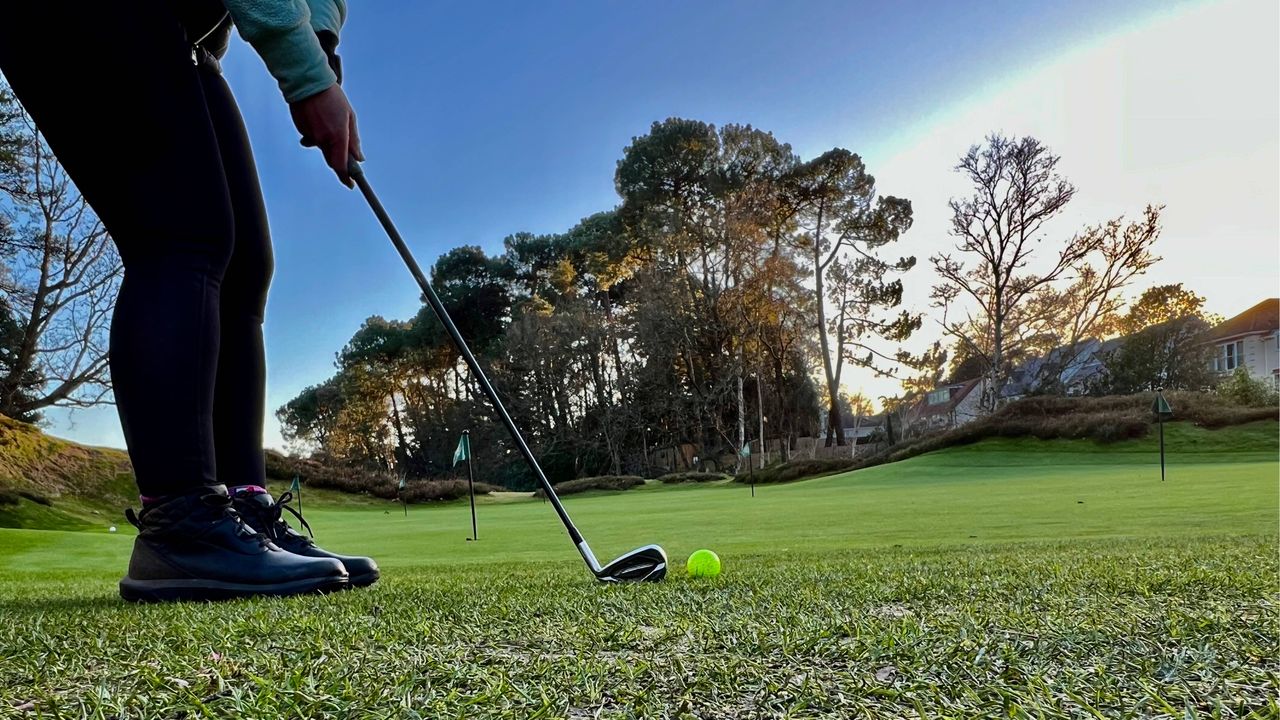
I’m a golf purist. The white golf ball symbolises everything that this great game represents. It’s part of the sport’s traditions. In my view, it’s how golf is supposed to be played.
For years and years I’ve seen manufacturers roll out coloured golf balls and I’ve always thought that they were a bit of a gimmick. A marketing spin to jazz up the best golf balls and give them more shop shelf appeal. To drive sales from curious customers.
There have been countless coloured balls produced but I’ve always resisted playing them. Nowadays you can buy a golf ball in practically every colour of the rainbow - pink, orange, yellow, red - you name it.
One manufacturer has even made a green golf ball for goodness sake, a green ball, played against a green golf course, how ludicrous. If you told me that golfers were going to be playing with green golf balls two decades ago I would have laughed.
But my eyes were recently opened to the benefits of switching to a yellow golf ball in the winter after doing so on a dark and dull day. I was playing in a fun yellow ball competition and we were all given a yellow golf ball that we had to play on two nominated holes.

The chosen yellow golf ball holes were double up point opportunities. It forced me to tee up with this very distinctive coloured golf ball for the first time ever and in doing so I discovered that I actually loved it. There was absolutely no doubt that it was far easier to see. Incredibly visible in fact.
For fun on our last hole of play in semi-darkness, daylight fading, we all played our yellow golf balls. Some with more accuracy than others. Every one of us found our tee shots, even those in the rough, and the putting was way easier in fading light. I was completely converted to this brilliantly bright golf ball. So much so, that I’ve continued using a yellow golf ball for the last few weeks and it’s been super easy to spot.
I’ve looked into the scientific evidence behind the yellow golf ball’s use and it actually makes logical sense. While there is no specific ‘brightness’ value provided from tests, studies suggest that yellow golf balls can be up to three times easier to track in the air over long distances compared to white balls. Neon yellow is consistently ranked as the most visible colour across the widest range of playing conditions.
The enhanced visibility is due to the way the human eye processes light and the greater contrast yellow creates against common golfing backgrounds like green grass, blue skies, or overcast conditions.
Considering how compelling the scientific evidence is in favour of playing a yellow golf ball, I’m actually surprised that more tournament professionals haven’t switched to this colour. There is undoubtedly still a stigma attached to its use.
Yet the improvement in following the golf ball in flight that spectators would gain from watching a live tour event on TV where professionals play yellow balls, or even better in person at an event, is certainly worth the tour considering. There’s clearly a benefit for the viewer and ultimately spectators are the lifeblood of the sport.

There are only a scattering of tour professionals who play a yellow golf ball regularly, including Fred Couples, who has been very vocal in discussing the improvement in his ability to see this yellow golf ball, versus white, as he has aged. The major golf ball manufacturers have taken this stance by producing more premium balls in a yellow option, such as the Titleist Pro VI.
Another reason I can think of that has prevented more golfers from needing to convert to playing a yellow golf ball in old age is the increased popularity of getting laser eye surgery. Having eye lens correction is now less expensive and far more common. It has undoubtedly led to fewer seniors needing to adopt the yellow ball, simply because they choose to correct their eyesight in old age instead.

I can’t name a single woman on the LPGA or LET who tees up with a yellow ball and the handful of times I’ve seen a coloured ball played on the PGA Tour or European Tour it has been used as part of a PR stunt, like Bubba Watson playing a pink Volvic ball as part of a full “pink it” set of Ping clubs, and in doing so raising funds towards his charity, the Bubba Watson Foundation.
Personally, I’d highly recommend that you try a yellow golf ball in the winter. The more rounds of golf I’ve played with it on dull days the more I’ve become a convert. While I still love the traditions of the game and the sentimental association the white golf ball has with them, I have to confess that being flexible to change over the last few months and embracing the use of a more visible yellow golf ball is something that everyone should consider. So put your pride aside and give it a try.