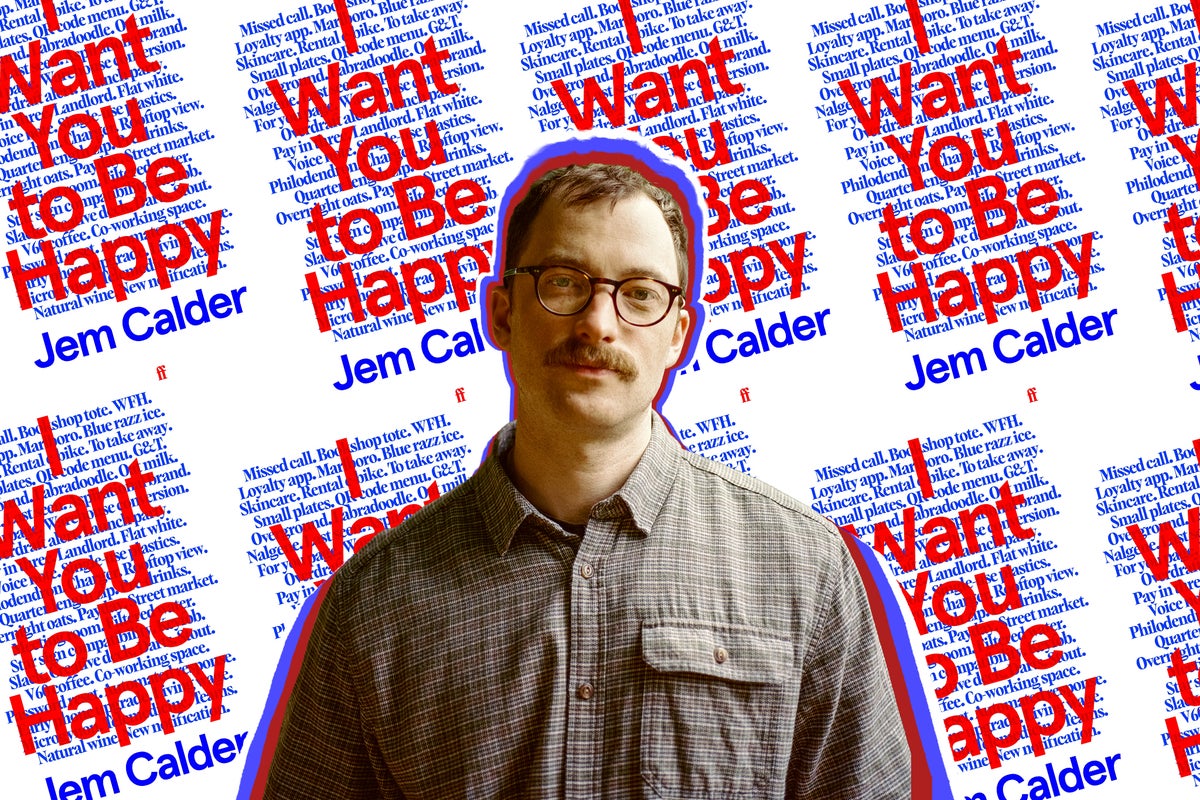
The cover of Jem Calder’s I Want You to Be Happy, one of the most talked-about debut novels of the year, is swathed in phrases that would make a Victorian man very confused. Slack. For you page. Last seen. Voice note. WFH. Small plates. Bookshop tote. The book’s likely millennial and Gen Z audience, though, are well versed in this parlance. These are the words that summon the onslaught-iness of modern life. Here, communication is instant, constant, but also faceless. Culture is funnelled through algorithms and trendy viral merch. It has become normal to pay £14 for a caramelised hispi cabbage.
Calder evokes this bleak state of affairs in his pages with a deft humour, his characters trapped in an eternal quest to optimise their lives, drowning in overwhelm while also trying to deal with the weird, messy stuff of just being a human in the world. Chuck, a copywriter in his mid-thirties, is a wannabe novelist who’s just broken up with his long-term fiancée, probably because of some kind of early-onset midlife crisis. On a night out, he meets Joey; she’s 23, works in a coffee shop, lives in a grotty houseshare, and yearns to be a poet. A poet! For a man whose sole interactions are now on Teams calls and with Deliveroo drivers, what could be more alluring?