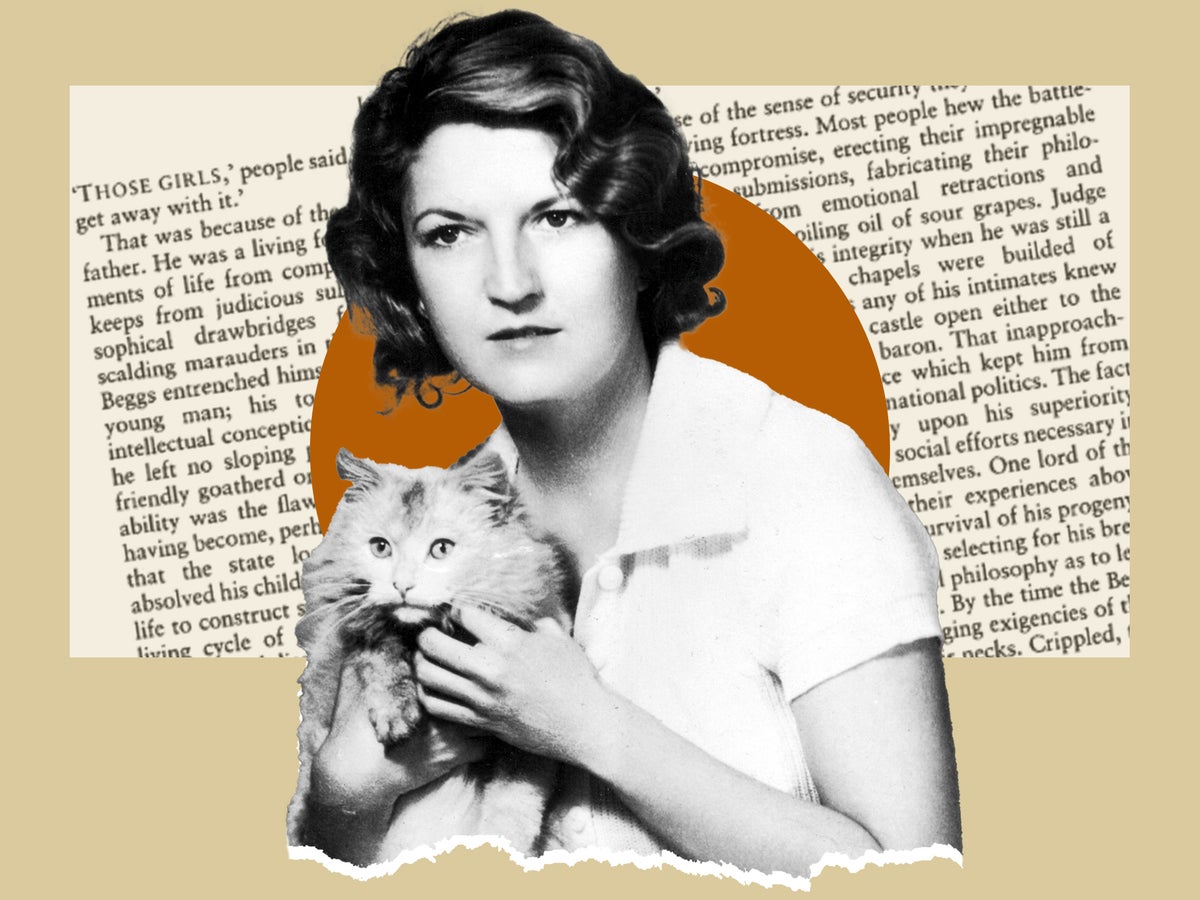
Sometime in the early 1970s, Frances “Scottie” Fitzgerald decided to hunt through her parents’ “secret treasures”. The daughter of Zelda and F Scott Fitzgerald was in her fifties when she went up to her attic in Washington on the trail of her literary roots. Rummaging among the scrapbooks and albums, she found a pair of dusty toy soldiers that her father had bought for her in Paris, and a handful of Christmas ornaments “peeling here and there”. But perhaps most revealingly, there were the “lavishly painted” paper dolls her mother Zelda had made for her as a child – “a jaunty Goldilocks, an insouciante Red Riding Hood, an Errol Flynn-like D’Artagnan” – that, 40years later, had barely faded.
“It is characteristic of my mother that these exquisite dolls, each one requiring hours of artistry, should have been created for the delectation of a six-year-old,” Scottie later wrote of Zelda Fitzgerald, who died 75 years ago on Friday. Zelda’s abiding legacy may be as the wild-eyed, jazz-age socialite once referred to by her husband as “America’s first flapper”, but these delicate paper dolls, so painstakingly crafted out of pleated wallpaper and Belgian lace, offer us a more nuanced and complex image of her.