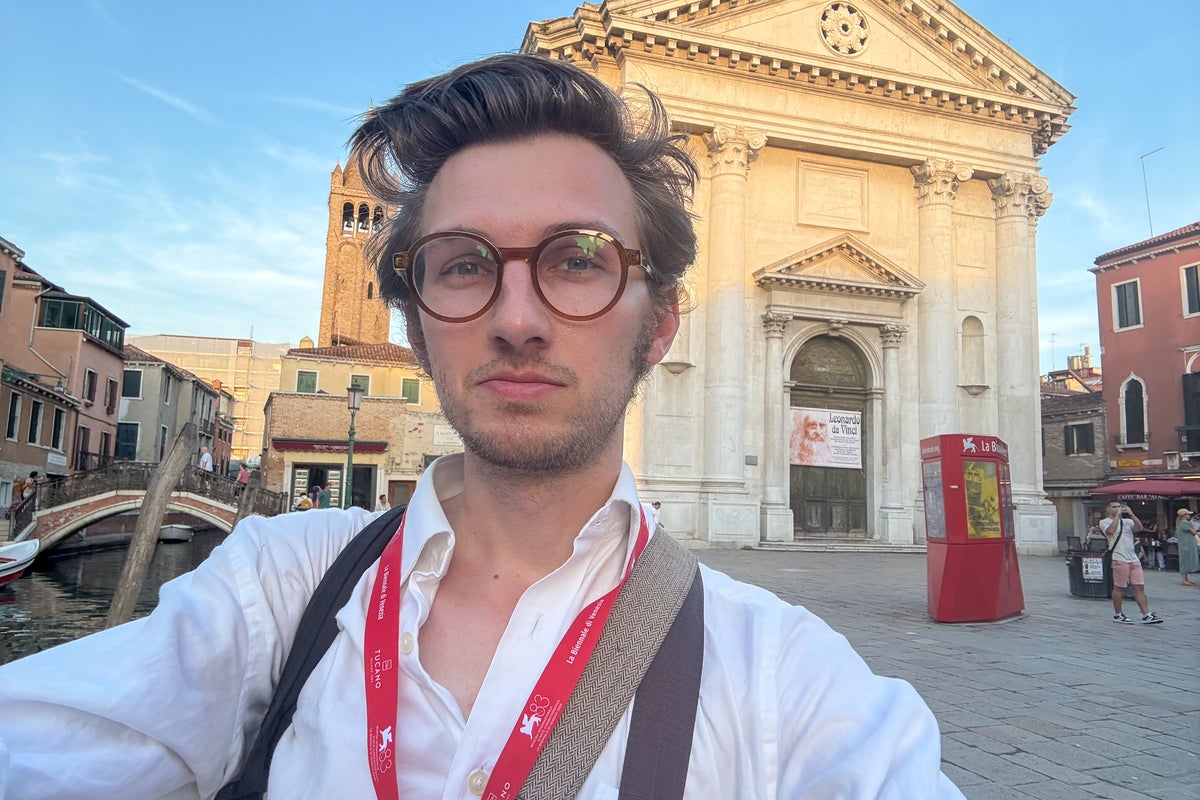
Venice is a cinematic city in more ways than one. Every September, thousands of cinephiles descend upon the Lido for the Venice Film Festival, to watch great films, drink Campari and try to catch a glimpse of George Clooney. The seven mile-long island hosts the world’s oldest film festival each year, but it’s not just for industry professionals, critics and the gaggle of PRs with their red lanyards. There are plenty of screenings open to the public too.
However, Venice is filmic beyond the 11-day festival. A city of 118 islands connected by gondola-enchanted canals, it’s no surprise that filmmakers keep returning here to shoot their films. From old classics (The Canal of the Angels, Summertime, Don’t Look Now) to modern blockbusters (Casino Royale, The Tourist, Spider-Man: Far From Home) to the strange and experimental (Susan Sontag’s Unguided Tour), Venice has served as a romantic and moody setting for hundreds of films – offering a resplendent backdrop to romance, espionage and murder.
If you’re visiting the Floating City, either during the festival or at any point throughout the year, here are some places to visit if you want to recreate movie moments from the silver screen.
Rialto Bridge and Grand Canal
The view of the Grand Canal from the Rialto Bridge is the best in the city, as long as you don’t mind the scores of tourists who share the same opinion. On either side of the canal sit restaurants and luxury hotels, and any film that wants to suggest glamour and decadence usually features a scene there. Julie and Anthony escape London and take a trip to Venice in Joanna Hogg’s exquisite The Souvenir (2019). Their romance may be doomed, but both they and the canal look beautiful.
The tragic finale of Casino Royale (2006) takes place on the canal, when Vesper gets trapped in the sinking Palazzo Pisani Moretta. (Thankfully, the real Palazzo didn’t really collapse into the water, so you can still look at it.) Both Katharine Hepburn and the Grand Canal shine in Summertime, David Lean’s 1955 romantic classic about an American woman who falls in love with a married Italian man.
On the other end of the cinematic spectrum, you have Spider-Man: Far From Home (2019), in which the Water Elemental lays waste to the Rialto Bridge in a soaking CGI bust-up. If there’s one city you don’t want your enemy to be water-based, it’s Venice.
St Mark’s Square
An essential and obvious place to visit, St Mark’s Square holds many of Venice’s iconic landmarks, like St Mark’s Basilica and Palazzo Ducale, or the Doge’s Palace. No tourist can visit Venice without stopping by, and no film can be set in Venice without a scene in the famous town square.
In Summertime (1955), a lonely Katharine Hepburn watches other couples as she sits at the famous Caffè Florian. She films her surroundings like a diligent tourist on her home-movie camera, and it’s here she first meets her soon-to-be-lover, the antique-dealer Rossano Brazzi.
When Peter Parker takes a class trip to Venice in Spider-Man: Far From Home, the first place they stop is San Marco Square, in a sequence that looks like an advert for the city. And in Moonraker (1979), Roger Moore’s Bond switches his gondola into a hovercraft and speeds around the Square escaping gunshots, in one of Bond’s more outlandish chase sequences. It’s the scene that includes the infamous double-taking pigeon. It’s not a good film.
Whether you’re just walking around or feel brave enough to pay €12 (£10) for a coffee at Caffè Florian, you can immerse yourself in the most spectacular place in the city, pretending to be Bond or Hepburn.
Read more: Best cheap hotels in Venice for a budget-friendly Italian city break
Campo San Barnaba
Perhaps you would rather be Indiana Jones? Well, you can pretend by visiting Campo San Barnaba, which features in Indiana Jones and the Last Crusade (1989). The exterior of the church serves as the library where Indy looks for clues in his search for the Holy Grail. As they approach the building, Jones says, “That doesn’t look much like a library...” which is essentially a little tongue-in-cheek joke by Spielberg.
Around the corner, a famous scene in Summertime takes place, where Katharine Hepburn, attempting to find the perfect angle for her camera, falls into the canal. Hepburn, ever the professional, actually submerged into the dirty water several times for the shoot and developed an infection in her eye that she claimed troubled her for the rest of her life.
Away from the most popular spots in town, it’s a great area to walk and to grab a drink; it’s still a popular spot but without the intense crowds of San Marco Square. Just make sure you don’t topple into the water while taking a photograph.
Read more: Once a year, silent film fans from around the world descend on this tiny Scottish town
Chiesa di San Nicolò dei Mendicoli
Most movies capture Venice in the sunshine, but Nicolas Roeg’s 1973 horror masterpiece presents a cold and moody city. In Don’t Look Now, Donald Sutherland plays a grieving architect who travels to the city to restore a crumbling church – and is haunted by the vision of his dead daughter in her blood-red raincoat.
The film takes us all over Venice, but fans of Don’t Look Now will want to visit the Chiesa di San Nicolò dei Mendicoli, the building Sutherland is working on. It’s easy to find – about a 15-minute walk from Campo San Barnaba – but quietly hidden away from the main tourist areas. When I visited just before sunset, there was no one else around. If you take the time to visit, you can sit outside one of the trendy bars on either side of the Ponte de la Piova bridge where locals drink.
Grand Hotel des Bains
If you’re in Venice for the film festival, this one’s easy to find, as it’s just a few minutes’ walk from where the main screenings take place. Situated on the Lido, this grand hotel was once the epitome of glamour, but has since fallen into disrepair. Thomas Mann’s novel Death in Venice is set there, as is Luchino Visconti’s film adaptation from 1971. The hotel was also used in The English Patient (1996), where it stands in for the Shepheard’s Hotel in Cairo. The once-glamorous spot where movie stars would stay during the film festival is now empty and fenced off, but you can walk down from the main festival area, view the outside and imagine the glitz and glamour that once filled its corridors
Murano
This group of islands to the north of the city is famous for glass-making. No wonder Bond makes a visit to the Venini Glass Furnace in Moonraker in his attempt to stop Drax from developing his spaceship. (Again, it’s not a good film.) In the movie, it’s implied the glass factory is just behind a shop off of San Marco Square, when in fact it’s in the Murano district.
But an older, better film was also shot here. The Canal of the Angels (1934) is about a young boy from a poor family who becomes aware of his mother’s adultery. Largely forgotten today, the film was a precursor to Italian neorealism, a genre of film known for its gritty style and bleak subject matter. Many films set in Venice could have been shot by the Tourist Board. This one reminds us that it is a real city, inhabited by real people.
How to get there
Most major airlines fly from British cities to Venice, including BA (from £102 return) and Jet2 (from £64 return). Alternatively, take the Eurostar from London to Paris, then a TGV train to Turin or Milan and onwards to Venice.
Where to stay
Hotel Flora is three minutes from Piazza San Marco, with rooms starting at £260 per night.