
I’ve spent decades trudging around with a heavy load on my back. The load in question has ranged from shoulder bags to extra-large backpacks, brimming with cameras, lenses and all manner of photographic accessories.
My wife used to joke (in a deadly serious kinda way) that she felt weekends away were like tagging along on camera club outings. I was always determined to be prepared for any eventuality, to be able to take any photo opportunity in my stride.
It’s taken me a very long time to realize that ‘any eventuality’ practically never materializes, and that I generally know in advance what sort of things I’m going to shoot, so I can get away with just a camera body and a couple of lenses.

For travel and walkabout photography, my kit of choice for the last few years has been a Nikon Z6 II body (recently replaced by a Nikon Z6 III), a Nikon Z 24-70mm f/4 S standard zoom and a Nikon Z 14-30mm f/4 S ultra-wide-angle zoom.
That usually ticks off everything on my out-and-about shooting to-do list. But while both lenses are pretty compact, thanks in no small part to their retractable designs, I still begrudge the stowage space needed by the 14-30mm, especially as it normally only surfaces for occasional use.

Things have just changed. Fundamentally. Wearing my hat as Digital Camera World’s chief lens reviewer, I got hold of a Viltrox AF 14mm f/4 Air lens to test. It’s full-frame compatible and available in both Nikon Z and Sony E mount options.
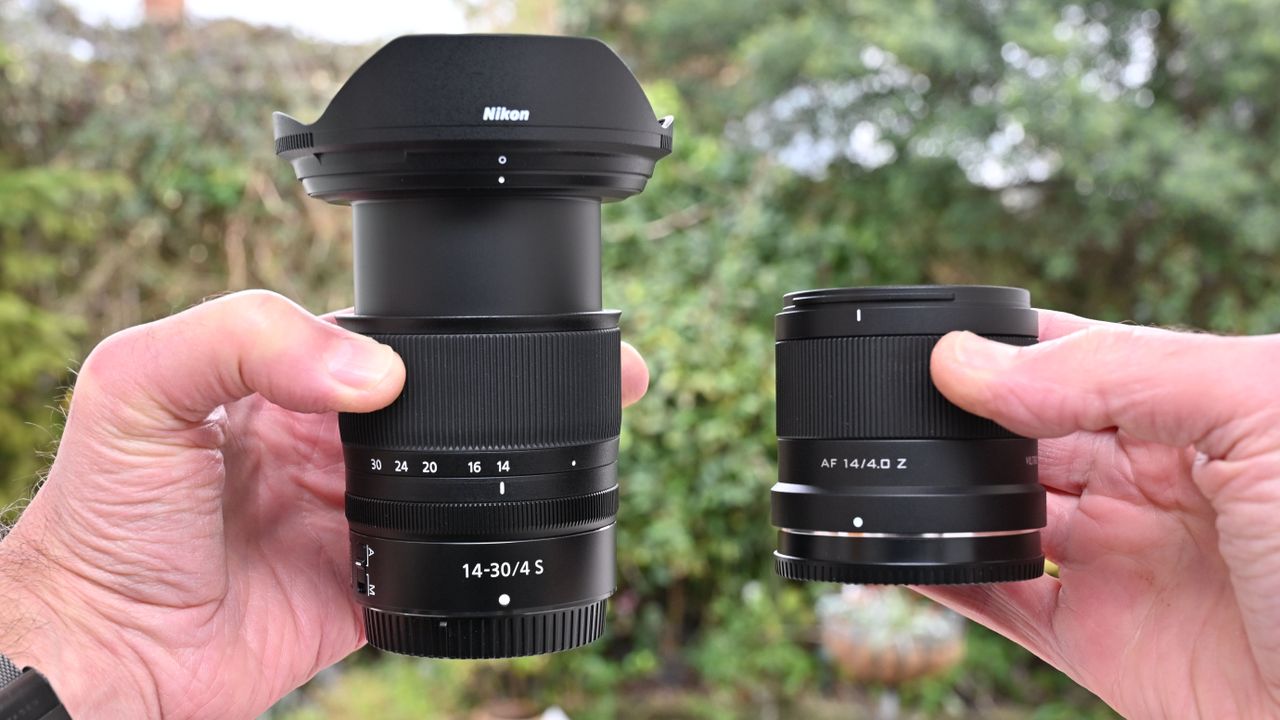
The similarities with my Nikon Z 14-30mm are virtually nonexistent.
Sure, both lenses share an ultra-wide-angle 14mm focal length and both have an f/4 aperture rating. But the Nikon zoom weighs in at 485g / 17.2oz and measures 89 x 85mm even in its retracted state, before being elongated for use. By stark contrast, and typical of Viltrox's Air series lenses, the 14mm prime is a real featherweight.

The Viltrox lens is just a little slip of a thing, weighing in at 185g / 6.5oz (not much more than a third of the Nikon zoom) and measuring a mere 68 x 58mm – that’s barely more than a couple of inches long.
Indeed, the Viltrox is small enough to pop into a spare coat pocket and light enough for me to not even notice it’s there.

Then there’s the small matter of cost. The Nikon’s price tag is $1,397 / £1,299 / AU$2.299, a not inconsiderable sum. The Viltrox costs just $199 / £190 / AU$299. That’s only about one seventh of the cost.
Sure, the Nikon lens is a more high-tech affair but I’ve been really impressed with the Viltrox’s edge-to-edge sharpness and all-round performance.

For such an ultra-lightweight, inexpensive lens, the Viltrox really is a little gem. Of course, as a prime lens, the Viltrox lacks the Nikon zoom’s versatility in terms of its range of perspectives, but I’m often content to nudge my camera into APS-C crop mode.
At this point the Viltrox effectively becomes a 21mm lens, neatly bridging the gap while still going wider than my 24-70mm standard zoom. All in all, it’s a proper little pocket rocket and one of my favorite wide-angle lenses.
I may not be ready for everything, but I'm ready for almost everything – and that's good enough for me.


You might also like…
Interested in refining your own lens collection? Take a look at the best Nikon Z lenses and the best lenses for Nikon DSLRs.