
Get all your news in one place.
100’s of premium titles.
One app.
Start reading
T3
T3
Technology
Rik Henderson

I've been writing about computer games for the last 40 years – here's what I think the future of gaming will look like

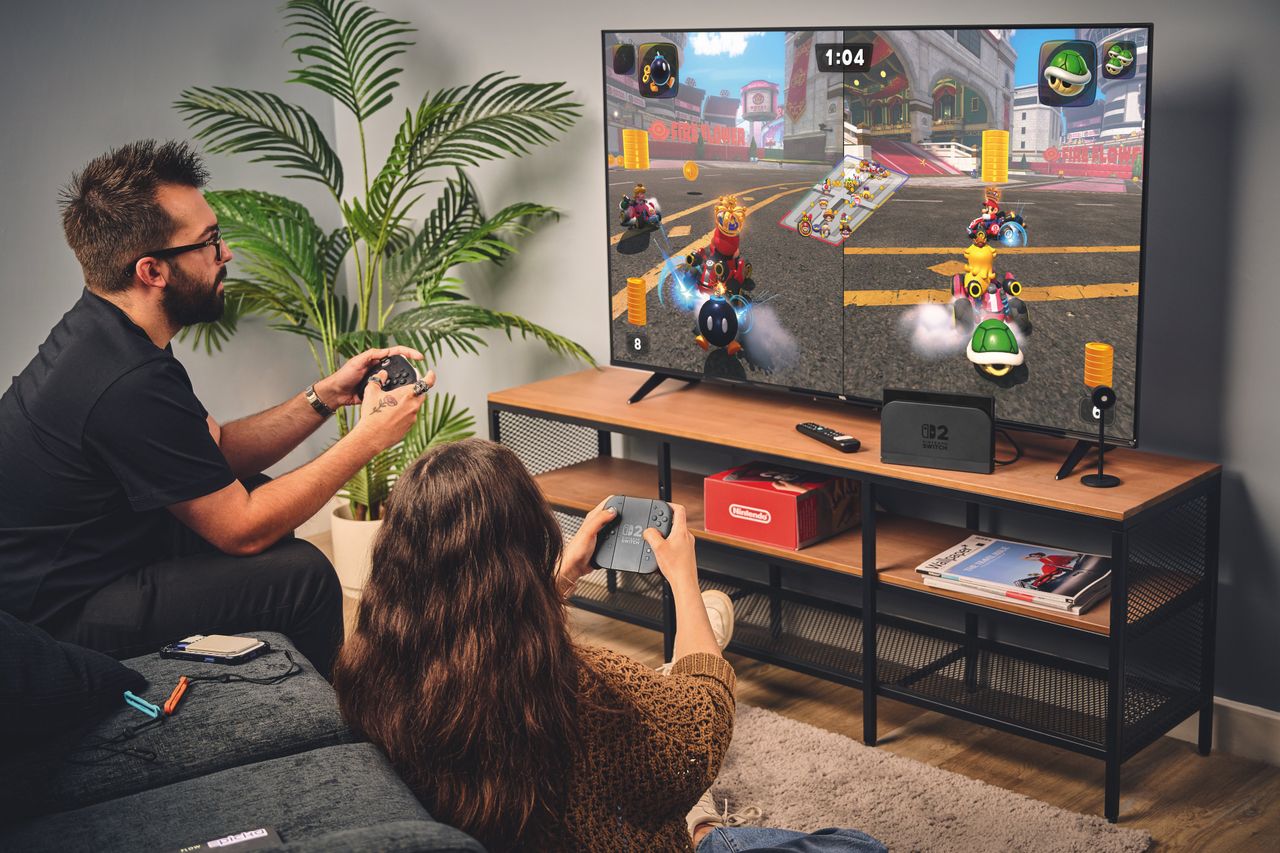
Two people playing computer games.

I’ve been writing about videogames for the best part of 40 years, so have seen many a pivot or transition when it comes to hardware generations, but the current shift we’re seeing today trumps them all.

We’ve had console gaming make way for dinky home computers, only to make way for consoles again. Big brands have come and disappeared again as quickly as an Arkanoid brick, and a once-too-often dalliance with motion play has simply served to fill our cupboards with plastic tat (I’m looking at you Balance Board). However, there’s something in the air that feels different this time – a revolution, if you like. Handhelds are invading the games space, and I couldn’t be happier.

Of course, the games industry was essentially built on the back of portable games – the 1980s were awash with single-game electronic toys, such as Game & Watch, and many a Space Invaders and Pac-Man clone. And at the end of that decade, Nintendo effectively changed the game, so to speak.

But as successful as the Game Boy and DS families proved, they have always felt complementary to the bigger machines lurking under the television. This time it feels different.

The rise of the handheld

Nintendo is continuing to bet the house on portability with its first true console sequel in many a year (the Wii U doesn’t count). The Switch 2 is dominating the build up to Christmas, being geared more for travel antics with a bigger display and improved controls. Even Microsoft has now entered the fray with an Xbox handheld (or two). And rumours of a new PlayStation portable persist.

Whatever your tastes, there’s something to pick up and play – and at every budget

Then there’s the Steam Deck, plus its many clones from just about every PC manufacturer around, while Chinese tech firms seem to be flooding the market with about 100 new retro gaming handhelds every month. Basically, whatever your tastes, there’s something to pick up and play – and at every budget. It shows no sign of stopping.

The retro gaming explosion

I for one am ecstatic. As a dyed-in-the-wool retro gamer – being retro myself – I have never had it so good. Being able to play 1,000s of classic titles on a device no bigger than a bag of Maltesers, and with an OLED display to boot, is literally something of my dreams. Admittedly, I still largely play the monochromatic Tetris, much like I did on my first Game Boy in ’89, but you get the idea.

It really does feel like we’re in the middle of monumental change in gaming, one that is more accessible and varied than ever before.

Consoles are superb for individuals, online and family play – gaming PCs too – but the promise that you can play anywhere, and any game you like, has never felt so tangible.

You don’t even need a dedicated handheld either – everyone has a more-than capable games machine in their pockets already – whether it runs on Android or iOS. Just add a controller, such as a Backbone One, and away you go. And with cloud gaming on the rise, that includes big releases at your fingertips.

Naturally, there will still be a PlayStation 6 and an Xbox Next – or whatever it turns out to be called – and Valve is set to enter the market with its new Steam Machine, but the console war as was is largely over today. Choice has won, and we’re all poised to benefit.

Handhelds are now very much part of the fabric of gaming, and are its future too… even if we only play 40-year-old games on them.

This opinion piece was included in issue #375 of T3 magazine.

Sign up to read this article
Read news from 100’s of titles, curated specifically for you.
Already a member? Sign in here
Related Stories
Top stories on inkl right now
One subscription that gives you access to news from hundreds of sites
Already a member? Sign in here
Our Picks
Fourteen days free
Download the app
One app. One membership.
100+ trusted global sources.